
EGSB Process for Industrial Wastewater Treatment: Engineering Solutions by a Global EPC Contractor
Industrial wastewater treatment is becoming increasingly important as manufacturing expands and environmental regulations become more demanding. Industries such as chemicals, pharmaceuticals, food processing, and new energy generate wastewater with complex compositions, high organic loads, and challenging treatment requirements. Selecting an appropriate treatment process and reliable engineering partner is essential for achieving stable operation, controlling costs, and meeting environmental discharge standards.
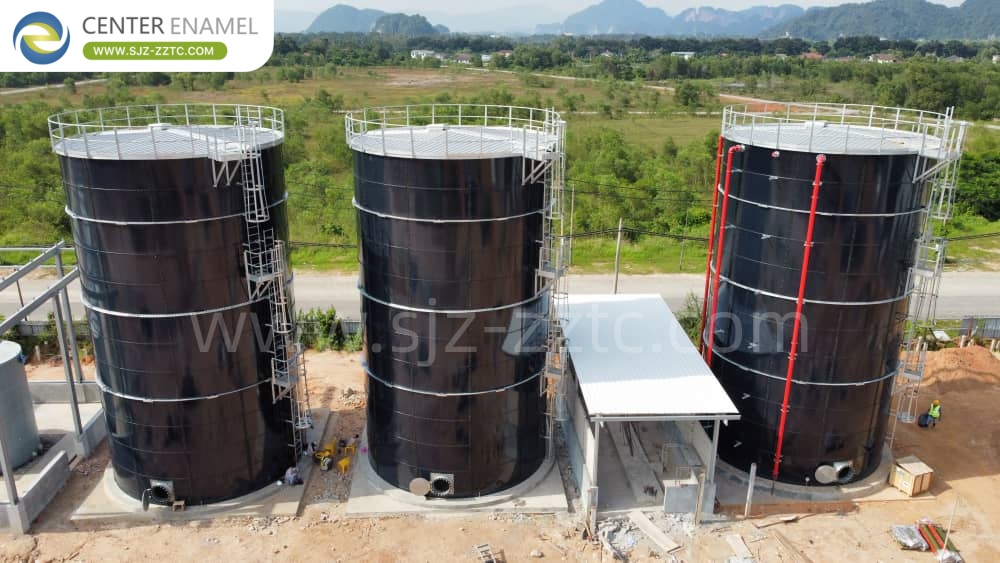
The EGSB Process (Expanded Granular Sludge Bed) is an advanced anaerobic treatment technology suitable for certain high-strength organic wastewater applications. Combined with customized tank systems, professional engineering design, and integrated project delivery, it can contribute to more efficient wastewater management and resource recovery.
As an experienced environmental engineering company, Center Enamel provides industrial wastewater treatment solutions, equipment manufacturing, engineering design, and project construction services for customers worldwide.
Global Industrial Wastewater Treatment: Emerging Opportunities and Challenges
Industrial wastewater treatment markets are developing differently across regions, creating demand for adaptable technologies and experienced engineering partners.
Asia-Pacific, particularly China, represents a major industrial wastewater market. Demand is increasingly shifting from individual construction projects toward long-term operation, maintenance, and treatment efficiency improvements.
Meanwhile, North America focuses heavily on upgrading existing treatment facilities, while European markets place greater emphasis on resource recovery and advanced environmental technologies. In the Middle East, water scarcity encourages investment in wastewater treatment and reuse, whereas manufacturing expansion in Southeast Asia continues to drive infrastructure development.
The rapid growth of lithium battery, photovoltaic, and hydrogen industries is another important development. Their wastewater streams may contain complex chemical compounds, elevated pollutant concentrations, and substances that are difficult to biodegrade.
These market conditions highlight several important requirements:
Customized treatment processes for different wastewater characteristics.
Reliable equipment capable of handling corrosive operating environments.
Efficient organic pollutant removal and potential biogas recovery.
Integrated engineering services covering design, manufacturing, and construction.
For industrial investors, working with an experienced EPC Contractor helps coordinate these requirements within a unified project framework.
Understanding the EGSB Process and Its Working Mechanism
The EGSB Process is an anaerobic biological treatment technology that uses highly active granular sludge to degrade organic pollutants under oxygen-free conditions.
Its main advantage is the combination of high upflow velocity, expanded sludge beds, and intensive contact between wastewater and anaerobic microorganisms.
The treatment process generally involves the following stages:
Pretreatment and Equalization
Incoming wastewater first passes through pretreatment facilities to remove unsuitable materials and balance water quality and flow. This helps reduce sudden variations that could affect biological treatment performance.
Wastewater Distribution and Sludge Expansion
The pretreated wastewater enters the reactor through a bottom distribution system. As the upflow velocity increases, granular sludge expands and becomes suspended, forming an active reaction zone.
Anaerobic Organic Degradation
Wastewater flows upward through the expanded sludge bed, allowing microorganisms to contact and degrade organic pollutants. During this process, biogas, treated water, and a relatively small amount of excess sludge are generated.
Biogas movement also promotes sludge suspension and mass transfer, supporting biological reactions.
Three-Phase Separation
The mixed liquid reaches the upper three-phase separator, where gas, liquid, and solid components are separated. Biogas is collected, granular sludge settles back into the reaction zone, and treated effluent flows out of the reactor.
Excess sludge is periodically discharged to maintain stable operation.
Simplified process flow: Pretreatment → Wastewater Distribution → Expanded Sludge Bed → Anaerobic Degradation → Three-Phase Separation → Effluent and Biogas Recovery.
Chemical Wastewater Characteristics and Treatment Requirements
Although anaerobic technologies offer advantages for high-strength organic wastewater, chemical wastewater presents additional challenges that must be evaluated before selecting a treatment process.
Its composition can vary significantly depending on production materials, manufacturing procedures, and discharge conditions.
| Key Parameter | Typical Characteristics | Treatment Challenge |
| COD | 5,000–80,000 mg/L; coal chemical wastewater may exceed 100,000 mg/L | High organic pollutant load |
| BOD/COD | Generally below 0.25 | Poor biodegradability |
| Organic pollutants | Benzene compounds, phenols, and halogenated hydrocarbons | Toxicity and refractory compounds |
| Inorganic salts | Tens of thousands to over 100,000 mg/L | High salinity and microbial inhibition |
| pH | Alternating strongly acidic and alkaline conditions | Biological system instability |
| Other pollutants | Cyanides, sulfides, and heavy metals | Potential biological toxicity |
These characteristics make chemical wastewater treatment particularly demanding.
Frequent production changes can cause significant fluctuations in wastewater volume and pollutant concentrations. Sudden shock loads may disrupt microbial activity, while toxic substances and excessive salinity can make biological system acclimation difficult.
Therefore, an EGSB reactor should not be selected solely based on COD concentration. Wastewater biodegradability, toxicity, salinity, temperature, and pretreatment requirements must also be evaluated.
A comprehensive treatment solution may combine physical, chemical, and biological processes to achieve the required treatment performance.
Sweden Organic Waste Biogas Project: A Practical Engineering Example
Engineering experience is an important consideration when evaluating wastewater and anaerobic treatment equipment. Center Enamel's international project portfolio demonstrates its experience in tank manufacturing and environmental engineering applications.
In 2024, Center Enamel participated in an organic waste biogas project in Sweden, using the UASB anaerobic process and Glass-Fused-to-Steel (GFS) tanks as the main reaction equipment.
The project was designed to support organic waste treatment and biogas energy recovery under Nordic environmental conditions.
Key Project Specifications
| Project Item | Details |
| Project Location | Sweden, Northern Europe |
| Completion Year | 2024 |
| Treatment Technology | UASB Anaerobic Process |
| Main Equipment | Glass-Fused-to-Steel Tanks |
| Single Tank Diameter | 19.11 m |
| Single Tank Height | 19.2 m |
| Main Applications | Organic Waste Treatment and Biogas Recovery |
| Tank Protection | 30-Year Corrosion Protection |
The GFS tanks provide corrosion resistance against demanding operating conditions, including acidic and alkaline environments. Their modular assembly also supports convenient installation and project construction.
The UASB process retains granular sludge and promotes organic pollutant degradation, generating biogas for potential energy utilization.
Although this project uses UASB rather than EGSB technology, it demonstrates Center Enamel's practical experience in anaerobic treatment equipment and international biogas engineering applications.
Why Choose Center Enamel as Your Industrial Wastewater EPC Contractor?
Selecting an EPC Contractor involves more than purchasing treatment equipment. Project owners need a partner capable of coordinating engineering design, equipment manufacturing, construction requirements, and site-specific technical challenges.
Center Enamel, also known as Shijiazhuang Zhengzhong Technology Co., Ltd., provides industrial wastewater project design, equipment manufacturing, and engineering construction services. Its solutions cover industrial wastewater, municipal wastewater, and biogas applications.
Several capabilities support its international project delivery.
Global Installation Experience
Center Enamel began its overseas GFS tank installation activities in 2009, completing a drinking water storage tank installation in Niger, Africa.
In 2015, the company completed China's first GFS tank export and installation project in the United States, gaining experience with demanding overseas acceptance requirements.
Its subsequent installations have covered Southeast Asia, Africa, the Americas, and other international markets.
| Year | Project Milestone | Engineering Experience |
| 2009 | First overseas GFS tank installation in Niger | International installation and site coordination |
| 2015 | GFS tank export and installation in the United States | Overseas standards and project acceptance |
| 2024 | Sweden organic waste biogas project | Anaerobic treatment equipment and cold-climate applications |
Professional Engineering and Customized Design
Center Enamel's design team includes senior engineers registered in the Hebei Provincial Science and Technology Expert Database.
Before project implementation, engineers evaluate important site conditions, including seismic activity, wind pressure, soil bearing capacity, water corrosivity, and local environmental requirements.
Based on these assessments, the engineering team can customize tank structures, panel thicknesses, foundation anchoring systems, sealing arrangements, and corrosion protection.
Solutions can also be adjusted according to wastewater volume, treatment targets, available plant space, and project budgets.
This integrated approach helps improve project adaptability while balancing structural safety, investment costs, and long-term operating requirements.
Aluminum Alloy Trough Deck Roof for Industrial Storage Tanks
In addition to tank structures and anaerobic treatment equipment, appropriate roof systems are important for protecting stored water and reducing maintenance requirements.
The Aluminum Alloy Trough Deck Roof is an economical covering solution for atmospheric-pressure water storage applications, including drinking water, industrial production wastewater, and firewater reserves.
Its main structure consists of integrally formed corrosion-resistant aluminum alloy plates supported by aluminum trusses.
The lightweight construction reduces the load imposed on the tank foundation, potentially lowering civil engineering costs.
A naturally formed oxide layer provides surface protection against weather exposure and mild wastewater corrosion. The roof also helps prevent dust, insects, fallen leaves, and rainwater from entering the tank, reducing the risk of secondary contamination.
Additional advantages include:
Simple installation and relatively short construction periods.
Low routine maintenance requirements.
Convenient integration of walkways, guardrails, vents, and monitoring ports.
Protection against external debris and odor volatilization.
This roof is suitable for storage tanks that do not require biogas collection or high-pressure sealing. For anaerobic digestion applications, a dedicated gas-tight roof system should be selected instead.
Integrated Engineering Solutions for Global Wastewater Projects
Industrial wastewater treatment requires a coordinated combination of process technology, equipment reliability, and engineering experience.
From evaluating wastewater characteristics and selecting anaerobic treatment technologies to manufacturing corrosion-resistant tanks and managing overseas installation, every project requires careful technical planning.
Center Enamel continues to provide customized environmental engineering solutions for industrial wastewater treatment, biogas projects, and water storage applications.
Whether your project requires an EGSB-based treatment system, specialized storage tanks, or complete engineering support, choosing an experienced EPC Contractor can help simplify project coordination and improve implementation efficiency.
Planning an industrial wastewater treatment project? Contact Center Enamel today to discuss your wastewater characteristics, technical requirements, and customized engineering solutions.
Frequently Asked Questions
What is the main advantage of the EGSB Process?
The EGSB Process uses expanded granular sludge beds to improve contact between anaerobic microorganisms and organic pollutants. It is suitable for selected high-strength organic wastewater applications and can support biogas recovery.
Can the EGSB Process treat chemical wastewater?
It depends on wastewater characteristics. High salinity, toxic compounds, poor biodegradability, and fluctuating pH may require pretreatment or combined treatment technologies. A wastewater analysis is necessary before process selection.
What should I look for in an industrial wastewater EPC Contractor?
Evaluate engineering experience, process selection capabilities, equipment manufacturing quality, corrosion protection, international installation experience, and project management services. An integrated EPC partner can coordinate design, manufacturing, and construction more efficiently.