
How Does the EGSB Process Transform Industrial Wastewater Treatment?
Regulation is no longer the only force reshaping Industrial Wastewater Treatment. Policies worldwide are escalating from "compliance discharge" toward mandatory resource recovery and zero liquid discharge, and the treatment processes that meet those standards must be selected at the design stage-not retrofitted later. The EGSB Process has become one of the most reliable answers for high-strength organic streams, and Center Enamel has built three decades of engineering around making it work in the field.
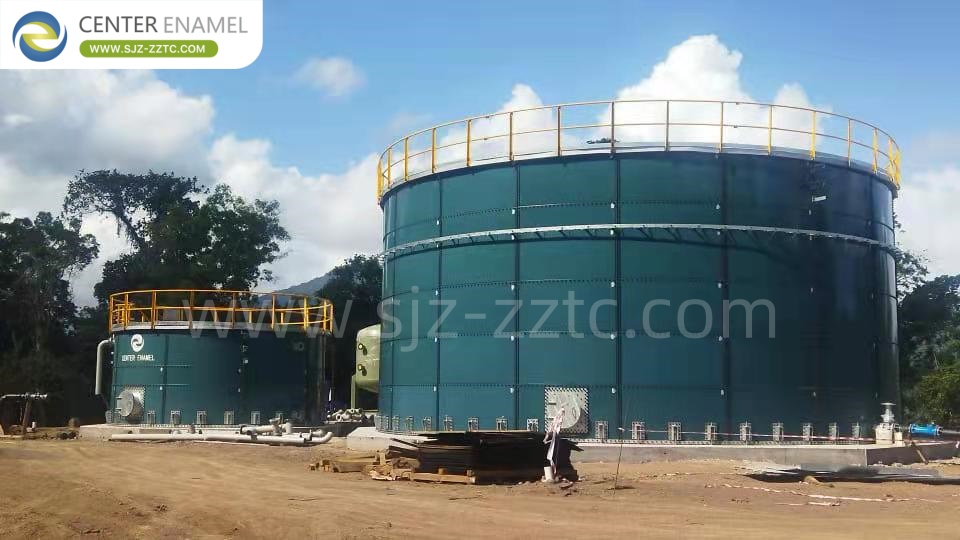
The Policy Squeeze Reshaping Industrial Wastewater Treatment
The global policy framework has tightened considerably. The EU, through its Circular Economy Action Plan, requires member states to raise industrial wastewater reuse rates and extends carbon footprint accounting across the full life cycle of treatment. China continuously updates discharge standards, with increasingly stringent limits on total nitrogen, total phosphorus, and characteristic pollutants for chemicals, pharmaceuticals, and printing and dyeing. Some water-scarce regions and heavily polluting industries are mandated to adopt zero or near-zero liquid discharge. Germany has established a differentiated pretreatment standard system by industry, requiring industrial wastewater to meet specific quality thresholds before discharge into municipal plants. For any Industrial Wastewater Treatment program, these rules translate into a single engineering conclusion: process selection must be source-matched and future-proof.
EGSB Process Defined: A Third-Generation Anaerobic Upgrade
The EGSB Process-Expanded Granular Sludge Bed-is a third-generation anaerobic technology improved from UASB. Its core optimization is elevated upflow velocity, which causes the granular sludge bed to fully expand and suspend, greatly enhancing mass transfer efficiency. It retains UASB's high-efficiency granular sludge reaction while optimizing the distribution system and increasing the tank height-to-diameter ratio. This directly addresses UASB's known limitations: sludge bed accumulation and restricted mass transfer. In an EGSB reactor, granular sludge is fully expanded and suspended, greatly increasing the microbe-pollutant contact area, with stronger adaptability to medium-low concentration, low-temperature, and recalcitrant organic wastewater. The versatility far exceeds traditional UASB-which is why the EGSB Process now anchors so many Industrial Wastewater Treatment designs.
Where Chemical Effluent Comes From-and Why It Matters
Chemical wastewater originates across the entire production chain of petrochemicals, coal chemicals, fine chemicals, fertilizers and pesticides, and consumer chemicals. Key pollution stages include reaction synthesis, raw material refining and separation, product purification and crystallization, catalyst regeneration, and solvent recovery. Auxiliary discharges include equipment and pipeline washing, reactor cleaning, floor washing, cooling water, and scrubber drainage. Petrochemical wastewater is primarily oily wastewater and alkaline residue, rich in hydrocarbons, phenols, and sulfides. Coal chemical wastewater is mainly gasification scrubber water, rich in ammonia nitrogen, cyanides, phenols, and heterocyclic compounds. Fine chemical wastewater carries diverse synthesis intermediates, residual raw materials, and byproducts. Pesticide wastewater contains organophosphorus and organochlorine residues. Generation is continuous, with significant fluctuations as product lines change-large petrochemical plants discharge high continuous volumes, while small and medium chemical plants discharge intermittently with extremely unstable quality. This variability is exactly what the EGSB Process is engineered to absorb.
Tank Material Selection: The Hidden Variable in Treatment Reliability
Process performance depends on containment. Center Enamel has independently developed over 200 specialized enamel frit formulations and supporting patents, customizing anti-corrosion enamel to the storage medium. Concrete tanks use a single material suitable only for neutral clean water; storing corrosive media such as livestock manure, palm oil mill effluent, chemical wastewater, food waste digestate, or high-salinity wastewater requires additional anti-corrosion linings that are prone to failure. GFS tanks can be formulated with specialized enamels resistant to strong acids, strong alkalis, high organic content, and high salinity-a single tank can switch between multiple wastewater and fermentation feedstock storage requirements. They are universally applicable across biogas anaerobic digestion, municipal wastewater, livestock farming, food processing, and industrial water treatment, eliminating the need to rebuild tanks when media change. For diversified, multi-condition Industrial Wastewater Treatment projects, this flexibility is a direct cost advantage.
A Thirty-Year Track Record Behind Every Project
Center Enamel has been engaged in environmental bolted storage equipment for over 30 years. Starting with proprietary enamel anti-corrosion material technology, the company completed a full-industry-chain upgrade from single tank manufacturer to comprehensive environmental EPC service provider. It has been recognized as a National High-Tech Enterprise, National Specialized and Sophisticated "Little Giant," Manufacturing Single Champion, and Provincial Green Factory, and has delivered over 30,000 environmental projects globally. The company has fully integrated enamel frit R&D, intelligent equipment manufacturing, and EPC project contracting-every business breakthrough rooted in proprietary core anti-corrosion technology.
| Milestone | Detail |
| Years in Operation | 30+ |
| Enamel Formulations | 200+ specialized frit formulations |
| Global Projects Delivered | 30,000+ |
| Core Manufacturing Base | 150,000+ m², Hebei Province, China |
| Key Honors | National High-Tech Enterprise, "Little Giant," Manufacturing Single Champion, Provincial Green Factory |
| Full-Chain Scope | Enamel R&D → equipment manufacturing → EPC contracting |
R&D Depth: The Team Sustaining Material Advantage
Center Enamel maintains a full-chain professional team covering R&D, design, marketing, installation, and after-sales. The R&D team is led by national-level materials technology experts specializing in enamel frit and tank anti-corrosion core technologies, with external senior environmental engineering and mechanical structure engineers retained to strengthen capabilities. Work focuses on anti-corrosion coating formulations, specialty corrosion-resistant tanks, and anaerobic supporting integrated equipment. The team operates proprietary laboratories with external university research collaboration, conducting year-round durability pilot testing and long-term corrosion simulation. Specialized enamel formulations are iteratively developed for extreme conditions such as high-salinity wastewater, strong acid/alkali POME, and high-organic livestock manure-supporting the company's annual new invention and utility patents and building a proprietary material technology barrier.
Roof Selection: Matching the Cover to the Application
Not every tank in an Industrial Wastewater Treatment facility requires gas-tight sealing. The FRP Roof is a general-purpose economical cover for atmospheric pressure storage tanks without air-tightness requirements, suitable for drinking water storage, agricultural irrigation, firewater reserve, and general production wastewater temporary storage. It is available in flat and dome styles. The roof is integrally molded from resin and fiberglass-lightweight, naturally water-resistant, and mildly acid/alkali resistant. It will not rust or rot in humid environments, eliminating the frequent anti-corrosion maintenance required for metal roofs.
The dome style offers excellent drainage, resisting water accumulation, dust buildup, snow load, and strong winds; the flat style facilitates maintenance walkways, level gauges, and vents. The product is fully insulated with no galvanic corrosion risk, will not contaminate drinking water quality, and meets environmental standards for domestic water storage. Modular components allow simple on-site hoisting and assembly with high construction efficiency and affordable costs. It is only suitable for atmospheric pressure tanks without biogas collection or pressurization, and is not recommended for anaerobic fermentation gas-producing conditions-making it a cost-effective general-purpose choice for conventional water storage across rural agricultural tanks, industrial park firewater tanks, waterworks buffer tanks, and small to medium domestic wastewater temporary storage.
Frequently Asked Questions
What is the difference between the EGSB Process and UASB?
EGSB increases upflow velocity to fully expand and suspend the granular sludge bed, eliminating UASB's sludge accumulation and mass transfer limitations. It also handles low-temperature, low-concentration, and recalcitrant streams that UASB struggles with.
Why are GFS tanks preferred over concrete for corrosive wastewater?
GFS tanks use specialized enamels formulated for strong acids, alkalis, high organic content, and high salinity. Concrete requires anti-corrosion linings that fail over time, while a single GFS tank can switch between multiple media without rebuilding.
Does Center Enamel handle projects outside China?
Yes. With 30,000+ projects delivered globally and a full EPC scope covering design, manufacturing, and installation, the company supports Industrial Wastewater Treatment programs across Asia, Africa, Europe, and the Americas.
Share your effluent characteristics with our engineers and receive a process recommendation built around the EGSB Process and your site conditions.
Contact Center Enamel today to discuss a complete Industrial Wastewater Treatment scope-from enamel formulation to commissioning.