
How We Use the EGSB Process to Treat High-Strength Chemical Wastewater
High-strength chemical wastewater is among the most challenging industrial effluents to manage. Generated by petrochemical, coal chemical, pharmaceutical, fertilizer, and fine chemical industries, it often contains complex organic compounds, high pollutant concentrations, toxic substances, and corrosive chemicals. These characteristics make conventional wastewater treatment methods insufficient for many industrial applications.
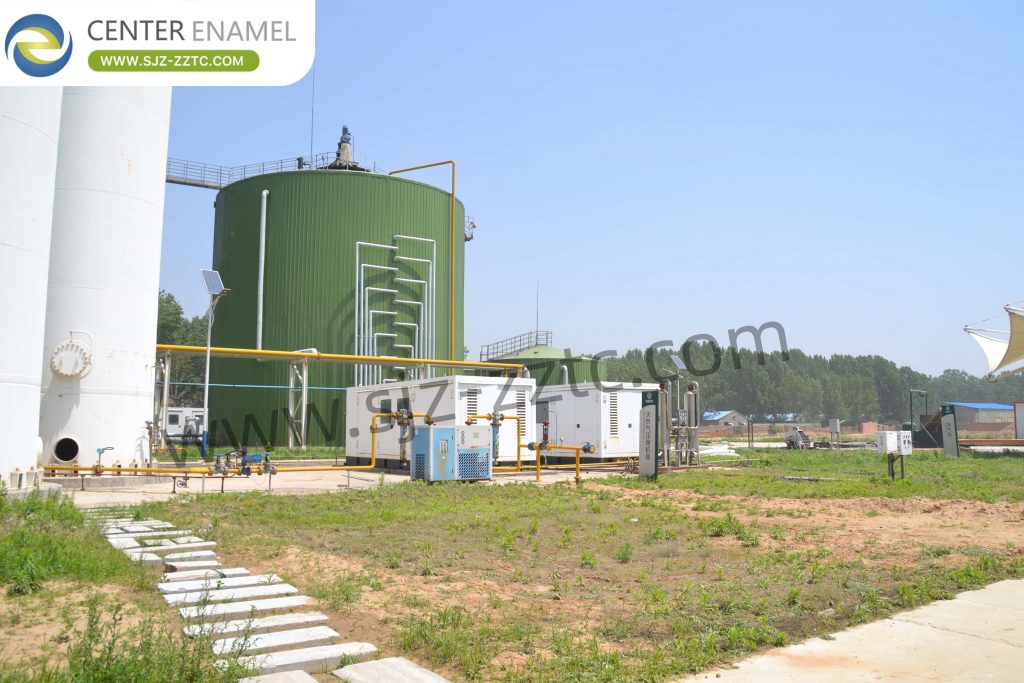
To address these challenges, selecting the right treatment technology and equipment is essential. The EGSB Process (Expanded Granular Sludge Bed) offers an advanced anaerobic treatment option for suitable biodegradable organic wastewater. Combined with durable GFS Tanks, it can support reliable reactor construction and long-term industrial wastewater management.
Center Enamel provides corrosion-resistant tank systems, customized engineering, and supporting equipment for Chemical Wastewater Treatment Plants, helping industrial customers develop treatment facilities adapted to demanding operating environments.
Chemical Wastewater Sources and Treatment Challenges
Chemical wastewater originates from multiple stages of industrial production, including chemical synthesis, raw material refining, product purification, catalyst regeneration, and solvent recovery.
Different industries generate wastewater with distinct characteristics.
| Industry | Main Wastewater Sources | Typical Pollutants |
| Petrochemical | Refining, separation, and alkaline residue discharge | Hydrocarbons, phenols, sulfides |
| Coal Chemical | Gasification and gas scrubbing | Ammonia nitrogen, cyanides, phenols |
| Fine Chemical | Chemical synthesis and product purification | Organic intermediates and residual chemicals |
| Fertilizer | Production and equipment cleaning | Ammonia nitrogen and inorganic pollutants |
| Pesticide | Synthesis and production washing | Organophosphorus and organochlorine compounds |
In addition to production wastewater, equipment cleaning, pipeline washing, floor washing, cooling water, and scrubber drainage also contribute to total wastewater discharge.
The main treatment challenges include complex compositions, fluctuating pollutant concentrations, poor biodegradability, and potentially toxic substances.
Large petrochemical facilities typically generate continuous wastewater flows, while small and medium-sized chemical plants may experience intermittent discharge and significant water quality variations.
Consequently, Chemical Wastewater Treatment Plants require flexible treatment configurations and equipment capable of withstanding long-term chemical exposure.
Understanding the EGSB Process for Chemical Wastewater Treatment
EGSB, or Expanded Granular Sludge Bed, is a third-generation anaerobic treatment technology developed from the UASB process.
Its main improvement is the increased upflow velocity, which causes granular sludge to expand and suspend inside the reactor. This increases contact between microorganisms and organic pollutants while improving mass transfer efficiency.
The EGSB Process generally involves four operating stages:
Influent Distribution: Pretreated wastewater enters the reactor through a uniform bottom distribution system, helping maintain stable hydraulic conditions.
Granular Sludge Expansion: Upward wastewater flow expands the granular sludge bed, creating a suspended biological reaction zone.
Anaerobic Degradation: Anaerobic microorganisms break down biodegradable organic pollutants, generating biogas, treated water, and excess sludge.
Three-Phase Separation: The upper separator separates gas, liquid, and solid components. Biogas is collected, sludge returns to the reaction zone, and treated effluent flows out.
Compared with conventional UASB systems, EGSB improves sludge expansion and mass transfer through higher upflow velocity and optimized reactor configuration.
It is particularly applicable to medium- and low-concentration, low-temperature, and certain refractory organic wastewater conditions. For high-strength chemical wastewater, pretreatment and biodegradability assessment remain essential before selecting this technology.
GFS Tanks: Reliable Reactor Structures for Corrosive Conditions
While treatment technology determines biological performance, reactor materials directly affect equipment durability and maintenance requirements.
Chemical wastewater may contain acids, alkalis, salts, and other aggressive substances that gradually damage conventional tank structures.
Center Enamel's GFS Tanks use independently developed double-sided, double-layer enameling technology. Steel panels undergo high-temperature enameling to create a dense, protective glass coating on both surfaces.
Compared with conventional concrete tanks, GFS Tanks offer several important advantages:
Superior Corrosion Resistance
The enamel coating provides resistance to acids, alkalis, salts, and microbial corrosion, making it suitable for demanding industrial wastewater environments.
Long Service Life
Center Enamel's technical information indicates that GFS tank corrosion protection can exceed 30 years, reducing the need for frequent internal lining repairs.
Reduced Leakage Risks
The dense enamel surface provides a protective barrier against corrosive liquids and helps reduce the risk of tank deterioration and leakage.
Modular Construction
Factory-manufactured steel panels are transported and assembled on-site, allowing flexible tank dimensions and efficient installation.
| Comparison | Traditional Concrete Tanks | Center Enamel GFS Tanks |
| Main Structure | Reinforced concrete | Enamel-coated steel panels |
| Corrosion Protection | Concrete surface and protective lining | Double-sided enamel coating |
| Chemical Resistance | Vulnerable to certain aggressive media | Resistant to acids, alkalis, salts, and microbial corrosion |
| Maintenance | Potential lining and structural repairs | Reduced need for internal lining repairs |
| Installation | On-site concrete construction | Modular panel assembly |
| Corrosion Protection Life | Original material notes deterioration concerns after 5–8 years | Exceeds 30 years according to company technical information |
These characteristics make GFS Tanks a practical choice for anaerobic reactors, equalization tanks, and other storage facilities within Chemical Wastewater Treatment Plants.
Complete Treatment Configurations for Complex Chemical Effluents
EGSB alone cannot address every pollutant found in chemical wastewater. A more comprehensive treatment system generally combines multiple technologies according to wastewater characteristics and discharge requirements.
A typical treatment configuration includes:
Segregated Pretreatment → Advanced Oxidation → Anaerobic Treatment → Aerobic Treatment → Advanced Treatment
| Treatment Stage | Recommended Technologies | Main Purpose |
| Pretreatment | Oil separation, DAF, chemical precipitation, evaporation crystallization | Remove specific pollutants and reduce treatment loads |
| Advanced Oxidation | Fenton, ozone catalytic oxidation, electrochemical oxidation | Improve biodegradability and break down refractory organics |
| Anaerobic Treatment | EGSB, UASB, or IC | Degrade biodegradable organic pollutants |
| Aerobic Treatment | A/O or SBR | Further reduce organic pollutants |
| Advanced Treatment | Activated carbon, reverse osmosis, evaporation crystallization | Improve effluent quality and support water reuse |
For example, oily wastewater may require oil separation and dissolved air flotation, while cyanide-containing wastewater needs dedicated chemical destruction.
High-salinity wastewater may require evaporation crystallization or specialized biological acclimation. The appropriate process combination should be determined through wastewater testing and engineering evaluation.
Center Enamel's GFS Tanks can serve as core equipment in selected treatment stages, providing corrosion-resistant containment for industrial wastewater applications.
Center Enamel's Enamel Technology and Engineering Capabilities
The performance of GFS Tanks depends heavily on coating quality and manufacturing consistency.
Center Enamel has independently developed more than 200 anti-corrosion enamel formulations and proprietary double-sided, double-layer enameling technology.
This material technology supports customized tank solutions for chemical wastewater, livestock manure, palm oil mill effluent, and biogas fermentation applications.
Beyond manufacturing, Center Enamel has established domestic and international professional installation teams.
Its construction personnel receive regular practical training in GFS tank installation and overseas construction standards. Regional teams can support multiple domestic projects, while international installation teams provide construction support for overseas facilities.
This manpower and technical preparation helps coordinate installation requirements across different geographical environments, including remote African locations and high-standard European and American industrial facilities.
FRP Roof Covers for Conventional Wastewater Storage Tanks
In addition to GFS Tanks, selecting an appropriate roof system is important for protecting wastewater storage facilities.
Center Enamel's FRP Roof is an economical covering option for atmospheric-pressure storage tanks that do not require airtight sealing.
Manufactured from resin and fiberglass, it features a lightweight structure, natural water resistance, and resistance to mild acid and alkali corrosion.
Two configurations are available:
FRP Dome Roof: Its curved structure provides effective drainage and helps reduce water accumulation and dust buildup.
FRP Flat Roof: Its flat surface facilitates the installation of maintenance walkways, vents, and monitoring equipment.
FRP roofs are suitable for drinking water, agricultural irrigation, firewater reserves, and conventional production wastewater storage.
However, they are not recommended for anaerobic fermentation tanks requiring airtight biogas collection or pressurized operation. Such applications require an appropriately engineered gas-tight roof system.
Customized Solutions for Chemical Wastewater Treatment Plants
Building a reliable chemical wastewater facility requires more than selecting a reactor. Tank materials, corrosion protection, installation conditions, and supporting structures must work together.
Center Enamel combines proprietary enamel material technology, GFS tank manufacturing, customized equipment design, and professional construction teams to support international environmental engineering projects.
From anaerobic reactor structures to conventional wastewater storage tanks, its equipment solutions can be adapted to different industrial requirements.
By integrating suitable EGSB technology with corrosion-resistant GFS Tanks and carefully selected treatment processes, industrial customers can establish more durable and efficient Chemical Wastewater Treatment Plants.
Frequently Asked Questions
Can the EGSB Process treat high-strength chemical wastewater?
Yes, for suitable biodegradable organic wastewater. However, toxic compounds, excessive salinity, and refractory pollutants may require pretreatment or advanced oxidation before anaerobic treatment.
Why are GFS Tanks suitable for Chemical Wastewater Treatment Plants?
GFS Tanks feature a double-sided enamel coating that resists acids, alkalis, salts, and microbial corrosion. Their modular construction and long-term corrosion protection make them suitable for demanding industrial applications.
Can Center Enamel provide customized wastewater treatment equipment?
Yes. Center Enamel provides GFS Tanks, supporting tank covers, customized equipment manufacturing, and professional installation services for industrial wastewater and environmental engineering projects.
Planning to build or upgrade a Chemical Wastewater Treatment Plant? Contact Center Enamel to discuss your wastewater characteristics and receive professional tank engineering recommendations.