
How We Use the EGSB Process to Treat High-Strength Chemical Wastewater
High-strength chemical wastewater is one of the most challenging industrial effluents to treat. Its complex composition, high COD concentration, poor biodegradability, elevated salinity, and potentially toxic substances can significantly affect conventional biological treatment systems. Without appropriate pretreatment and process selection, treatment facilities may experience unstable operation, insufficient pollutant removal, and increased maintenance costs.
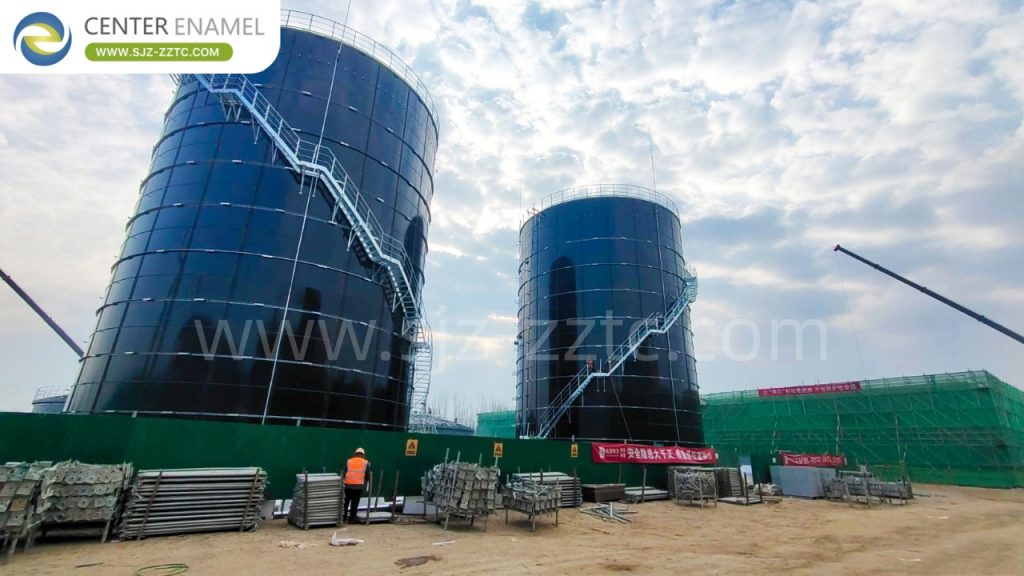
To address these challenges, Center Enamel combines advanced anaerobic treatment technologies, specialized equipment, and customized Wastewater Treatment Solutions. Among these technologies, the EGSB Process (Expanded Granular Sludge Bed) provides an effective option for treating suitable high-organic-load wastewater.
As a professional manufacturer of GFS Tanks and environmental engineering solutions, Center Enamel provides corrosion-resistant tank systems, supporting equipment, and integrated engineering services to help industrial customers build reliable wastewater treatment facilities.
Why High-Strength Chemical Wastewater Requires Specialized Treatment
Chemical wastewater varies considerably depending on production processes, raw materials, and industrial operations. Unlike conventional domestic sewage, it may contain multiple pollutants that are difficult to remove through a single treatment technology.
Typical challenges include:
High organic concentration: Elevated COD creates substantial treatment loads.
Poor biodegradability: Refractory organic compounds can limit biological treatment efficiency.
High salinity: Excessive inorganic salts may inhibit microbial activity.
Toxic substances: Phenols, cyanides, sulfides, and heavy metals may affect biological systems.
Unstable water quality: Production fluctuations can cause sudden changes in wastewater composition and pH.
These conditions require a carefully designed treatment train rather than relying exclusively on anaerobic digestion.
For industrial facilities, selecting suitable reactors and corrosion-resistant storage equipment is equally important. This is where integrated Wastewater Treatment Solutions combining process engineering and GFS Tanks provide practical value.
EGSB Process: An Efficient Anaerobic Treatment Technology
The EGSB Process uses highly active anaerobic granular sludge to break down biodegradable organic pollutants under oxygen-free conditions.
Its operating principle relies on high upflow velocity, which expands the granular sludge bed and increases contact between microorganisms and wastewater.
The treatment process generally consists of four stages.
Influent Distribution and Equalization
Wastewater first undergoes pretreatment and flow equalization to reduce fluctuations in water quality and hydraulic loading. A uniform distribution system then introduces wastewater into the bottom of the EGSB reactor.
Granular Sludge Expansion
As wastewater flows upward, the increased hydraulic velocity causes anaerobic granular sludge to expand and become suspended, forming an active reaction zone.
Anaerobic Organic Degradation
Microorganisms within the granular sludge degrade biodegradable organic pollutants, producing biogas, treated water, and a relatively small amount of excess sludge. Rising biogas also promotes mixing and mass transfer.
Three-Phase Separation
At the top of the reactor, a three-phase separator separates gas, liquid, and solid components. Biogas is collected, granular sludge returns to the reaction zone, and treated effluent flows out of the system.
This process enables efficient organic degradation when wastewater characteristics and operating conditions are suitable.
EGSB Supporting Equipment and GFS Tank Configuration
Stable EGSB operation depends not only on biological processes but also on equipment configuration and hydraulic control.
Center Enamel's EGSB supporting equipment system integrates several components to maintain sludge expansion, improve separation, and support continuous operation.
| Equipment | Main Function |
| GFS Anaerobic Reactor | Provides the main reaction space for anaerobic treatment |
| Three-Phase Separator | Separates biogas, treated water, and granular sludge |
| Uniform Distribution System | Ensures even wastewater distribution |
| Influent Lift Pumps | Maintain the required upflow velocity |
| Equalization Tank | Balances influent flow and water quality |
| Biogas Collection System | Collects and transfers generated biogas |
| Online Monitoring Instruments | Monitors temperature, pH, and COD |
| Sludge Discharge and Return System | Maintains appropriate granular sludge concentration |
Among these components, GFS Tanks play an important role as the main reactor structure.
Their modular construction, corrosion-resistant surfaces, and adaptability to customized dimensions make them suitable for various industrial wastewater and anaerobic treatment applications.
However, the reactor structure must be designed according to hydraulic loading, operating pressure, wastewater properties, and site conditions to ensure system compatibility.
Why GFS Tanks Are Suitable for Corrosive Wastewater Environments
Chemical wastewater treatment facilities frequently operate under demanding conditions involving acids, alkalis, salts, and biological corrosion.
Traditional concrete tanks may develop seepage, surface deterioration, and reinforcement corrosion after prolonged exposure to aggressive wastewater. Repairing internal linings can also increase maintenance costs.
Center Enamel's GFS Tanks use independently developed double-sided, double-layer enameling technology. Steel panels undergo high-temperature enameling to create a dense, non-porous protective surface.
Key advantages include:
Excellent Corrosion Resistance
The enamel coating provides protection against various acidic, alkaline, saline, and microbial corrosion conditions, making it suitable for demanding wastewater applications.
Long-Term Durability
According to Center Enamel's technical information, GFS tank corrosion protection can exceed 30 years, reducing the need for frequent internal lining repairs.
Reliable Coating Performance
The fused enamel surface avoids the typical peeling and blistering risks associated with conventional applied coating systems when properly manufactured and maintained.
Modular Installation
Factory-produced steel panels can be transported and assembled on-site, supporting flexible project layouts and convenient installation.
Compared with conventional concrete and FRP storage structures, GFS Tanks offer an attractive combination of corrosion protection, installation flexibility, and long-term maintenance advantages.
Integrated Treatment Train for Complex Chemical Wastewater
Although EGSB technology can efficiently treat suitable biodegradable organic wastewater, complex chemical effluent often requires multiple treatment stages.
Center Enamel's recommended approach follows a combined treatment train:
Segregated Pretreatment → Advanced Oxidation → Anaerobic Treatment → Aerobic Treatment → Advanced Treatment
| Treatment Stage | Typical Technology | Main Objective |
| Pretreatment | Oil separation, DAF, chemical precipitation, evaporation crystallization | Remove specific pollutants and reduce treatment interference |
| Advanced Oxidation | Fenton, ozone catalytic oxidation, electrochemical oxidation | Break down refractory organic compounds |
| Anaerobic Treatment | EGSB, IC, or UASB where appropriate | Degrade biodegradable organic pollutants |
| Aerobic Treatment | A/O or SBR | Further remove organic pollutants |
| Advanced Treatment | Activated carbon, reverse osmosis, evaporation crystallization | Improve effluent quality and support reuse |
Different wastewater streams require different pretreatment methods. For example, oily wastewater may require oil separation and dissolved air flotation, while high-cyanide wastewater requires dedicated cyanide destruction.
High-salinity wastewater may need evaporation crystallization or specialized biological acclimation before entering the main biological treatment stage.
By combining appropriate treatment technologies with corrosion-resistant GFS Tanks, industrial facilities can develop more adaptable Wastewater Treatment Solutions for complex operating conditions.
Mali and Guinea Beverage Factory Projects: Practical Engineering Experience
In addition to chemical wastewater applications, Center Enamel has delivered wastewater treatment equipment for food and beverage industries, demonstrating its experience in customized industrial wastewater engineering.
In 2024, Center Enamel simultaneously implemented wastewater treatment projects for two beverage factories in Mali and Guinea.
Each facility was designed with a daily treatment capacity of 100 m³, addressing organic wastewater generated by beverage production, particularly high-sugar wastewater.
Project Specifications
| Project Parameter | Details |
| Project Locations | Mali and Guinea |
| Implementation Year | 2024 |
| Number of Projects | 2 |
| Daily Treatment Capacity | 100 m³ per facility |
| Treatment Process | DAF + Hydrolysis Acidification + Biological Contact Oxidation + Sedimentation + Ozone Oxidation |
| Main Equipment | Center Enamel GFS Tanks |
| Main Objective | Industrial Organic Wastewater Treatment |
The treatment system uses DAF to remove suspended solids, biological treatment to degrade organic pollutants, and ozone oxidation to improve final effluent quality.
The modular GFS tank configuration supports convenient installation and operation and maintenance.
Although these projects use a different treatment process from EGSB, they demonstrate Center Enamel's ability to provide customized equipment and engineering solutions for different industrial wastewater characteristics.
Center Enamel's Complete Product Portfolio and Engineering Capabilities
Beyond GFS Tanks, Center Enamel has developed a comprehensive product portfolio covering storage tanks, roof systems, pressure vessels, and environmental engineering services.
This integrated manufacturing capability allows customers to obtain compatible equipment for different stages of wastewater treatment projects.
| Product Category | Main Features | Typical Applications |
| GFS Tanks | Double-layer enamel coating, corrosion resistance, modular assembly | Chemical wastewater, biogas, anaerobic reactors |
| FBE Tanks | Fusion-bonded epoxy coating | Drinking water and firewater storage |
| Aluminum Dome Covers | Lightweight, self-supporting structure | Tank sealing and biogas collection |
| Stainless and Carbon Steel Tanks | Customized structural configurations | Industrial storage and processing |
| Pressure Vessels | Customized separation, reaction, and storage equipment | Industrial process applications |
In addition to equipment manufacturing, Center Enamel undertakes environmental EPC general contracting and anaerobic process subcontracting.
Its engineering services cover food waste, landfill leachate, municipal wastewater, livestock biogas, petrochemical wastewater, metallurgy, and seawater desalination.
This product-and-process integration helps reduce equipment compatibility issues and simplifies coordination between manufacturing, engineering, and construction teams.
Global Project Support and After-Sales Services
Successful wastewater treatment projects require reliable support beyond equipment delivery.
Center Enamel has established an international service network through regional sales centers and overseas local agent partnerships.
Its service system includes four main areas:
24/7 Response: Technical communication and rapid response to customer requirements.
Installation Support: Domestic and overseas on-site installation services.
Project Management: Coordination throughout equipment delivery and construction.
Long-Term Maintenance: Warranty support, inspections, and after-sales assistance.
From preliminary site surveys to installation management and long-term maintenance, this service framework helps customers coordinate different project stages more efficiently.
For international industrial wastewater projects, this combination of equipment manufacturing, engineering capabilities, and after-sales support provides a practical foundation for long-term cooperation.
Frequently Asked Questions
Can the EGSB Process treat all types of high-strength chemical wastewater?
No. EGSB is suitable for wastewater containing biodegradable organic pollutants. Toxic substances, excessive salinity, and refractory compounds may require pretreatment, advanced oxidation, or alternative biological technologies.
Why choose GFS Tanks for chemical wastewater treatment?
GFS Tanks feature a dense, fused enamel coating that provides excellent resistance to corrosion from acids, alkalis, salts, and microorganisms. Their modular structure also supports convenient transportation and installation.
Does Center Enamel provide complete Wastewater Treatment Solutions?
Yes. Center Enamel provides GFS Tanks, supporting equipment, anaerobic process subcontracting, environmental EPC services, installation support, and after-sales assistance for various industrial wastewater applications.
Looking for reliable GFS Tanks and integrated Wastewater Treatment Solutions? Get in touch with our technical team today to explore the right solution for your industrial facility.