
End-to-End Industrial Wastewater Treatment Project EPC Contractor Built on GFS Tanks
The competitive landscape of industrial wastewater treatment is diverging fast. Leading firms are assembling integrated service capabilities through technical integration and capital operations, and industry concentration is climbing. Chinese manufacturers continue to consolidate their edge in mid-tier equipment exports. International giants pursue high-end customers and the most complex industrial streams, while local players hold the mid-to-low-end and industrial-park centralized treatment markets through service responsiveness and cost control.
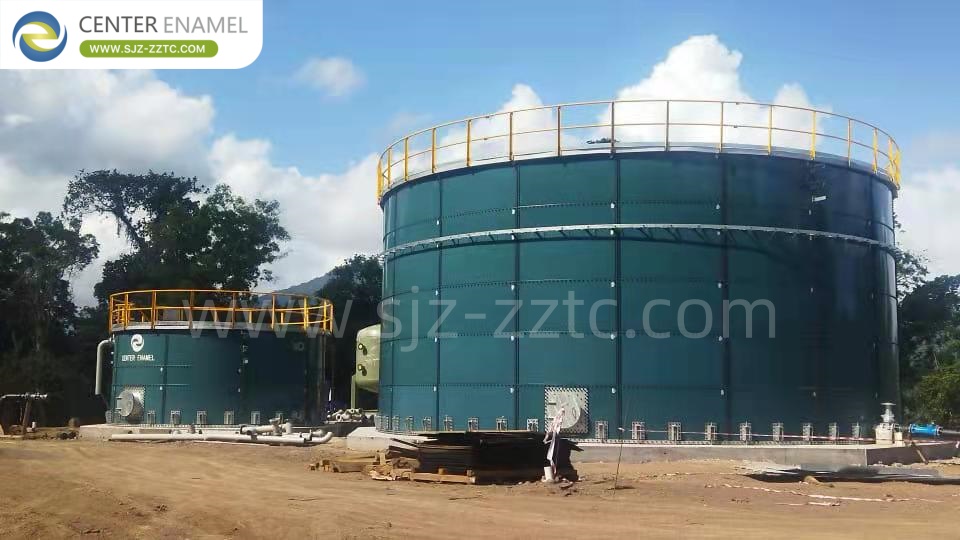
At the process level, anaerobic reactors-UASB, EGSB, and IC-dominate high-concentration organic pretreatment across food processing, pharmaceutical fermentation, alcohol brewing, and chemicals, prized for high loading rates, small footprints, and stable operation. Every one of these reactors depends on a steel tank shell, and that shell's corrosion resistance and gas tightness decide long-term operational stability. This is precisely where the choice of an experienced Industrial Wastewater Treatment Project EPC Contractor and proven GFS Tanks becomes decisive.
Why GFS Tanks Outperform Concrete Containment
Center Enamel's independently developed double-sided, double-layer enameling technology represents the industry's leading coating anti-corrosion solution, with corrosion resistance that completely surpasses concrete tanks. Concrete interiors are riddled with pores that allow wastewater and acid/alkaline media to penetrate and attack the structural layer. Over time this produces irreversible internal wall spalling, water seepage, and rebar corrosion-problems that are difficult to repair and cannot be fundamentally resolved.
GFS Tanks apply high-temperature enamel to both interior and exterior steel panel surfaces. The dense, non-porous finish completely blocks corrosive liquids and biogas permeation, while the enamel layer delivers exceptional chemical stability against acids, alkalis, salts, and microbial attack.
| Tank Type | Corrosion/Leak Onset | Anti-Corrosion Service Life | Maintenance Profile |
| Concrete | 5–8 years | Limited by structural decay | Frequent lining repair |
| GFS (enamel) | No permeation | 30+ years | No routine lining work |
Concrete tanks develop extensive corrosion and leakage after just 5–8 years, whereas GFS Tanks exceed 30 years of anti-corrosion service with no need for frequent internal lining repairs-significantly reducing long-term maintenance investment and eliminating the environmental risk of medium leakage contaminating sites and groundwater. Unlike concrete and FRP alternatives, GFS coatings carry no risk of peeling or blistering and handle highly corrosive conditions such as palm oil mill effluent, livestock manure, and chemical high-salinity wastewater, delivering outstanding long-term comprehensive cost advantages.
Inside the IC Reactor Package
Core equipment is the GFS tank itself, fitted with a built-in gas-lift internal circulation system and upper/lower three-phase separators-the key components enabling autonomous circulation and sludge–water separation. A bottom precision distribution system and pressure-regulating feed device ensure uniform, stable influent. Supporting equipment includes influent lift pumps, equalization tanks, and flow meters for precise influent control, plus top-mounted high-efficiency biogas collection, desulfurization, dehydration, and storage integrated equipment. High-precision online monitoring tracks temperature, pH, COD, and level in real time, while dedicated bottom and mid-section sludge discharge pipes and recirculation controls eliminate the need for external return pumps. The complete system is highly integrated, with no excess external equipment, a compact structure, and high automation.
Dairy Wastewater: A Standardized Treatment Train
Dairy effluent is high-oil, high-protein, and readily biodegradable, and a mature train of "oil separation pretreatment + anaerobic digestion + aerobic treatment + advanced treatment" fits it perfectly. Pretreatment uses screens to remove packaging debris and equalization tanks to balance flow. Oil separation tanks and DAF units remove free and emulsified oil before it can foul biological systems and membranes. High-concentration CIP wastewater is collected separately and fed in batches to avoid shock loading.
The main stage applies UASB/IC anaerobic processes for high-efficiency degradation-lactose and milk proteins break down readily with high biogas production and significant energy recovery. Subsequent A/O or contact oxidation aerobic processes deeply degrade residual organics and remove nitrogen and phosphorus, and final sedimentation, filtration, and disinfection ensure compliance. Anaerobic digesters use Center Enamel GFS Tanks resistant to milk fatty acids and hydrogen sulfide corrosion. The entire process is simple, stable, and suited to dairy's intermittent discharge patterns.
A Complete Product Matrix Under One Roof
Center Enamel has built a complete matrix of "core storage tanks + supporting covers + specialty pressure vessels + complete environmental engineering services"-the only company globally to achieve integrated enamel frit R&D, self-manufacturing, and GFS tank application.
| Category | Product | Primary Application |
| Core | Proprietary GFS Tanks | Strong-corrosion wastewater, biogas, chemical |
| Supporting | Fusion Bonded Epoxy Tanks | Drinking water, fire water, neutral media |
| Sealing | Aluminum Dome Covers | Tank sealing, biogas collection |
| Other | Carbon/stainless steel, composting tanks, pressure vessels | Non-standard and specialty duty |
| Services | Environmental EPC contracting, anaerobic subcontracting | Food waste, leachate, municipal, livestock, petrochemical |
Proprietary GFS Tanks use double-sided hot-rolled double-layer enamel anti-corrosion technology-resistant to strong acids/alkalis, high salinity, and microbial corrosion-with modular quick assembly for all strongly corrosive wastewater, biogas, and chemical conditions. Fusion bonded epoxy tanks roll off China's first intelligent standardized production line, serving drinking water, fire water, and neutral media. Engineering services span environmental EPC general contracting and anaerobic process section subcontracting, with one-stop coverage across food waste, leachate, municipal wastewater, livestock biogas, petrochemical/metallurgical, and seawater desalination industries.
Sealing the Top: Aluminum Geodesic Dome Roofs
The Aluminum Geodesic Dome Roof is manufactured from high-strength aluminum alloy plates through integral stamping, forming a triangular-grid spherical self-supporting structure that covers large spans without internal support columns. Aluminum alloy delivers excellent weather and corrosion resistance against acid rain, salt spray, and UV radiation across extreme climates. The design complies with international AWWA D108 standards, with plate thickness, rib cross-sections, and joint connections verified by finite element stress analysis for wind and snow loads across global regions.
Weighing only one-third to one-half of a steel roof at the same span, the dome significantly reduces tank-top load and installs directly without wall reinforcement. Double sealing between panels-specialized sealant strips plus mechanical interlocking-enables both airtight gas storage and enclosed odor control, ideal for biogas collection, wastewater tank odor control, and drinking water protection. The column-free design leaves mixers and distributors unobstructed, and aluminum does not support microbial growth, requiring no anti-corrosion maintenance over its life cycle.
Global Reach, Local Insight
The marketing team brings together environmental industry multi-skilled professionals and multilingual foreign trade specialists with deep expertise in global biogas, wastewater, and biomass new energy markets, backed by practical project experience across Southeast Asia, Africa, Europe, and the Americas. The team is proficient in various countries' wastewater discharge regulations, biogas subsidy policies, and carbon trading rules, providing one-stop preliminary site survey, solution planning, and investment return analysis. With English, French, Spanish, and Arabic capabilities, the team precisely matches regional industrial resources, project budgets, and environmental requirements-customizing high-cost-performance GFS Tanks and anaerobic reactor solutions based on production capacity, treatment targets, and gas production expectations, while proactively helping clients avoid risks in overseas approvals, equipment import, and construction implementation.
Frequently Asked Questions
What does your EPC scope cover?
Full environmental EPC contracting plus anaerobic process subcontracting-design, equipment manufacturing, construction, and commissioning.
Are GFS Tanks suitable for high-salinity or high-sulfide wastewater?
Yes. The enamel layer resists acids, alkalis, salts, and microbial corrosion, with 30+ years of service life.
Can you supply roofs for biogas collection?
Yes-aluminum geodesic dome roofs meet AWWA D108 and provide airtight sealing for gas storage and odor control.
Share your project brief and discharge targets-our engineers will return a tailored EPC scope and tank specification within days. Partner with Center Enamel to build containment that outlasts the process it protects.