
EPC Contractor Delivers GFS Tanks and CSTR Process for Ghana Pig Farm Biogas Project
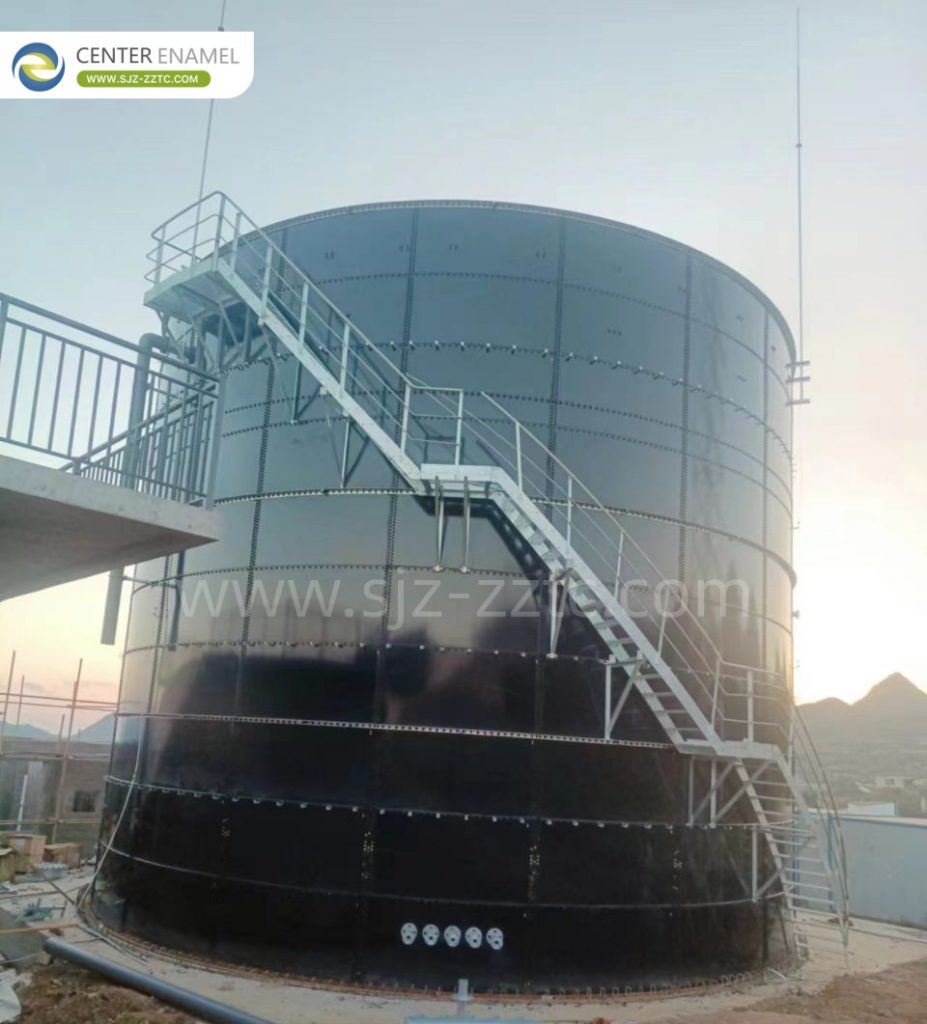
Ghana's agricultural sector is the backbone of its rural economy, and livestock farming—particularly pig production—has expanded significantly in recent years. The Pig Farmers Association of Ghana has confirmed that waste management on farms remains a critical challenge, with many farmers relying on rudimentary storage methods or direct environmental discharge. This has caused substantial degradation to the country's fertile soil and precious water resources.
Research conducted in agricultural communities across Ghana has revealed that organic manure from livestock operations accounts for approximately 74% of nitrate contamination in affected groundwater supplies. In nine communities studied, nitrate levels exceeded the World Health Organization's recommended limit of 50 milligrams per liter, raising serious health concerns, particularly for infants at risk of methemoglobinemia.
Furthermore, Ghana generates approximately 237.72 normal million cubic meters of biogas potential annually from animal manure, with pigs contributing significantly to this resource. The uncontrolled decomposition of manure releases harmful greenhouse gases and creates pervasive odor issues that negatively impact farm staff and surrounding communities. These environmental challenges have created a critical demand for modern, sustainable, and regulatory-compliant waste treatment infrastructure across Ghana.
The Multifaceted Benefits of Converting Pig Manure to Biogas
Transforming pig manure into biogas offers numerous advantages for Ghanaian farms and communities:
Mitigates Environmental Pollution: The anaerobic digestion process captures methane that would otherwise escape into the atmosphere, significantly reducing the farm's carbon footprint. Proper waste management also prevents harmful contaminants from leaching into groundwater and soil.
Generates Renewable Energy and Reduces Costs: Biogas provides a clean, renewable source of cooking fuel and electricity. Farmers can save up to GH¢54,000 over 10 years by adopting biogas systems instead of traditional fuels. The biogas produced can be harnessed for heating, electricity generation, or upgraded to biomethane as vehicle fuel.
Creates Valuable Biofertilizer: The digestate produced is nutrient-rich and can generate approximately 150 litres of liquid fertiliser per day—up to 36,000 litres annually. Research confirms that anaerobic digestion increases nutrient concentration, particularly nitrogen, indicating strong potential as a biofertilizer.
Enhances Biosecurity: Proper waste management through biogas systems helps avoid biosecurity problems previously encountered on pig farms. As the Pig Farmers Association president noted, "When we handle this correctly, we can avoid many of the biosecurity problems we previously encountered".
Center Enamel: A Leading EPC Contractor for Biogas Projects in Ghana
Center Enamel is a global leader in the water, wastewater, and biogas sectors. As the largest manufacturer of GFS Tanks in Asia, with over 250,000 tank sheets produced annually, we are more than a manufacturer—we are a comprehensive EPC Contractor offering full Engineering, Procurement, and Construction services for Biogas Projects worldwide.
For Ghana, where farms often operate in remote locations with challenging logistics, Center Enamel provides complete turnkey solutions. Our EPC Contractor capabilities mean we handle everything from initial site assessment and design to manufacturing, shipping, and installation of the biogas plant. We have successfully delivered and installed state-of-the-art anaerobic digester tanks for transformative biogas projects in Ghana, demonstrating our commitment to providing innovative solutions for the nation's environmental challenges.
With 36+ years of experience in over 100 countries, we understand Ghana's tropical climate, local regulations, and the need for scalable, affordable solutions. Our anaerobic digester tanks are specifically designed to withstand the region's high humidity, heavy rainfall, and potential exposure to corrosive elements.
The Full Process: From Waste to Energy
The journey from pig manure to clean energy follows a carefully engineered sequence designed to maximize efficiency and output.
1. Pre-treatment Stage:
The process begins with screening to remove larger solid impurities, followed by crushing to ensure uniform particle size. A homogenization tank then removes sand and heavier particles, stabilizing flow and creating a consistent mixture for the main reactor.
2. CSTR Process:
At the heart of the plant lies the CSTR (Continuous Stirred-Tank Reactor) , the core technology for converting organic waste into biogas and digestate through anaerobic microorganisms.
The Core Technology: The CSTR Process
The CSTR Process is an anaerobic treatment technology where fermentation materials and microorganisms are fully mixed in a closed tank. The CSTR reactor is equipped with a mechanical stirring device that is key to its effectiveness.
Through continuous or semi-continuous feeding at a constant temperature, the highly concentrated, suspended-solids-rich wastewater is maintained in a complete-mix state with the anaerobic microbes. This intimate contact maximizes organic matter degradation and ensures high biogas yields. Research has demonstrated that codigestion in CSTR reactors achieves optimal performance at an organic loading rate of 3.67 kgVSadd/m³reactor/day, yielding methane productivity of 1.91 LNCH4/Lreactor/day. This technology is particularly effective for the high-solid, high-organic content typical of pig manure.
Premium Infrastructure: GFS Tanks and Double Membrane Roof
The tanks housing the CSTR Process must be exceptionally durable, which is why Center Enamel's solutions are built around world-class GFS Tanks.
GFS Tanks (Glass-Fused-to-Steel): These are the premium choice for Biogas Projects. By firing molten glass at 820°C to 930°C, it fuses to the steel surface, creating an inert, inorganic bond. This gives the tank the strength of steel and outstanding corrosion resistance—essential for resisting the acidic, corrosive environment inside a digester. GFS Tanks provide a service life exceeding 30 years and are designed to withstand Ghana's tropical climate variations.
Double Membrane Roof: For biogas storage and collection, a Double Membrane Roof is the preferred solution, offering significant advantages:
Cost Optimization: Directly reduces overall roof costs compared to traditional structures.
Space Efficiency: Significantly reduces the plant footprint, saving valuable land and eliminating foundation costs for ground-mounted gas holders.
Key Advantages of Center Enamel's Biogas Project Solutions
Center Enamel's approach to Ghana's Biogas Projects is built on key pillars:
Superior Corrosion Resistance: The GFS coating provides robust protection against the extremely corrosive digester environment, essential for Ghana's humid climate.
Rapid and Efficient Installation: Our bolted tank design requires zero on-site welding, enabling faster assembly and shorter project timelines. Installation takes only 7-10 days compared to 20-35 days for traditional tanks.
Customized Design: We tailor solutions to fit each farm's specific needs—from tank size to mixing system choice—ensuring optimal efficiency.
Minimal Maintenance Requirements: The durable coating minimizes maintenance requirements, reducing operational expenses and maximizing uptime.
Comprehensive Supporting Equipment
A successful Biogas Project requires more than just a main reactor. Center Enamel supplies a full suite of supporting equipment:
Gas Holder: For safe biogas storage.
Solid-liquid Separator: For separating liquid and solid fractions of the digestate.
Torch System: For safe flaring of excess gas.
Dehydration and Desulfurization Tank: To purify biogas and protect downstream equipment.
Lifting Pumps and Piping: For efficient slurry movement.
Screw Sludge Dewatering Machine: For further processing of solid digestate.
Efficient Installation and Global Expertise
Center Enamel's installation process is a key advantage for Ghana. We use a hydraulic jacking system that allows for top-down assembly without extensive scaffolding, making it ideal for remote sites. Our professional installation teams have extensive experience in African markets and can commission your plant quickly and efficiently.
The modular design of our tanks allows for quick and efficient installation, minimizing project timelines and reducing overall costs—crucial for rapid deployment in developing infrastructure. We are fully certified to international standards, including CE/EN1090, ISO9001, NSF61, and AWWA D103, ensuring that your Biogas Project meets the highest quality and safety benchmarks.
Center Enamel: Your Trusted One-Stop Solution Partner for Ghana
Choosing the right EPC Contractor is the most critical decision for a biogas project. Center Enamel provides a truly one-stop solution: from initial consultation, site investigation, and process design to equipment supply, installation, and after-sales training.
Our commitment is to make the transition to renewable energy as seamless as possible for Ghanaian pig farms. We leverage 36+ years of history and experience in over 100 countries to deliver Biogas Projects that are environmentally sound and economically viable. We understand local challenges—from logistics to climate—and support the sustainable growth of Ghana's livestock industry. Our EPC services ensure a single point of accountability, making your project simpler and more reliable.
As noted by the Pig Farmers Association of Ghana, "This biogas system offers a solution to waste management challenges on our farms... it's a game-changer". With approximately 20,000 biogas systems planned for installation across nine regions of Ghana, Center Enamel stands ready to support this transformative initiative.
Conclusion
The challenge of pig farm waste in Ghana is substantial, but the opportunity is even greater. By embracing advanced anaerobic digestion technology, farms can turn a major environmental headache into a profitable source of renewable energy, clean cooking fuel, and fertilizer. Center Enamel is proud to contribute to this transformation, providing world-class technology like the CSTR Process, GFS Tanks, and Double Membrane Roof to empower Ghana's agricultural sector and build a more sustainable, energy-secure future.
Frequently Asked Questions (FAQs)
1. How much biogas can Ghana produce from pig manure?
Ghana has the potential to generate approximately 237.72 normal million cubic meters of biogas annually from animal manure, with pigs contributing significantly to this resource. By 2100, Ghana could produce 1,288.56 NMm³ of manure-based biogas, which could offset 13.88% of liquefied petroleum gas consumption.
2. What makes GFS Tanks ideal for Ghana's climate?
GFS Tanks are specifically designed to withstand Ghana's tropical climate, including high humidity and heavy rainfall. The glass-fused-to-steel coating provides exceptional corrosion resistance, robust structural integrity, and requires minimal maintenance—making them ideal for long-term operation in Ghana's challenging environmental conditions.
3. Does Center Enamel provide comprehensive support for Biogas Projects in Ghana?
Yes, Center Enamel offers full-suite EPC services, including professional design, high-quality equipment supply, and expert installation guidance for a seamless turn-key experience. Our team has successfully delivered anaerobic digester tanks for biogas projects in Ghana and understands the specific requirements of the local agricultural sector and regulatory environment.