
EPC Contractor with UASB Process for Beverage Wastewater Treatment Project
The global industrial wastewater treatment market is experiencing significant regional diversification, directly influencing the demand for specialized technologies and EPC services. Understanding these regional trends is crucial for selecting the right partner for your beverage wastewater treatment project.
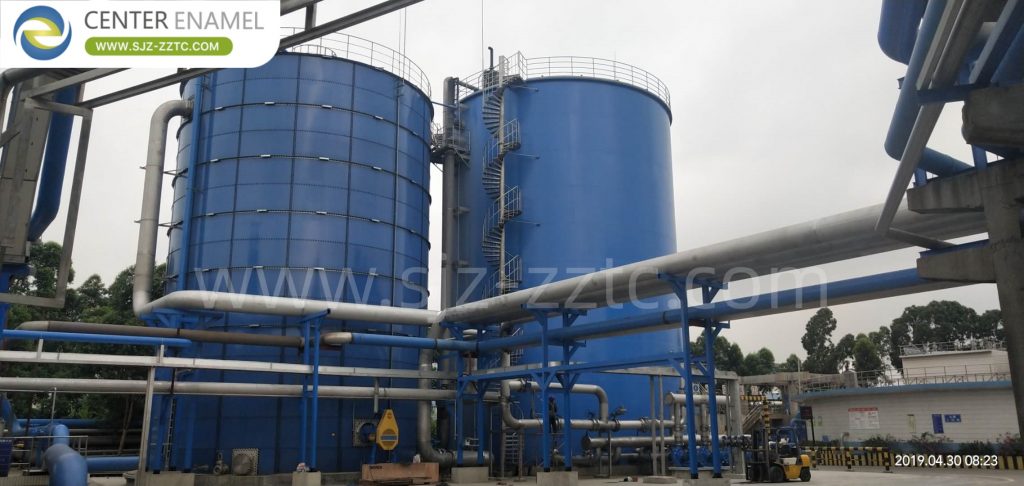
The Asia-Pacific region, particularly China, has become the world's largest industrial wastewater treatment market, with the operation and maintenance service segment's contribution continuing to rise, marking a shift from project construction to long-term operational management. This trend underscores the value of engaging an experienced EPC contractor who can provide comprehensive, long-term support. The North American market focuses on upgrading existing facilities, while Europe emphasizes high-value-added resource recovery technologies. Wastewater from the new energy industry chain (lithium batteries, photovoltaics, hydrogen) has become the most notable emerging growth area due to its complex composition and high treatment difficulty, generating significant demand for customized solutions.
The maturity of third-party treatment models in industrial parks continues to improve, driving consolidation in the professional operation market. The Middle East has strong demand for advanced treatment and reuse of industrial wastewater due to water scarcity, while manufacturing transfer in Southeast Asia drives local industrial wastewater treatment facility construction demand. These diverse regional requirements demand flexible and robust treatment solutions, making the UASB process, delivered by a capable EPC contractor like Center Enamel, an essential component for successful project implementation worldwide.
The UASB Process: A Proven Technology for Beverage Wastewater
At the heart of many modern, high-efficiency treatment plants is a robust biological process that can handle high organic loads. The Upflow Anaerobic Sludge Blanket (UASB) reactor is a cornerstone technology for effective beverage wastewater treatment, and its selection is a key decision for any project.
UASB Process Definition and Core Principles
UASB, or Upflow Anaerobic Sludge Blanket Reactor, is the benchmark mainstream technology for medium-to-high concentration soluble organic wastewater treatment. It requires no mechanical mixing or media carriers, relying on the upward flow of wastewater to suspend and expand granular sludge within the reactor, forming a stable sludge bed layer. Highly active anaerobic granular sludge efficiently degrades pollutants, with excellent settleability and high microbial concentration.
The UASB process innovatively integrates reaction, sedimentation, and gas-liquid-solid separation functions, simplifying the anaerobic treatment process with advantages of high efficiency, energy savings, and compactness. It is widely used in various medium-to-high concentration soluble organic wastewater treatment applications, making it a critical component of comprehensive solutions for beverage wastewater treatment projects. Engaging a specialized EPC contractor ensures that this complex process is properly designed and integrated for optimal performance.
Understanding Beverage Wastewater Sources and Characteristics
The beverage industry produces a very specific type of high-strength wastewater. A thorough understanding of its sources and characteristics is essential for designing an effective treatment system that leverages the UASB process and is delivered by a competent EPC contractor.
Key Sources of Beverage Wastewater
Beverage wastewater originates from the entire processing chain of carbonated beverages, fruit juices, tea drinks, bottled water, energy drinks, and other beverage products. It is a typical high-sugar, high-concentration organic wastewater in the food processing sector. Key pollution stages include raw material pretreatment (fruit washing, crushing, juicing, syrup preparation), blending/mixing (beverage compounding, syrup mixing-high-sugar wastewater), filtration/clarification (juice and tea filtration-fruit/tea residue), filling/packaging (filler and bottle wash-low-concentration high-volume wastewater), CIP cleaning (pipeline, tank, mixer cleaning-core high-concentration wastewater), and floor cleaning.
Juice processing wastewater contains pectin, fruit pulp, and juice residues-extremely high organic concentration; carbonated beverage wastewater contains syrup, phosphoric acid, and CO₂ residues; tea beverage wastewater contains tea polyphenols and tea residues. Large and medium-sized beverage plants discharge hundreds to thousands of tons daily, with water quality varying with product type and CIP cleaning cycles. This variability necessitates a flexible and robust treatment system, where the UASB process provides stable performance despite influent changes, and a qualified EPC contractor ensures seamless integration.
Proven Application: Ghana Municipal Wastewater Project
The practical application of anaerobic technologies in diverse settings confirms their reliability and effectiveness. The Ghana municipal project showcases how robust UASB-related processes and high-quality GFS tanks can meet strict discharge standards, a testament to the value of an experienced EPC contractor.
Case Study: UBF + A²/O Process with GFS Tanks in Ghana
Completed installation in 2021, this project treats 1,800 m³/day of municipal wastewater using UBF anaerobic + A²/O nitrogen/phosphorus removal mature processes. It is equipped with multiple Center Enamel GFS tanks including 1 UBF anaerobic reactor, 1 secondary clarifier, and 2 internal/external double-layer A²/O biological tanks. Influent has high COD, BOD, suspended solids, and nitrogen/phosphorus concentrations. After full treatment, effluent parameters are significantly reduced with pH stable at 6.5-9.0, fully meeting local environmental discharge standards.
The corrosion-resistant, conveniently assembled GFS tanks efficiently solve urban domestic wastewater pollution while balancing treatment effectiveness and O&M economics. This project serves as a mature municipal wastewater case in Africa, demonstrating how integrated solutions combining anaerobic digestion and premium tank systems, delivered by a capable EPC contractor, can be successfully deployed in remote or challenging locations, providing a model for beverage wastewater treatment projects worldwide.
Center Enamel's Professional Construction Team
The successful execution of complex treatment projects, especially in international contexts, depends heavily on the expertise and availability of skilled construction personnel. Center Enamel's robust manpower reserves ensure project delivery is never compromised.
Global Manpower and Construction Team Reserves
Center Enamel has established its own domestic and international certified construction teams, with regular practical training on GFS tank installation and overseas construction standards for various countries. Domestically, regional construction teams cover multiple zones, capable of simultaneously deploying multiple teams for large tank farm projects. Internationally, cross-border professional installation teams are equipped to various country construction standards.
This sufficient manpower reserve ensures uninterrupted construction delivery for remote African sites, high-standard European/American facilities, and other projects worldwide. As an EPC contractor, this internal capacity significantly reduces client coordination effort and ensures that project timelines are met, even in challenging environments.
Center Enamel's R&D and Engineering Expertise
The foundation of any leading EPC contractor is its technical expertise and capacity for innovation. Center Enamel's dedicated R&D team continuously advances the core technologies that underpin its GFS tanks and integrated treatment solutions.
Comprehensive R&D and Innovation Capabilities
Center Enamel has built a full-chain professional team covering R&D, design, marketing, installation, and after-sales. The R&D team is led by national-level materials technology experts, specializing in enamel frit and tank anti-corrosion core technologies. External senior environmental engineering and mechanical structure engineers are retained to strengthen R&D capabilities, focusing on anti-corrosion coating formulations, specialty corrosion-resistant tanks, and anaerobic supporting integrated equipment-continuously breaking through industry technological barriers.
The team operates through proprietary laboratories with external university research collaboration-conducting year-round new material and new process durability pilot testing and long-term corrosion simulation testing. Specialized enamel formulations are iteratively developed for extreme conditions such as high-salinity wastewater, strong acid/alkali POME, and high-organic livestock manure-providing core technical support for the company's annual new invention and utility patents. This builds a proprietary material technology barrier, ensuring that every beverage wastewater treatment project delivered by this EPC contractor benefits from cutting-edge, durable, and reliable equipment.
Advanced Tank Cover Solutions: Aluminum Geodesic Dome Roof
In addition to the tanks and reactors, roofing solutions play a vital role in protecting water quality, enabling biogas capture, and ensuring safe operation. The Aluminum Geodesic Dome Roof is a key component for many anaerobic digestion projects.
The Aluminum Geodesic Dome Roof: Innovation in Tank Sealing
The Aluminum Geodesic Dome Roof independently developed by Center Enamel is manufactured using high-strength aluminum alloy plates through integral stamping. It features a triangular grid spherical self-supporting structure, enabling large-span full coverage without internal support columns. Made of aluminum alloy, the roof offers excellent weather resistance and corrosion resistance, capable of long-term protection against acid rain, salt spray, and UV radiation, suitable for various extreme outdoor climate conditions.
The structural design complies with international AWWA D108 standards, with aluminum plate thickness, rib cross-sections, and joint connections all verified by finite element stress analysis, ensuring wind and snow load resistance that meets building code requirements across different global regions. The weight of the Aluminum Geodesic Dome Roof is only one-third to one-half of a steel roof with the same span, significantly reducing the load on the tank top and allowing direct installation without tank wall reinforcement. The roof provides superior overall sealing performance, with double sealing between panels using specialized sealant strips and mechanical interlocking, enabling both airtight gas storage and enclosed odor control-suitable for biogas collection and storage, wastewater tank odor control, and drinking water contamination prevention.
The support-column-free design does not interfere with the installation and operation of internal equipment such as mixers and water distributors. The aluminum material does not support microbial growth, requiring no anti-corrosion maintenance over long-term use, resulting in low total life-cycle costs. This innovative cover solution perfectly complements the UASB process, optimizing gas capture and long-term system integrity for any beverage wastewater treatment project managed by a professional EPC contractor.
Frequently Asked Questions (FAQ)
1. Why is the UASB process the preferred choice for beverage wastewater treatment?
Beverage wastewater is characterized by high concentrations of soluble sugars and excellent biodegradability. The UASB process is exceptionally efficient at converting these sugars into biogas, achieving over 80% COD removal without aeration. It handles high organic loads and intermittent flow patterns well, making it ideal for the beverage industry's batch production cycles.
2. What advantages does Center Enamel offer as an EPC contractor for such projects?
Center Enamel provides comprehensive EPC services, managing everything from initial design and equipment manufacturing to logistics, on-site construction, and commissioning. Their in-house R&D team tailors solutions to local conditions, while their global construction teams ensure professional installation, minimizing client coordination and ensuring timely, budget-conscious delivery.
3. How do GFS tanks and aluminum dome roofs contribute to project success?
Glass-Fused-to-Steel (GFS) tanks offer superior corrosion resistance, essential for the acidic environment of anaerobic digesters. Their modular design allows for flexible sizing and easy assembly. The Aluminum Geodesic Dome Roof provides a durable, self-supporting cover for efficient biogas collection and odor control, while its lightweight construction reduces tank load and maintenance costs.