
How an EPC Contractor Delivers Complete Solutions for "Four Highs" Food Waste Water
Food waste water presents one of the most demanding challenges in industrial wastewater treatment, characterized by what the industry calls the "four highs": high COD, high oil and grease, high salinity, and high suspended solids. COD levels typically range from 15,000 to 80,000 mg/L, with oil separation wastewater often exceeding 100,000 mg/L. Animal and vegetable oil content reaches 5,000–20,000 mg/L, while sodium chloride from seasonings and salt residues contributes 5,000–15,000 mg/L of salinity.
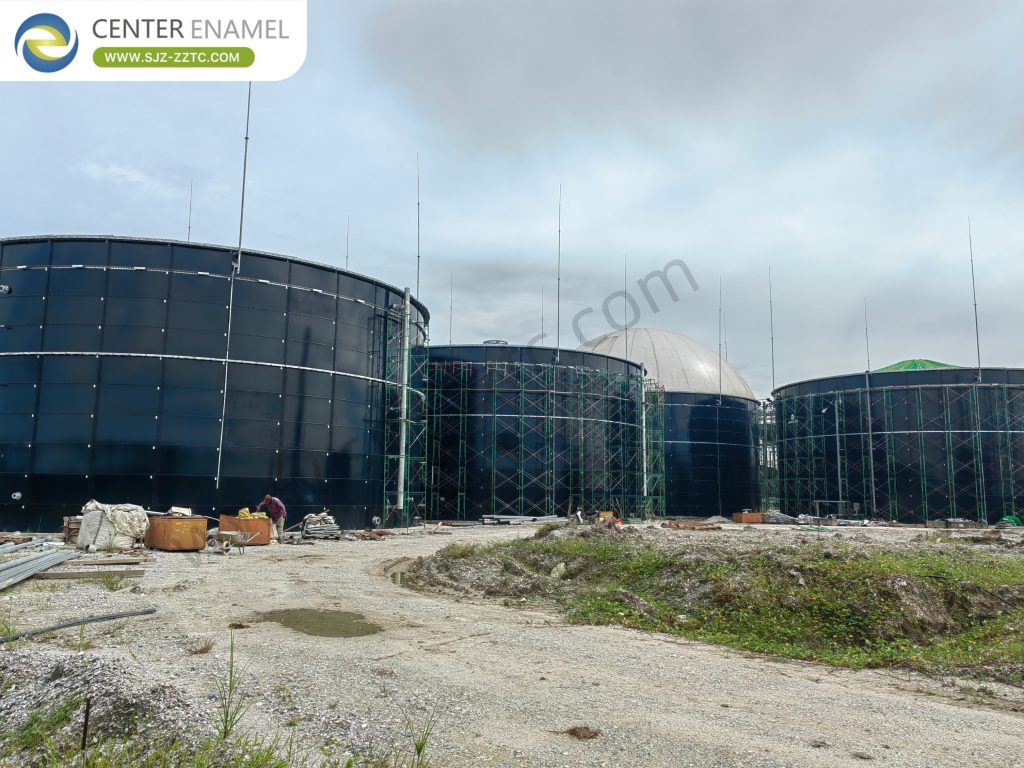
These extreme characteristics demand not only robust treatment processes but also containment systems that can withstand highly corrosive conditions without failing. This is where the combination of GFS Tanks and comprehensive EPC Contractor services becomes essential-delivering both the structural durability and process integration required to transform this challenging waste stream into a resource recovery opportunity.
What Global Regulatory Trends Mean for Industrial Wastewater Treatment
The global policy landscape for industrial wastewater is undergoing a fundamental shift. Regulations are escalating from simple "compliance discharge" requirements toward mandatory "resource recovery" and "zero liquid discharge" objectives. The European Union, through its Circular Economy Action Plan, now requires member states to increase industrial wastewater reuse rates and extends carbon footprint accounting across the full life cycle of wastewater treatment. China has continuously tightened industrial water pollutant discharge standards, with increasingly stringent limits on total nitrogen, total phosphorus, and characteristic pollutants for industries including chemicals, pharmaceuticals, and textiles.
Certain water-scarce regions and highly polluting industries are now mandated to adopt zero or near-zero liquid discharge technologies. Germany has established a differentiated pretreatment technical standard system by industry, requiring industrial wastewater to meet specific quality requirements before discharge into municipal treatment plants, implementing strict source control measures. These regulatory developments create a clear imperative: treatment infrastructure must deliver both environmental compliance and resource recovery, which places new demands on containment systems and process design alike.
Why GFS Tanks Outperform Concrete in Corrosive Environments
Among the critical components of any industrial wastewater treatment system, the containment vessel determines the operational lifespan and maintenance economics of the entire facility. Center Enamel's independently developed double-sided double-layer enameling technology represents the industry's leading coating anti-corrosion solution, with corrosion resistance completely surpassing traditional concrete tanks.
Concrete tank interiors are inherently riddled with pores, allowing wastewater and acid/alkaline media to easily penetrate and corrode the structural layer. Long-term exposure leads to irreversible problems including internal wall spalling, water seepage, and rebar corrosion-issues that are difficult to repair and cannot be fundamentally resolved. By contrast, GFS Tanks feature high-temperature enameling on both interior and exterior surfaces of steel panels, creating a dense, non-porous enamel finish that completely blocks corrosive liquids and biogas permeation. The enamel layer possesses extremely strong chemical stability, resisting acids, alkalis, salts, and microbial corrosion.
The operational difference is dramatic. Concrete tanks typically develop extensive corrosion and leakage after 5–8 years of use, while GFS Tanks anti-corrosion service life can exceed 30 years, with no need for frequent internal lining repairs throughout the service life. This significantly reduces long-term anti-corrosion maintenance investment and fundamentally eliminates environmental risks of medium leakage contaminating sites and groundwater. Compared to traditional concrete and FRP tanks, GFS Tanks coatings have no risk of peeling or blistering and are adaptable to highly corrosive conditions such as palm oil mill effluent, livestock manure, and chemical high-salinity wastewater-all conditions common in food waste water treatment. The long-term comprehensive cost advantages are outstanding.
Inside the Anaerobic Process: Converting Organic Load into Biogas
The treatment of high-solids organic wastewater, after simple pretreatment to remove large debris, involves uniformly feeding material into the reactor through a bottom distribution system. The upward flow drives solid substrates and anaerobic sludge to slowly rise and thoroughly mix. In the sealed anaerobic environment, microorganisms sequentially hydrolyze/acidify and then methanogenically ferment, degrading macromolecular organic pollutants and generating biogas and treated water. Without complex separation structures, gentle hydraulic disturbance prevents clogging. The mixed liquor rises to the upper portion of the reactor where natural gas-liquid-solid separation occurs. Biogas is collected, effluent overflows, and solid sludge and unreacted substrate settle back to the lower reaction zone for continued reaction, with a small amount of aged sludge periodically discharged-enabling continuous stable operation. This process design directly addresses the "four highs" challenge by leveraging the high organic content as an energy resource rather than treating it purely as a pollutant to be removed.
Case Study: Bangladesh Poultry Farm Manure Resource Recovery Project
To illustrate how GFS Tanks and EPC Contractor capabilities translate into operational results, consider Center Enamel's large-scale poultry farm manure resource recovery project in Bangladesh. Targeting local poultry farm manure with daily treatment capacity of 47 tons, the project faced influent parameters that rank among the most challenging: COD at 50,000 mg/L, BOD at 25,000 mg/L, and SS at 50,000 mg/L. After implementing CSTR + UASB anaerobic treatment, all three parameters were reduced to below 200 mg/L, 100 mg/L, and 100 mg/L respectively, with effluent fully compliant with local environmental discharge standards. The project produces approximately 4,900 m³ of biogas daily-each cubic meter of biogas can generate 2 kWh of electricity, yielding daily power generation of 9,800 kWh. This simultaneously achieves pollutant reduction and clean energy recovery, establishing a benchmark for livestock waste recycling in Southeast Asia.
Influent vs. Effluent Parameters (Bangladesh Project)
| Parameter | Influent Concentration | Effluent Concentration | Treatment Standard |
| COD | 50,000 mg/L | < 200 mg/L | Local discharge standards |
| BOD | 25,000 mg/L | < 100 mg/L | Local discharge standards |
| SS | 50,000 mg/L | < 100 mg/L | Local discharge standards |
Resource Recovery Performance (Bangladesh Project)
| Recovery Metric | Value |
| Daily treatment capacity | 47 tons |
| Daily biogas production | ~4,900 m³ |
| Electricity conversion rate | 2 kWh per m³ biogas |
| Daily power generation | 9,800 kWh |
| Waste recycling outcome | Pollutant reduction + clean energy recovery |
Design Expertise Aligned with International Standards
Behind every successful project is a design team with the technical depth to handle diverse and demanding conditions. Center Enamel's design team includes senior engineers registered in the Hebei Provincial Science and Technology Expert Database, with design standards aligned with strict European and American high-end equipment safety standards. The team provides complete integrated design for differentiated overseas projects across livestock biogas, POME, municipal wastewater, hazardous waste storage, seawater desalination, and other applications-covering tank structure, anti-corrosion and sealing systems, biogas piping, and anaerobic process integration.
Pre-design work thoroughly investigates local seismic zone conditions, wind pressure, soil bearing capacity, water quality corrosivity, and local environmental discharge standards, applying thickened panels, reinforced anchored bases, and optimized sealing and corrosion structures as needed. Complete customized equipment solutions can be tailored to customer plant area, wastewater load, treatment targets, and budget-balancing safety, economics, and local adaptation to provide compliant, stable, and highly adaptable equipment structural design support for global environmental projects.
Full-Industry-Chain Integrated Delivery from a Single EPC Contractor
Center Enamel is the only company globally integrating proprietary enamel frit research and development, self-manufactured tanks, and EPC general contracting-delivering full-process self-control from solution design and equipment production through cross-border logistics, overseas construction, and post-construction operation and maintenance. This vertically integrated approach significantly reduces client coordination burden and time costs. For food waste water projects requiring the "four highs" treatment capabilities described throughout this article, working with a single EPC Contractor ensures that tank design, process engineering, and installation are optimized as an integrated system rather than assembled from disconnected suppliers. The result is faster project delivery, clearer accountability, and performance outcomes that meet both environmental compliance requirements and resource recovery objectives.
Ready to discuss your food waste water treatment project? Contact Center Enamel today for a customized solution that combines GFS Tanks durability with full-scope EPC Contractor delivery. Request a free consultation and feasibility assessment for your specific wastewater conditions.
Frequently Asked Questions
Q: Why choose GFS Tanks over concrete for food waste water treatment?
GFS Tanks use non-porous enamel coatings that resist the high salinity, oils, and organic acids present in food waste water. While concrete corrodes and leaks within 5–8 years, GFS Tanks deliver a 30+ year service life with minimal maintenance, reducing long-term ownership costs.
Q: What does an EPC Contractor provide for food waste water projects?
A full-scope EPC Contractor delivers integrated design, equipment manufacturing, construction, and commissioning. Center Enamel's vertical integration covers everything from enamel frit R&D to overseas installation-one contract, one accountable partner, defined performance guarantees.
Q: Can anaerobic treatment handle the "four highs" in food waste water?
Yes. COD levels up to 80,000+ mg/L are effectively treated through anaerobic digestion, which converts organic load into biogas while reducing pollutant concentrations. Center Enamel's Bangladesh project achieved 50,000 mg/L COD reduction to below 200 mg/L using CSTR + UASB.