
Leading EPC Contractor Using UASB Process Solutions for Industrial Wastewater Treatment
The Asia-Pacific region, particularly China, has become the world's largest industrial wastewater treatment market, with the operation and maintenance service segment's contribution continuing to rise, marking a significant shift from project construction to long-term operational management. This regional dominance directly influences the strategies of any EPC Contractor operating in this space, as they must now offer comprehensive lifecycle support alongside traditional construction services. The North American market focuses on upgrading existing facilities, while Europe emphasizes high-value-added resource recovery technologies, reflecting different regulatory and maturity levels across global markets.
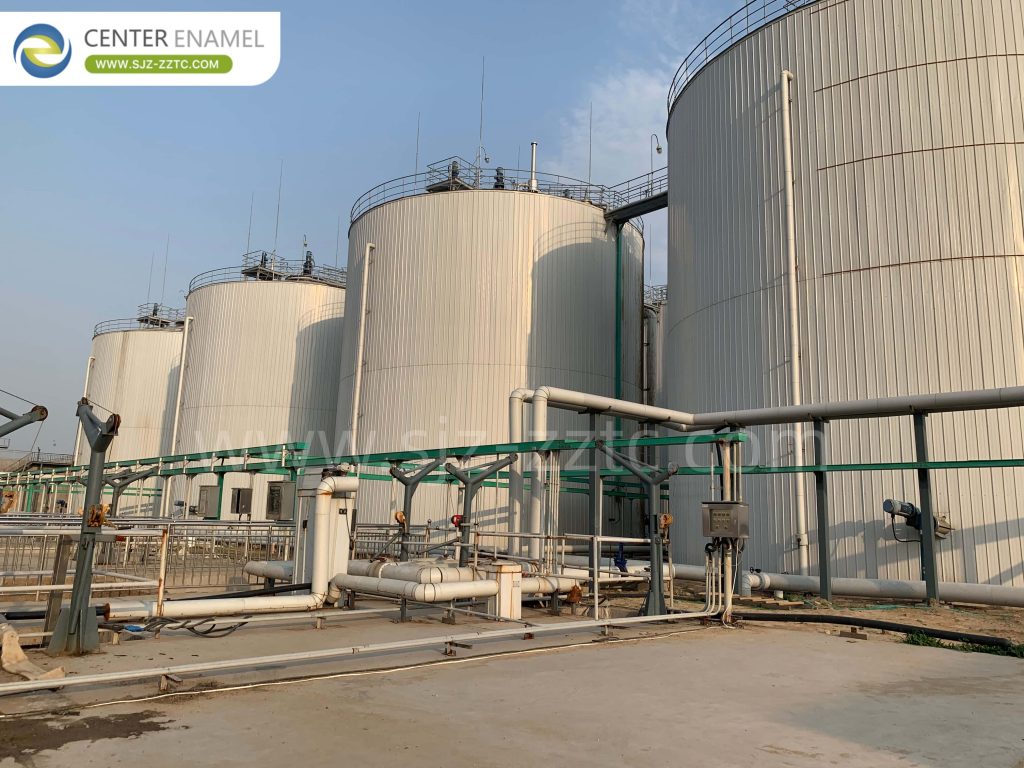
In parallel with these regional trends, wastewater from the new energy industry chain (lithium batteries, photovoltaics, hydrogen) has become the most notable emerging growth area due to its complex composition and high treatment difficulty, generating significant demand for customized solutions from experienced EPC Contractors. The maturity of third-party treatment models in industrial parks continues to improve, driving consolidation in the professional operation market. The Middle East has strong demand for advanced treatment and reuse of industrial wastewater due to water scarcity; manufacturing transfer in Southeast Asia drives local industrial wastewater treatment facility construction demand. These diverse regional drivers underscore the need for versatile and robust technologies like the UASB Process and durable GFS tanks, which are core offerings of a leading EPC Contractor.
UASB Supporting Equipment for Efficient Industrial Wastewater Treatment
At the heart of many successful industrial wastewater treatment projects delivered by a professional EPC Contractor lies the UASB Process, supported by a comprehensive suite of specialized equipment. Core equipment includes the GFS anaerobic reactor tank, with the internal three-phase separator being the key component for gas-liquid-solid separation and sludge retention, which is fundamental for maintaining a high concentration of active biomass. The bottom high-precision distribution system (distribution pipes, distributors, pressure regulators) ensures uniform influent distribution, preventing short-circuiting and sludge accumulation within the UASB reactor.
Supporting equipment for the UASB process includes influent lift pumps, equalization tanks, and flow meters to stabilize influent conditions, ensuring the biological system receives a consistent feed. The top biogas collection system, complete with gas collection hoods, gas piping, desulfurization and dehydration equipment, and gas storage, allows for the capture and utilization of methane produced during anaerobic digestion. Online temperature, pH, and COD monitoring instruments are integrated to provide real-time process control. Bottom sludge discharge pipes and pumps periodically remove excess sludge to maintain optimal reactor performance. The complete equipment package is compact, with no rotating wear parts, resulting in low equipment loss and high operational stability, making it a reliable and cost-effective choice for industrial wastewater treatment.
Standardized Treatment Solutions for Textile Industry Challenges
Integrating the previously discussed technologies, a leading EPC Contractor offers standardized and comprehensive treatment solutions for the textile industry, effectively addressing its unique pollution challenges. The treatment train typically follows a combined approach of "pretreatment + anaerobic digestion + aerobic treatment + advanced decolorization," primarily tackling the high color, high alkalinity, and recalcitrant dye pollution characteristic of textile effluents.
Pretreatment uses screens and equalization tanks to balance quality and flow, with acid addition to neutralize pH to neutral, creating a suitable environment for subsequent biological steps. Coagulation and sedimentation, along with Dissolved Air Flotation (DAF), remove suspended solids, some dyes, and colloidal impurities, reducing the initial color load. The main biological stage uses the aforementioned UASB or IC anaerobic processes for high-concentration organic degradation; importantly, the anaerobic environment can break down some dye molecular structures to improve overall biodegradability, making the subsequent aerobic stage more effective. Subsequent A/O, contact oxidation, or SBR aerobic processes deeply degrade residual organics and remove nitrogen and phosphorus.
The final advanced decolorization uses coagulation decolorization, chemical oxidation (such as ozone or Fenton's reagent), or activated carbon adsorption to ensure color compliance, meeting stringent discharge standards. Where water reuse is required, membrane treatment is added to achieve high-quality reclaimed water. Throughout this process, anaerobic digesters often utilize Center Enamel's corrosion-resistant GFS tanks, which are specifically designed to withstand the high alkalinity and dye auxiliaries found in textile wastewater. High-temperature wastewater requires heat exchange cooling to control biological system temperatures, ensuring optimal performance. These integrated, standardized solutions demonstrate how the combination of robust equipment and effective processes like the UASB Process, delivered by a skilled EPC Contractor, creates a powerful and reliable system for industrial wastewater treatment.
Proven Global Impact: Indonesia Palm Oil Biogas Upgrade Project
The effectiveness of these integrated solutions is best demonstrated through real-world applications delivered by a trusted EPC Contractor. In Indonesia, a landmark palm oil biogas upgrade project commissioned in 2013 serves as a benchmark for biomass energy and environmental sustainability. The project utilized three GFS tanks as the core anaerobic digestion reactors specifically for high-organic palm oil production wastewater, where anaerobic digestion degrades pollutants and recovers valuable biogas. The tanks are adapted to local palm industry wastewater needs, and their convenient assembly and superior corrosion resistance make them ideally suited for Southeast Asia's hot, humid, and highly corrosive environment. This project exemplifies the maturity and reliability of GFS-based anaerobic treatment systems in challenging industrial sectors, mirroring the demands of complex industrial wastewater treatment projects and demonstrating the project execution capabilities of a leading EPC Contractor.
Global Integrated Standardized Service System
To support its extensive project portfolio and role as a premier EPC Contractor, Center Enamel has established a comprehensive global integrated standardized service system. Leveraging regional sales centers in China and overseas local agent networks, the company has built a complete after-sales service loop covering all markets. This system provides four core service pillars: a 24/7 rapid response mechanism, on-site domestic and overseas installation services, full-project-cycle after-sales support, and long-term warranty protection. This forms a complete service chain from preliminary site survey, mid-term construction management, to long-term inspection and maintenance. The entire system is uniformly adapted to both domestic and international project service standards, coordinating personnel scheduling, material support, and on-site coordination for simultaneous projects across multiple regions, significantly reducing customer multi-party coordination costs and ensuring efficient domestic and overseas project delivery for every industrial wastewater treatment project.
Marketing and Technical Expertise for Global Projects
Underpinning the company's success as a leading EPC Contractor is a highly skilled marketing and technical team. The marketing team brings together environmental industry multi-skilled professionals and multilingual foreign trade specialists, with deep expertise in global biogas, wastewater treatment, and biomass new energy markets, accumulating extensive practical project experience in Southeast Asia, Africa, Europe, and the Americas. This expertise is crucial for understanding and meeting the diverse needs of clients worldwide.
The team is proficient in various countries' wastewater discharge regulations, biogas subsidy policies, and carbon trading rules, providing one-stop preliminary site survey, solution planning, and investment return analysis consulting services. With multilingual capabilities (English, French, Spanish, Arabic), the team effectively communicates with clients worldwide, precisely matching regional industrial resources, project budgets, and environmental requirements. They customize high-cost-performance GFS tanks and anaerobic reactor solutions, including the UASB Process, based on client production capacity, treatment targets, and gas production expectations. Leveraging extensive overseas project experience, the team proactively helps clients avoid risks in overseas approvals, equipment import, and construction implementation, building a globally adaptable integrated environmental equipment business service system that reinforces the company's position as a trusted EPC Contractor.
FRP Roof Cover Solution for General-Purpose Storage Tanks
In addition to core treatment and storage tanks, complementary components like roof covers play a significant role in the overall functionality of an industrial wastewater treatment project managed by an EPC Contractor. The FRP Roof is a general-purpose economical roof for atmospheric pressure storage tanks without air-tightness requirements, suitable for drinking water storage, agricultural irrigation water, firewater reserve, and general production wastewater temporary storage. It is available in two styles: flat and dome, allowing flexible selection based on tank specifications and site aesthetic requirements.
The roof is integrally molded from resin and fiberglass, making it lightweight with natural water resistance and mild acid and alkali corrosion resistance. It will not rust or rot in long-term humid environments, eliminating the frequent anti-corrosion maintenance required for metal roofs. The dome style features excellent drainage performance due to its curved structure, resisting water accumulation, dust buildup, snow load, and strong winds. The flat style facilitates the installation of maintenance walkways, level gauges, and vents on top, making inspection and operation convenient.
The product is fully insulated with no risk of galvanic corrosion, will not contaminate drinking water quality, and meets environmental standards for domestic water storage. The modular design with low individual component weight allows for simple on-site hoisting and assembly, offering high construction efficiency and affordable procurement and installation costs. It is only suitable for atmospheric pressure water storage tanks without biogas collection or pressurization requirements, and is not recommended for anaerobic fermentation gas-producing conditions. It is widely used in rural agricultural water storage tanks, industrial park firewater tanks, waterworks buffer tanks, and small to medium-sized domestic wastewater temporary storage facilities, making it a cost-effective general-purpose roof choice for conventional water storage applications within the broader scope of an industrial wastewater treatment project.
Frequently Asked Questions (FAQs)
1. What is the role of an EPC Contractor in industrial wastewater treatment?
An EPC (Engineering, Procurement, and Construction) Contractor provides a single point of responsibility for the entire project. This includes designing the treatment system, procuring all necessary equipment (such as GFS tanks and UASB reactors), managing construction, and commissioning the facility. This integrated approach simplifies project management, reduces client risk, and ensures seamless coordination between all phases.
2. Why is the UASB Process a preferred choice for industrial wastewater?
The UASB (Upflow Anaerobic Sludge Blanket) Process is highly efficient for treating soluble medium-to-high concentration organic wastewater. Its key advantages include low energy consumption (no mechanical mixing), production of valuable biogas, low sludge yield, high loading rates, and excellent stability against shock loads, making it ideal for industries like food processing, textiles, and chemicals.
3. How does Center Enamel support global industrial wastewater treatment projects?
Center Enamel provides comprehensive support through its integrated EPC contracting services. This includes a global network of sales and service centers, a multilingual team with deep regulatory knowledge, a full-industry-chain manufacturing capability, and a standardized service system offering 24/7 support, on-site installation, and long-term warranty. This ensures efficient and reliable project delivery worldwide.