
How Can an EPC Contractor Leverage IC Process to Help Pharmaceutical Plants Treat Wastewater?
The core challenges of industrial wastewater treatment center on the "three highs"-high difficulty, high cost, and high energy consumption. Wastewater from new energy, chemical, and pharmaceutical industries is complex in composition with numerous characteristic pollutants, and traditional treatment processes are difficult to remove effectively.
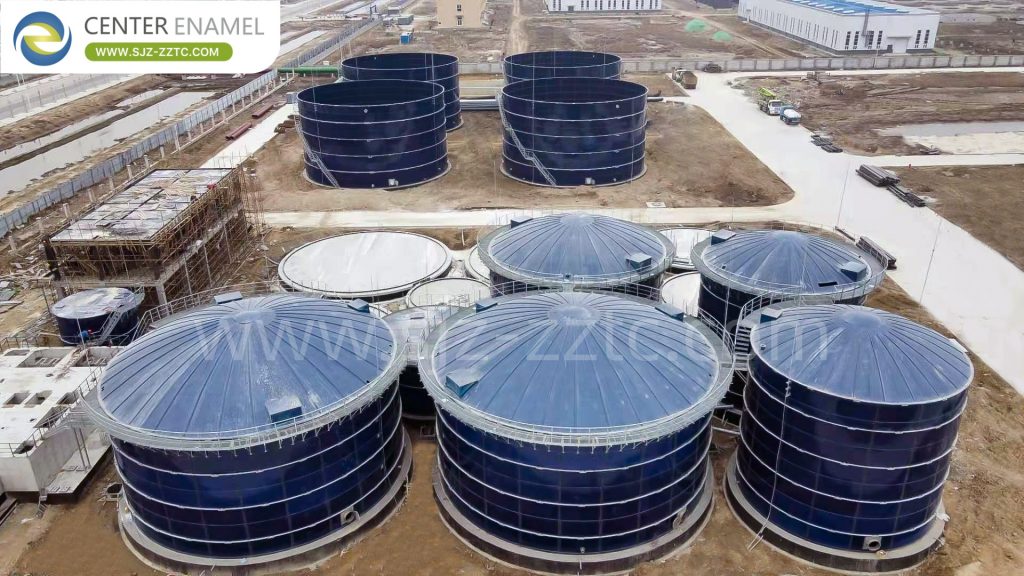
Within this landscape, Chinese companies have significant price advantages in the mid- to low-end equipment segment. However, the industry also faces continuous technological upgrade pressure from increasingly stringent emission standards, as well as new requirements for digitalization and low-carbon transformation on operational refinement management capabilities. Meeting these demands requires not only robust equipment but also an experienced EPC Contractor capable of integrating advanced treatment processes into a seamless, end-to-end solution.
Understanding Pharmaceutical Wastewater Characteristics
Pharmaceutical wastewater presents some of the most difficult conditions in industrial treatment. Its composition is complex, with large fluctuations, high pollution load, and very poor biodegradability.
COD ranges widely-fermentation type 5,000–30,000 mg/L, chemical synthesis peaking over 100,000 mg/L, with BOD/COD generally below 0.2. The water contains unreacted raw materials, drug intermediates, organic solvents, mycelium, and high concentrations of salts, with some wastewater salinity reaching tens of thousands of mg/L. Color is high, ranging from yellow-brown to dark black, with nitrogen and phosphorus pollutants severely exceeding limits, readily causing eutrophication. Water quality and quantity have no stable pattern, with alternating high/low concentration discharges-making treatment extremely difficult.
These characteristics demand a treatment approach that can withstand shock loads, handle toxicity, and maintain stable performance. This is precisely where the IC Process proves its value.
How the IC Process Works
Pretreated high-strength organic wastewater enters the lower main reaction zone from the bottom, mixing with recirculated sludge-water mixture and rising rapidly. Anaerobic microorganisms efficiently degrade organic matter, producing large volumes of biogas.
The gas-lift action of biogas carries the mixed liquor upward to the top gas-liquid separator where biogas is collected. Degassed sludge-water mixture returns by gravity through downcomers to the reactor bottom, creating autonomous internal circulation that repeatedly enhances pollutant degradation.
After multiple circulation cycles, the wastewater enters the upper polishing zone for further reaction and sludge-water separation. Remaining trace organics are fully degraded, sludge settles back to the lower reaction zone, treated effluent overflows from the top, and aged sludge is periodically discharged. The result is fully autonomous circulation and efficient continuous operation-a hallmark of the IC Process.
Proven Performance Data
The following tables summarize key operational parameters and a representative project outcome.
Table 1: Pharmaceutical Wastewater Characteristics vs. IC Process Performance
| Parameter | Raw Pharmaceutical Wastewater | After IC Process Treatment |
| COD (fermentation type) | 5,000–30,000 mg/L | Significantly reduced |
| COD (chemical synthesis) | Over 100,000 mg/L | Significantly reduced |
| BOD/COD ratio | Generally below 0.2 | Improved biodegradability |
| Salinity | Up to tens of thousands mg/L | Tolerated by adapted biomass |
| Color | Yellow-brown to dark black | Substantially reduced |
| Nitrogen & phosphorus | Severely exceeding limits | Progressively removed |
Center Enamel's Manufacturing Strength
Center Enamel's core intelligent manufacturing base is located in Hebei Province, China, covering a total area of over 150,000 m², with Phase I mature manufacturing facility and Phase II high-end environmental equipment industrial park-dual-base synergy ensures stable production capacity.
The base includes dedicated R&D office buildings, proprietary material laboratories, and finished product testing centers, with full-process quality control systems meeting ISO, NSF, CE, and other international standards. The facility operates to green manufacturing standards, certified as a Provincial Green Factory-balancing efficient production with energy conservation and emission reduction.
The company has 6 marketing service centers across China, establishing a nationwide production-sales network ensuring stable global order delivery. The base is adjacent to expressway networks and major logistics hubs, with complete container shipping capabilities-supporting simultaneous large-scale tank projects globally. The base employs over 500 staff, with multiple parallel automated production lines-facility scale and production capacity firmly placing it among the global top tier of GFS tank equipment manufacturers.
Full-Industry-Chain Integrated Delivery
Center Enamel is the only company globally integrating proprietary enamel frit R&D, self-manufactured tanks, and EPC general contracting-full-process self-control from solution design, equipment production, cross-border logistics, overseas construction, to post-construction O&M-significantly reducing client coordination and time costs.
This integrated capability means pharmaceutical plants working with Center Enamel as their EPC Contractor receive a single point of accountability from concept through commissioning.
Aluminum Geodesic Dome Roof for Wastewater Tanks
Aluminum Geodesic Dome Roof independently developed by Center Enamel is manufactured using high-strength aluminum alloy plates through integral stamping. It features a triangular grid spherical self-supporting structure, enabling large-span full coverage without internal support columns.
Made of aluminum alloy, the roof offers excellent weather resistance and corrosion resistance, capable of long-term protection against acid rain, salt spray, and UV radiation, suitable for various extreme outdoor climate conditions. The structural design complies with international AWWA D108 standards, with aluminum plate thickness, rib cross-sections, and joint connections all verified by finite element stress analysis, ensuring wind and snow load resistance that meets building code requirements across different global regions.
The weight of the Aluminum Geodesic Dome Roof is only one-third to one-half of a steel roof with the same span, significantly reducing the load on the tank top and allowing direct installation without tank wall reinforcement. The roof provides superior overall sealing performance, with double sealing between panels using specialized sealant strips and mechanical interlocking, enabling both airtight gas storage and enclosed odor control, suitable for biogas collection and storage, wastewater tank odor control, and drinking water contamination prevention.
The support-column-free design does not interfere with the installation and operation of internal equipment such as mixers and water distributors. The aluminum material does not support microbial growth, requiring no anti-corrosion maintenance over long-term use, resulting in low total life-cycle costs.
Let's Build Your Treatment Solution Together
Ready to upgrade your pharmaceutical wastewater treatment with a proven IC Process and a reliable EPC Contractor? Contact Center Enamel today for a tailored solution.
Partner with Center Enamel and experience end-to-end delivery-from design and manufacturing to construction and long-term O&M support.
Frequently Asked Questions
1. What makes the IC Process suitable for pharmaceutical wastewater?
The IC Process handles high organic loads and toxic compounds through internal circulation, maintaining stable anaerobic degradation even with poor biodegradability.
2. Can Center Enamel act as both equipment supplier and EPC Contractor?
Yes. Center Enamel integrates enamel tank manufacturing with full EPC delivery, providing single-source accountability from design to commissioning.
3. How does the IC Process compare with conventional anaerobic treatment?
The IC Process offers higher loading rates, smaller footprint, and greater resistance to shock loads compared to conventional UASB systems.