
How Does an EPC Contractor Leverage the IC Process to Treat High-Strength Chemical Wastewater?
The industrial wastewater landscape is shifting toward higher organic loads, tighter discharge limits, and greater demand for energy recovery. At the center of this shift sits the IC Process, a third-generation anaerobic technology that has moved from niche adoption to mainstream specification for high-concentration organic streams. Yet process selection alone does not guarantee project success. The delivery model-specifically whether an EPC Contractor can integrate design, containment, and commissioning under a single point of responsibility-often determines whether a facility meets its performance targets on schedule and within budget.
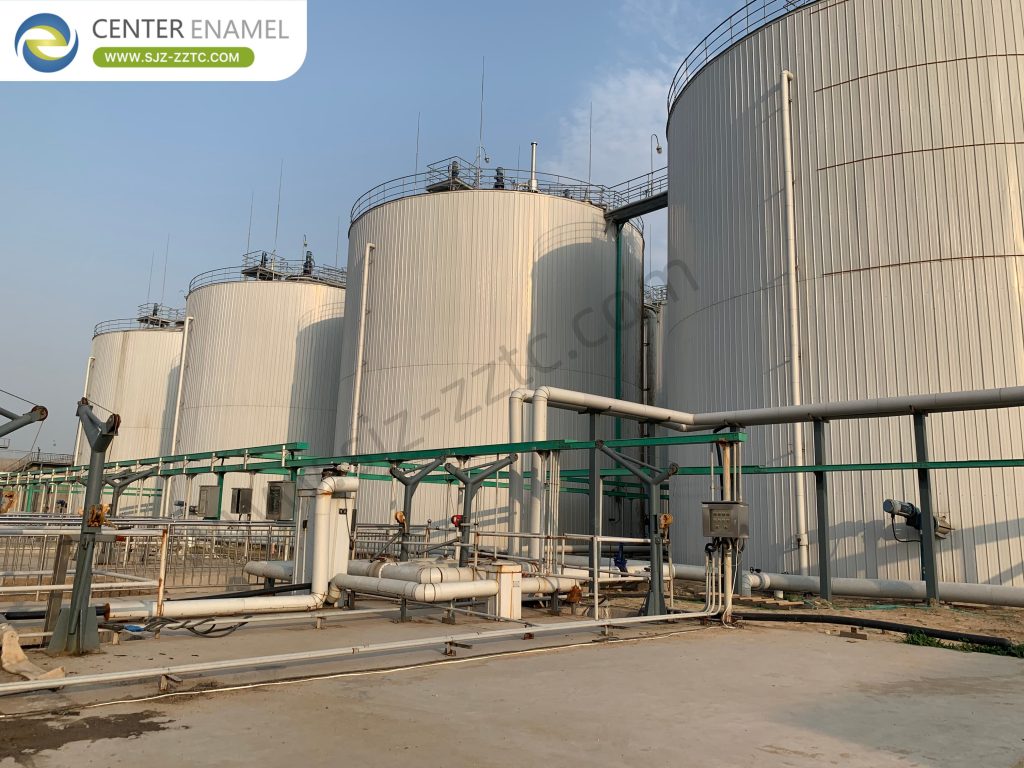
Center Enamel occupies a distinctive position at the intersection of these two forces. With over 30 years of specialization in environmental bolted storage equipment and a track record exceeding 30,000 global projects, the company has evolved from a tank manufacturer into a comprehensive environmental EPC Contractor with proprietary anti-corrosion technology at its core. This article examines how the IC Process works, why containment material matters, and how an integrated EPC approach reduces risk across complex industrial wastewater projects.
What Makes the IC Process the Preferred Anaerobic Solution?
The IC Process-Internal Circulation Anaerobic Reactor-represents the third generation of high-efficiency anaerobic treatment, building upon the foundational UASB design. Its defining innovation is a built-in gas-lift internal circulation system that enables autonomous wastewater recirculation without external return pumps. The reactor operates with a dual-zone configuration: a lower main reaction zone for vigorous biological degradation and an upper polishing zone for final treatment. Biogas generated in the lower zone drives hydraulic internal circulation, significantly increasing upflow velocity and enhancing contact between sludge and wastewater.
This design yields exceptionally high volumetric loading rates while maintaining a compact physical footprint, making the IC Process particularly suited for high-concentration, high-flow industrial organic wastewater from food processing, pharmaceutical fermentation, alcohol brewing, and chemical production. The result is a process that combines high treatment efficiency, energy savings, and minimal land occupation-attributes that align directly with the operational and sustainability priorities of modern industrial facilities.
Why Does Containment Material Determine Long-Term IC Performance?
Anaerobic reactors operate in a chemically aggressive environment. The steel tank shells that house UASB, EGSB, and IC reactors must withstand continuous exposure to organic acids, hydrogen sulfide, and fluctuating pH conditions. Corrosion resistance and gas-tightness directly determine long-term operational stability, and failures in either area can lead to biogas leakage, structural degradation, and costly unplanned downtime.
Center Enamel addresses this challenge through Glass-Fused-to-Steel technology, independently developed and refined over three decades. The company has formulated more than 200 anti-corrosion enamel compositions, fusing glass to steel at temperatures exceeding 820°C to create an inert, impermeable barrier. This surface resists the volatile organic acids generated during anaerobic digestion across a pH range of 3 to 11, while precision-engineered sealants ensure the gas-tight integrity essential for biogas capture and odor control. For IC Process reactors handling chemical wastewater rich in phenols, sulfides, and heterocyclic compounds, this material advantage translates directly into extended service life and reduced maintenance burden.
How Does an Integrated EPC Contractor Reduce Project Risk?
Complex industrial wastewater projects involve multiple disciplines: process design, containment engineering, equipment procurement, site construction, and performance commissioning. When these responsibilities are fragmented across separate vendors, the client absorbs the coordination burden-and the risk of interface failures. An experienced EPC Contractor eliminates this fragmentation by assuming total liability for budget, schedule, and guaranteed performance metrics.
Center Enamel’s EPC model integrates enamel frit research, intelligent equipment manufacturing, and project contracting into a single chain of responsibility. From initial process design and material selection through on-site construction and commissioning, the company delivers a turnkey solution that food producers, chemical plants, and industrial parks can commission with confidence. This approach is particularly valuable for international projects where supply chain coordination, regulatory compliance, and site conditions vary significantly. The company’s portfolio includes projects across Asia, the Middle East, Latin America, and Africa, supported by modular bolted tank designs that accommodate diverse climatic and logistical conditions.
Project Snapshot: Pakistan Food Waste + Napier Grass Biogas Demonstration
Center Enamel served as general contractor for a biogas demonstration project in Pakistan utilizing food waste and Napier grass as mixed fermentation feedstock. The facility employs CSTR as the core anaerobic process, equipped with a mechanical mixing system that ensures thorough contact between feedstock and anaerobic microorganisms. The system achieves efficient organic degradation with a stable daily biogas production of 100 cubic meters. This project functions as a local official demonstration for validating gas production efficiency and long-term continuous operational stability. Following successful pilot operation, multiple large-scale Napier grass biogas projects are planned in the region to advance biomass clean energy and support low-carbon development objectives.
| Project Parameter | Specification |
| Location | Pakistan |
| Feedstock | Food waste + Napier grass |
| Core Process | CSTR |
| Mixing System | Mechanical |
| Daily Biogas Output | 100 m³ |
| Project Role | Official local demonstration |
What Distinguishes Center Enamel’s Aluminum Dome Roof Solutions?
For biogas collection and odor control applications, the containment system extends beyond the tank shell. Center Enamel’s Aluminum Geodesic Dome Roof, independently developed and manufactured from high-strength aluminum alloy plates through integral stamping, provides a triangular grid spherical self-supporting structure capable of large-span full coverage without internal support columns. The design complies with AWWA D108 standards, with plate thickness, rib cross-sections, and joint connections verified through finite element stress analysis.
The roof weighs only one-third to one-half of a comparable steel roof, reducing tank top loading and permitting direct installation without wall reinforcement. Double sealing between panels-achieved through specialized sealant strips and mechanical interlocking-enables both airtight gas storage and enclosed odor control. The support-column-free design does not interfere with internal equipment such as mixers and water distributors, and the aluminum surface does not support microbial growth, requiring no anti-corrosion maintenance over its service life.
Frequently Asked Questions
What wastewater types suit the IC Process?
The IC Process is designed for high-concentration organic wastewater from food processing, pharmaceutical fermentation, alcohol brewing, chemical production, and similar industries. Its high loading rate and small footprint make it particularly effective where space is constrained and organic loads are elevated.
How does an EPC Contractor differ from a tank supplier?
An EPC Contractor assumes single-point responsibility for engineering, procurement, construction, and commissioning, guaranteeing performance metrics. A tank supplier delivers equipment only, leaving process integration and performance risk with the client. Center Enamel operates as an EPC Contractor with in-house tank manufacturing capability.
What is the service life of GFS tanks in anaerobic service?
Center Enamel’s Glass-Fused-to-Steel tanks are engineered for a service life exceeding 30 years in anaerobic reactor applications, with the fused glass coating providing continuous corrosion protection against organic acids and sulfide exposure.
Ready to evaluate whether the IC Process fits your wastewater profile? Share your project parameters with Center Enamel’s engineering team for a technical assessment tailored to your discharge characteristics and site conditions.
Connect with Center Enamel today to discuss how an integrated EPC approach can de-risk your next wastewater treatment project-from process selection through commissioning and beyond.