
How an EPC Contractor Pairs IC Process with GFS Tanks for High-Strength Wastewater
The Asia-Pacific region, particularly China, has become the world's largest industrial wastewater treatment market. The operation and maintenance service segment's contribution continues to rise, marking a shift from project construction to long-term operational management. North America focuses on upgrading existing facilities, while Europe emphasizes high-value-added resource recovery technologies.
Wastewater from the new energy industry chain-lithium batteries, photovoltaics, hydrogen-has become the most notable emerging growth area due to its complex composition and high treatment difficulty, generating significant demand for customized solutions. Third-party treatment models in industrial parks continue to mature, driving consolidation in the professional operation market. The Middle East has strong demand for advanced treatment and reuse due to water scarcity, while manufacturing transfer in Southeast Asia drives local facility construction.
For project owners navigating these shifting markets, selecting the right EPC Contractor and treatment process determines whether a facility meets discharge limits for the next two decades. Two technologies sit at the center of that decision: the IC Process for anaerobic treatment and GFS Tanks for reliable, adaptable containment.
The IC Process: Third-Generation Anaerobic Efficiency
IC, or Internal Circulation Anaerobic Reactor, is the third-generation high-efficiency anaerobic treatment technology built upon UASB. Its core innovation is the built-in gas-lift internal circulation system, enabling autonomous wastewater recirculation without external return pumps. The reactor features a dual-zone configuration-a lower main reaction zone and an upper polishing zone. Biogas gas-lift creates hydraulic internal circulation, significantly increasing upflow velocity and enhancing sludge-wastewater contact. With extremely high compactness, the IC Process is specifically designed for high-concentration, high-flow industrial organic wastewater, combining high efficiency, energy savings, and minimal footprint. It is the core process for modern industrial high-strength wastewater treatment.
Why GFS Tanks Outperform Concrete in Project Delivery
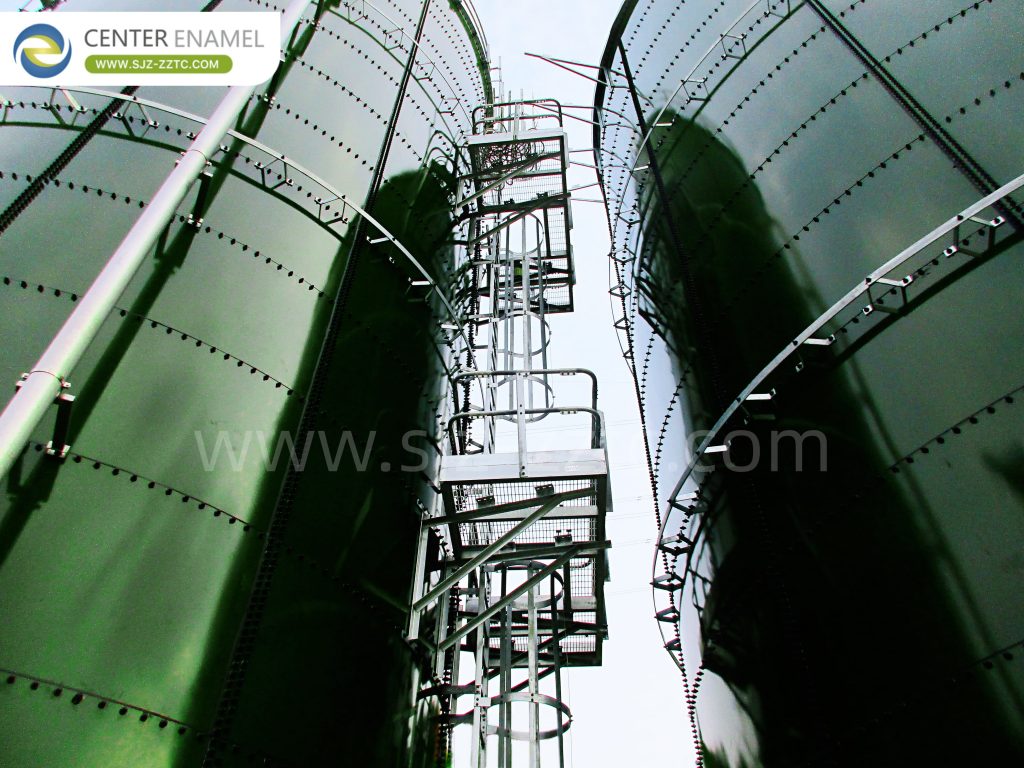
GFS Tanks are assembled on-site from prefabricated panels, with short construction periods and support for expansion, relocation, and reuse-advantages distinctly different from immovable concrete tanks. Concrete pouring requires formwork, rebar tying, pouring, and long curing periods, with a single tank taking months. Rain, snow, and low temperatures force work stoppages. Once poured, concrete tanks cannot be dismantled, expanded, or relocated-project relocation means complete abandonment.
GFS tank panels are factory-prefabricated, transported to site, and assembled directly with simple procedures. Construction proceeds even in low-temperature, light-rain conditions, with installation time only one-third that of concrete tanks-schedules stay controllable. For expansion, additional steel panels increase volume; for plant relocation, tanks are fully disassembled and reassembled at the new site, significantly reducing material and construction costs. This makes GFS Tanks ideally suited for short-term environmental projects, phased expansion, and relocated construction.
| Comparison | GFS Tanks | Concrete Tanks |
| Installation time | One-third of concrete | Months per tank |
| Weather impact | Workable in light rain, low temperature | Stoppages in rain, snow, cold |
| Expansion | Add steel panels | Not possible |
| Relocation | Fully disassemblable and reusable | Permanent, abandoned on move |
Dairy Wastewater: A High-Load Stream Built for Anaerobic Treatment
Dairy wastewater originates from the entire processing chain of liquid milk, milk powder, cheese, yogurt, cream, and whey-a typical high-oil, high-protein, high-concentration organic stream in food processing. Key pollution stages include raw milk receiving and storage (pipeline and tank wash water), pasteurization and UHT (sterilizer cleaning and cooling water), separation and homogenization (centrifuge wash water with cream residues), fermentation (yogurt tank wash with cultures and lactose), spray drying (dryer wash with milk powder residues), filling and packaging, and floor cleaning.
Critically, dairy wastewater comes primarily from CIP in-place cleaning-high-concentration and intermittent. Large and medium-sized dairies discharge hundreds to thousands of tons daily, with water quality varying significantly with production changes and product changeovers. This variability is exactly where the IC Process earns its place: robust against shock loads, compact for land-constrained sites, and productive of biogas that offsets energy costs.
Case Snapshot: South Africa Brewery High-Strength Wastewater Project
| Project Parameter | Detail |
| Location | South Africa |
| Industry | Brewing |
| Core Equipment | GFS Tanks (anaerobic digestion) + stainless steel tanks |
| Wastewater Type | High COD, high sugar, readily decomposable organics |
| System Role | GFS Tanks as primary anaerobic digestion system |
| Supporting Use | Stainless steel tanks for transfer and chemical storage |
| Outcome | Long-term stable treatment; solved local brewing pollution challenge |
This mature African case demonstrates how GFS Tanks integrate with anaerobic digestion for high-strength industrial streams. The GFS Tanks serve as the primary anaerobic digestion system, suited to brewery wastewater's readily degradable organic load, while stainless steel tanks handle wastewater transfer and chemical storage. The complete equipment package provides excellent corrosion resistance and flexible assembly, delivering long-term stable treatment of production and cleaning wastewater.
Material Technology That Extends Service Life Beyond 30 Years
Center Enamel has independently developed over 200 anti-corrosion enamel formulations, with proprietary double-sided, double-layer enameling technology. GFS Tank anti-corrosion service life exceeds 30 years-far surpassing concrete and ordinary equipment-suitable for global high-corrosion wastewater and biogas fermentation conditions.
Behind this sits a full-chain professional team covering R&D, design, marketing, installation, and after-sales. The R&D team is led by national-level materials technology experts specializing in enamel frit and tank anti-corrosion core technologies. External senior environmental engineering and mechanical structure engineers strengthen R&D capabilities, focusing on anti-corrosion coating formulations, specialty corrosion-resistant tanks, and anaerobic supporting integrated equipment. The team operates proprietary laboratories with external university research collaboration, conducting year-round new material and process durability pilot testing and long-term corrosion simulation. Specialized enamel formulations are iteratively developed for extreme conditions-high-salinity wastewater, strong acid/alkali POME, and high-organic livestock manure-building a proprietary material technology barrier.
Frequently Asked Questions
What makes the IC Process different from UASB?
The IC Process adds a built-in gas-lift internal circulation system, eliminating external return pumps and enabling a dual-zone configuration for higher upflow velocity and better sludge contact.
Can GFS Tanks be relocated after installation?
Yes. Panels are fully disassemblable and can be transported and reassembled at a new site-unlike concrete tanks, which are abandoned on relocation.
How long do GFS Tanks last in corrosive wastewater?
With over 200 enamel formulations and double-sided double-layer enameling, anti-corrosion service life exceeds 30 years, even in high-salinity and high-organic conditions.
Evaluating an IC Process or GFS Tank solution for your next plant? Send our engineers your wastewater characteristics and site constraints-we will return a preliminary process configuration and tank specification.
Connect with Center Enamel today to discuss EPC delivery, and discover why project owners in more than 100 countries trust our bolted GFS Tanks and anaerobic systems for long-term performance.