
A Global EPC Contractor Powering Chemical Wastewater Treatment with Advanced Anaerobic Technologies
In today's tightening regulatory landscape, chemical manufacturers face mounting pressure to treat complex industrial effluent safely, cost-effectively, and in compliance with global discharge standards. As an experienced EPC contractor, Center Enamel integrates process engineering, corrosion-resistant equipment, and field-tested anaerobic technologies into a single deliverable-helping plants across Southeast Asia, Africa, Europe, and the Americas move from basic compliance to genuine resource recovery.
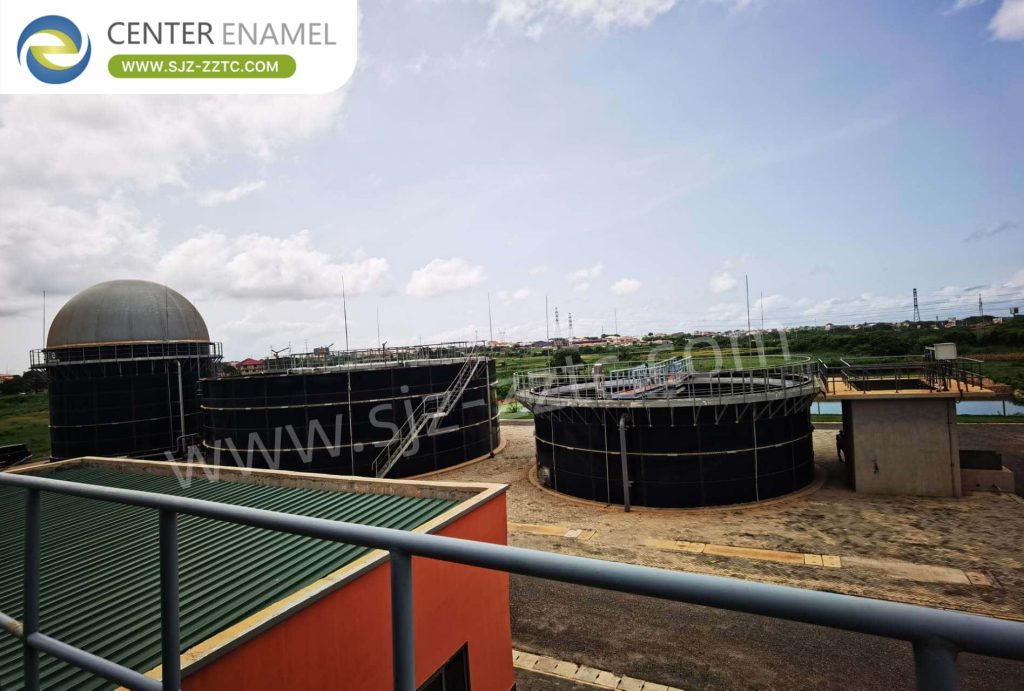
The "Three Highs" Shaping Industrial Wastewater Treatment
The core challenges of industrial wastewater treatment center on the "three highs"-high difficulty, high cost, and high energy consumption. Effluent from new energy, chemical, and pharmaceutical industries is complex in composition, carrying numerous characteristic pollutants that conventional biological systems struggle to remove. Chinese manufacturers have long held a price advantage in mid-to-low-end equipment, yet end users increasingly demand both technical depth and lifecycle value rather than upfront cost alone. On top of this, continuously tightening emission standards force plants toward constant process upgrades, while digitalization and low-carbon targets raise the bar for operational refinement.
These mounting pressures hit chemical producers with particular force, because the pollutants themselves are not merely difficult-they are dangerous.
Why Chemical Wastewater Carries the Highest Ecological Risk
Among all industrial effluent types, chemical wastewater treatment presents the strongest environmental toxicity and highest ecological risk, combining acute toxicity, chronic toxicity, and environmental persistence. Toxic organics such as benzene-series compounds, phenols, cyanides, and halogenated hydrocarbons at high concentrations are strongly inhibitory and even lethal to aquatic organisms and microbial communities; trace-level discharges can still inflict irreversible damage on receiving waters. Phenols and cyanides act rapidly, directly harming aquatic life, while halogenated hydrocarbons and polycyclic aromatic hydrocarbons persist in the environment, bioaccumulate through the food chain, and carry carcinogenic, teratogenic, and mutagenic risks. High-salinity discharges drive soil salinization and groundwater mineralization, heavy metals accumulate in sediments over the long term, and trace endocrine disruptors can interfere with aquatic reproduction-even at concentrations below conventional detection limits.
Because biological communities can be wiped out before conventional treatment catches up, engineers must adopt anaerobic technologies that concentrate biomass, tolerate shock loads, and recover energy from the very pollutants that would otherwise be discarded.
Anaerobic Technologies: The Engine of High-Strength Effluent
Center Enamel's anaerobic technologies are engineered around one principle: keep active granular sludge in close, continuous contact with high-COD wastewater while capturing the biogas it produces. This approach transforms high-concentration chemical effluent-often too strong for purely aerobic systems-into treated water plus renewable biogas, simultaneously cutting excess sludge and plant energy demand. Among the platform's workhorses, the IC (Internal Circulation) reactor has become the reference choice for large-flow, high-strength chemical wastewater treatment trains.
The IC reactor's performance stems directly from its compact, self-recirculating architecture, which solves the footprint and shock-load problems that have long held back conventional anaerobic systems.
IC Reactor Advantages: Compact, Stable, and Resource-Recovering
The IC reactor delivers top-tier treatment efficiency within only one-third of the footprint required by traditional anaerobic processes for the same capacity-a decisive compactness advantage on crowded chemical plant sites. Its built-in gas-lift internal circulation eliminates external recirculation equipment, autonomously forcing mixing between sludge and wastewater; the resulting hydraulic shear ensures thorough microbe–pollutant contact, raising degradation efficiency and enabling the system to withstand high water-quality and hydraulic shock loads. The dual-zone configuration pairs high-rate degradation with deep polishing, stabilizing effluent quality, while a high degree of sludge granulation keeps biomass active and resists washout. With high automation, low failure rates, large biogas output, and long-term energy and O&M costs far below conventional anaerobic units, the IC reactor is purpose-built for large-flow, high-concentration industrial wastewater-including effluent from chemical, pharmaceutical, and fine-chemical operations.
Process performance, however, is only as reliable as the vessels and enclosures that contain it-especially when the contents are corrosive, odorous, or pressurized by biogas.
Purpose-Built Equipment: GFS Tanks and Aluminum Geodesic Domes
At the core of Center Enamel's equipment stack are glass-fused-to-steel (GFS) tanks and stainless steel tanks that host anaerobic reactors, equalization basins, and sludge holding systems. GFS panels are assembled on site, scale rapidly with project size, and resist the corrosion caused by acidic or high-salinity chemical effluent far better than painted steel or ordinary concrete.
Above these vessels, biogas and odor must be contained-and here Center Enamel's independently developed Aluminum Geodesic Dome Roof comes into play.
Manufactured from high-strength aluminum alloy plates formed by integral stamping, the dome uses a triangular-grid, spherical, self-supporting structure that spans large diameters without internal columns. Aluminum alloy offers outstanding weather and corrosion resistance against acid rain, salt spray, and UV radiation, suiting it to extreme outdoor climates worldwide. The structural design complies with AWWA D108, with plate thickness, rib sections, and joint connections verified by finite-element stress analysis to meet wind and snow building codes across regions. Weighing only one-third to one-half of a steel roof of equal span, it reduces top-of-tank load and can be mounted without wall reinforcement. Double sealing between panels-using specialized sealant strips and mechanical interlocking-delivers airtight gas storage and enclosed odor control for biogas collection, wastewater odor abatement, and drinking-water protection. The column-free interior leaves mixers and water distributors unobstructed, while aluminum's resistance to microbial growth eliminates recurring anti-corrosion maintenance, lowering total lifecycle cost.
Proven process and equipment mean little without field evidence, and Center Enamel has assembled that evidence across thousands of deployments.
Global Project Footprint: 30,000+ Deployments in 100+ Countries
Center Enamel's project portfolio spans over 100 countries across Southeast Asia, Africa, Europe, and the Americas, with more than 30,000 mature installations accumulated across palm oil, livestock, municipal, brewing, food-waste biogas, and-of growing importance-chemical and pharmaceutical effluent treatment. This breadth allows the company to rapidly match customized solutions to regional climates, water-quality profiles, and regulatory regimes, rather than forcing every site onto a single template.
| Region | Representative Industries Served | Typical Treatment Train |
| Southeast Asia | Palm oil, food processing, municipal | GFS anaerobic reactor + A2O polishing |
| Africa | Brewing, livestock, agro-processing | IC/USR anaerobic + biogas recovery |
| Europe & Americas | Municipal, food & beverage | GFS tanks + aluminum geodesic dome covers |
| Global total | 100+ countries / 30,000+ projects | EPC-delivered, internationally certified equipment |
A representative African installation illustrates how this platform performs on high-strength organic effluent.
Case Study: High-Strength Brewery Wastewater, South Africa
Focusing on high-concentration organic wastewater from South Africa's brewing sector, the project combines Center Enamel GFS tanks and stainless steel tanks as core equipment. GFS tanks act as the primary anaerobic digestion system, well suited to brewery wastewater's high-COD, high-sugar, readily biodegradable profile; stainless steel tanks handle wastewater transfer and chemical storage supporting processes. The package's corrosion resistance and flexible assembly enable long-term stable treatment of brewing and cleaning wastewater, resolving a persistent local pollution challenge and demonstrating a blueprint transferable to analogous high-strength chemical wastewater treatment trains.
| Item | Configuration |
| Primary treatment | GFS-tank-based anaerobic digestion system |
| Ancillary equipment | Stainless steel tanks for wastewater transfer & chemical storage |
| Wastewater profile | High-COD, high-sugar, readily biodegradable brewery effluent |
| Key benefits | Corrosion-resistant, modular assembly, long-term stable operation |
| Outcome | Mature African reference for high-strength organic wastewater |
Delivering such projects at scale requires more than engineering-it requires the material science and compliance credentials to back every vessel.
R&D Depth and Global Certifications
Technology R&D is Center Enamel's core competitive advantage. The company independently masters more than 200 differentiated anti-corrosion enamel formulations, controls the enamel raw-material chain, and holds nearly 100 invention and utility patents. Products have passed NSF, WRAS, ASME, BSCI, CE, and ISO9001 certifications, while the company itself holds National High-Tech Enterprise, National Specialized and Sophisticated "Little Giant," Hebei Manufacturing Single Champion, Provincial Smart Factory, and Provincial Green Factory designations, together with full environmental engineering and special-equipment manufacturing qualifications. Long-term collaborative research with multiple universities-run through joint materials laboratories-keeps anti-corrosion coatings and large bolted-tank structural design iterating, creating a proprietary material barrier that lets product performance rival high-end imported storage equipment from Europe and North America.
Together, these capabilities position Center Enamel as a single-source EPC contractor for chemical wastewater treatment-from process design and equipment supply to installation and long-term O&M support.
Frequently Asked Questions
Q1. What industries does Center Enamel serve as an EPC contractor?
A1. Center Enamel delivers EPC solutions for chemical, pharmaceutical, palm oil, brewing, food processing, livestock, municipal, and biogas projects in over 100 countries, combining anaerobic technologies, GFS tanks, and aluminum geodesic dome covers into one integrated delivery.
Q2. Why are anaerobic technologies preferred for high-strength chemical wastewater?
A2. Anaerobic systems such as the IC reactor concentrate granular sludge, tolerate high COD and shock loads, use only one-third of the aerobic footprint, generate biogas for energy recovery, and produce far less excess sludge-cutting both operating cost and environmental risk.
Q3. Are Center Enamel tanks and covers certified for global projects?
A3. Yes. GFS tanks and aluminum geodesic dome roofs carry NSF, WRAS, ASME, CE, ISO9001, and BSCI certifications, comply with AWWA D108 standards, and are validated for wind, snow, and corrosion conditions across global climates.
Looking for a reliable EPC contractor to de-risk your chemical wastewater treatment project? Share your effluent profile and discharge targets, and Center Enamel's engineering team will return a tailored anaerobic technologies solution and equipment scope within 48 hours.
From process design and GFS tank fabrication to on-site installation and long-term O&M support, our global project managers stand ready-contact Center Enamel today to turn your effluent challenge from a compliance burden into a competitive advantage.