
How an EPC Contractor with USR Process to Solve Livestock Manure Treatment Challenges
Livestock manure treatment has become a defining challenge for modern agriculture. As global swine and livestock inventories remain stable, the environmental pressure from manure-greenhouse gas emissions, nutrient runoff, and odor-continues to intensify. Meeting this challenge requires both the right biological process and the right delivery partner. Center Enamel brings together a proven USR Process for high-solids organic wastewater and over a decade of EPC Contractor experience across global markets, offering livestock operators a complete solution from design through long-term operation.
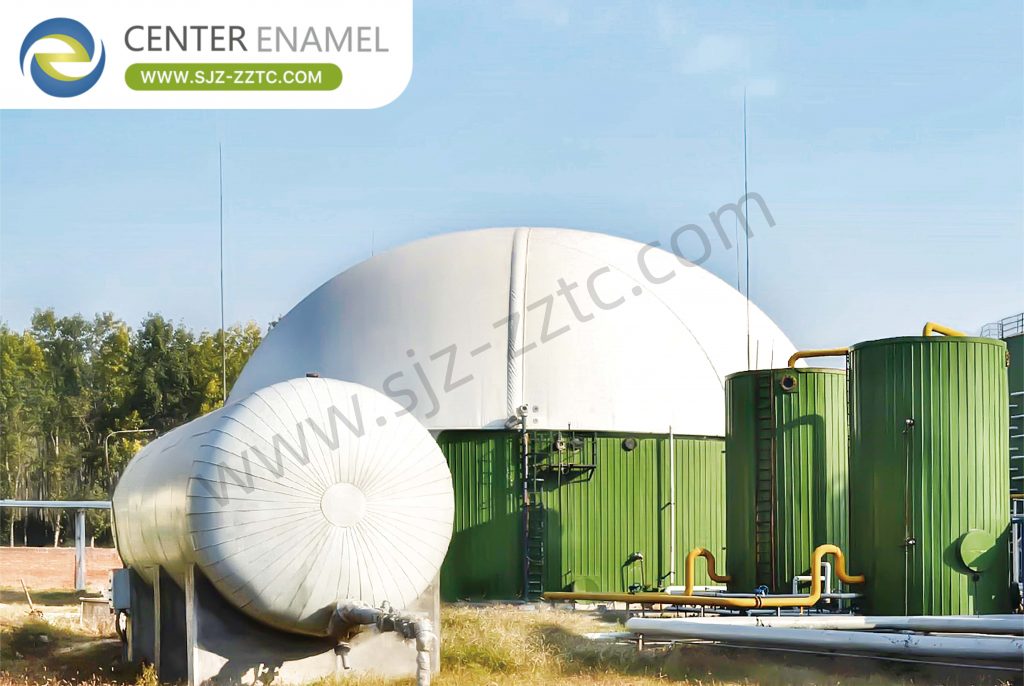
Regional Manure Management-Where the World Stands Today
Global livestock inventories such as swine remain stable, but manure management practices vary widely across regions. The United States has developed technical models represented by integrated crop-livestock systems with on-field application and Comprehensive Nutrient Management Plans. Denmark, the Netherlands, and other European nations have advanced centralized biogas projects with digestate application systems, achieving high resource utilization rates.
China's large-scale farms still have considerable room for improvement in supporting biogas project coverage, and digestate resource utilization rates lag behind advanced European levels. Latin American countries started later in manure management but are accelerating relevant infrastructure development. Greenhouse gas emissions from livestock account for a significant proportion of total global anthropogenic emissions, making manure management a critical battleground for agricultural carbon reduction.
This regional divergence creates a clear opportunity. Whether a farm is in a mature regulatory environment or a rapidly developing one, the technical requirements converge on the same need: a robust, high-solids-tolerant anaerobic process delivered by an experienced EPC Contractor who understands local conditions.
The USR Process-Engineered for High-Solids Organic Wastewater
The USR Process, or Upflow Solids Reactor, is an upflow anaerobic process modified for high-suspended-solids, high-solids organic wastewater. It was specifically designed to solve the problems of clogging, sludge washout, and uneven reaction common in traditional anaerobic processes when treating high-solids wastewater.
How the USR Process Works
High-solids organic wastewater, after simple pretreatment to remove large debris, is uniformly fed into the reactor through the bottom distribution system. The upward flow drives solid substrates and anaerobic sludge to slowly rise and thoroughly mix. In the sealed anaerobic environment, microorganisms sequentially hydrolyze and acidify, then methanogenically ferment, degrading macromolecular organic pollutants and generating biogas and treated water.
Without complex separation structures, gentle hydraulic disturbance prevents clogging. The mixed liquor rises to the upper portion of the reactor where natural gas-liquid-solid separation occurs. Biogas is collected, effluent overflows, and solid sludge and unreacted substrate settle back to the lower reaction zone for continued reaction. A small amount of aged sludge is periodically discharged, enabling continuous stable operation.
Why USR Excels with Livestock Manure
The USR Process eliminates complex three-phase separators, simplifies internal structure, and relies on upflow hydraulics to promote thorough mixing of solid materials and anaerobic sludge. No strict granular sludge formation conditions are required-flocculent sludge can operate stably. The key feature is high solids tolerance and impurity resistance, with very high influent suspended solids tolerance. It is a dedicated high-efficiency anaerobic process for livestock manure, agricultural organic waste, and high-solids livestock wastewater.
Livestock Wastewater Characteristics-The "Four Highs" Challenge
Understanding why the USR Process is necessary requires understanding what makes livestock wastewater so difficult to treat. Livestock wastewater is typically a high-concentration organic wastewater with "four highs"-high COD, high ammonia nitrogen, high total phosphorus, and high suspended solids-creating a very high pollution load.
COD can exceed 8,000 mg/L, with high turbidity and suspended solids. Nitrogen and phosphorus levels far exceed discharge standards, making livestock wastewater a primary cause of eutrophication. The wastewater is rich in manure, feed residues, and metabolic waste, readily turning black and odorous. Water quality fluctuates significantly with production cycles, seasons, and washing frequency.
Aquaculture wastewater presents a different profile. It has lower pollutant concentrations but significant nitrogen and phosphorus accumulation issues, causing algal blooms and water quality deterioration with long-term discharge. In both cases, the variability and concentration demand a treatment process that is robust, flexible, and forgiving of fluctuating loads-precisely the design philosophy behind the USR Process.
Proven Performance-The Bangladesh Poultry Farm Case
The effectiveness of Center Enamel's approach is demonstrated by a reference project in Bangladesh. The Bangladesh Large-Scale Poultry Farm Manure Resource Recovery Project targets local poultry farm manure resource recovery with daily treatment of 47 tons.
Influent COD, BOD, and SS measure as high as 50,000 mg/L, 25,000 mg/L, and 50,000 mg/L respectively. After CSTR + UASB anaerobic treatment, all three parameters are reduced to below 200 mg/L, 100 mg/L, and 100 mg/L-effluent fully compliant with local environmental discharge standards.
The project produces approximately 4,900 m³ of biogas daily. Each cubic meter of biogas can generate 2 kWh of electricity, yielding daily power generation of 9,800 kWh. This simultaneously achieves pollutant reduction and clean energy recovery, establishing the project as a benchmark for livestock waste recycling in Southeast Asia.
Table 1: Bangladesh Poultry Farm Manure Recovery Project-Performance Data
| Parameter | Influent | After Anaerobic Treatment | Outcome |
| COD | 50,000 mg/L | Below 200 mg/L | >99.6% removal |
| BOD | 25,000 mg/L | Below 100 mg/L | >99.6% removal |
| SS | 50,000 mg/L | Below 100 mg/L | >99.8% removal |
| Daily Treatment | 47 tons poultry manure | - | - |
| Biogas Output | 4,900 m³/day | - | - |
| Power Generation | 9,800 kWh/day | - | 2 kWh per m³ biogas |
Over a Decade of Global Installation Experience
Delivering projects like the Bangladesh facility requires more than process knowledge-it requires proven execution capability across diverse geographies. Center Enamel offers unmatched global practical experience among domestic peers, with over a decade covering multiple regions and all industry sectors.
In 2009, Center Enamel completed its first overseas GFS tank installation, sending a team to Niger, Africa for drinking water storage tank installation. In 2015, the company broke industry ground with China's first GFS tank export and installation to the US, passing strict US acceptance standards.
All installed projects have operated stably for many years, covering livestock biogas, POME, municipal wastewater, and drinking water storage applications. Construction has covered Southeast Asia, Africa, the Americas, and other regions-accumulating specialized solutions for complex sites including mountainous terrain, coastal salt spray, tropical high temperatures, and high-standard European and American facility conditions. This experience enables Center Enamel to maturely address global special construction requirements as a reliable EPC Contractor.
Engineering Design Tailored to Local Conditions
Behind every successful installation is a design process that accounts for local realities. The Center Enamel design team includes senior engineers registered in the Hebei Provincial Science and Technology Expert Database, with design standards aligned with strict European and American high-end equipment safety standards.
The team provides complete integrated design for differentiated overseas projects in livestock biogas, POME, municipal wastewater, hazardous waste storage, seawater desalination, and other applications-covering tank structure, anti-corrosion and sealing systems, biogas piping, and anaerobic process integration.
Pre-design thoroughly investigates local seismic zone, wind pressure, soil bearing capacity, water quality corrosivity, and local environmental discharge standards. Thickened panels, reinforced anchored bases, and optimized sealing and corrosion structures are applied as needed. Complete customized equipment solutions can be tailored to customer plant area, wastewater load, treatment targets, and budget-balancing safety, economics, and local adaptation. This provides compliant, stable, and highly adaptable equipment structural design support for global environmental projects.
Aluminum Geodesic Dome Roof-Protection and Performance
A digester is only as effective as its cover. The Aluminum Geodesic Dome Roof, independently developed by Center Enamel, is manufactured using high-strength aluminum alloy plates through integral stamping. It features a triangular grid spherical self-supporting structure, enabling large-span full coverage without internal support columns.
Made of aluminum alloy, the roof offers excellent weather resistance and corrosion resistance, capable of long-term protection against acid rain, salt spray, and UV radiation, suitable for various extreme outdoor climate conditions. The structural design complies with international AWWA D108 standards, with aluminum plate thickness, rib cross-sections, and joint connections all verified by finite element stress analysis, ensuring wind and snow load resistance that meets building code requirements across different global regions.
The weight of the Aluminum Geodesic Dome Roof is only one-third to one-half of a steel roof with the same span, significantly reducing the load on the tank top and allowing direct installation without tank wall reinforcement. The roof provides superior overall sealing performance, with double sealing between panels using specialized sealant strips and mechanical interlocking, enabling both airtight gas storage and enclosed odor control.
The support-column-free design does not interfere with the installation and operation of internal equipment such as mixers and water distributors. The aluminum material does not support microbial growth, requiring no anti-corrosion maintenance over long-term use, resulting in low total life-cycle costs. It is suitable for biogas collection and storage, wastewater tank odor control, and drinking water contamination prevention.
Table 2: Center Enamel Roof and Delivery Capabilities-Key Specifications
| Feature | Specification | Benefit |
| Roof Type | Aluminum Geodesic Dome | Self-supporting, no internal columns |
| Material | High-strength aluminum alloy | Weather and corrosion resistant |
| Standard | AWWA D108 compliant | Verified by finite element analysis |
| Weight | 1/3 to 1/2 of steel roof | Reduced tank top load |
| Sealing | Double sealant strips + mechanical interlock | Airtight gas storage, odor control |
| Global Experience | 2009 Niger, 2015 US export | Proven across diverse regions |
| Design Team | Hebei Provincial Expert Database engineers | European/American safety standards |
| Applications | Livestock biogas, POME, municipal wastewater | Multi-sector capability |
Whether you are planning a new biogas facility or upgrading an existing manure treatment system, Center Enamel offers the USR Process expertise and EPC Contractor capability to deliver results. Contact our team today to discuss your project requirements and receive a tailored solution. Let us show you why over 30,000 projects worldwide have trusted Center Enamel for their environmental infrastructure needs.
Frequently Asked Questions
What is the USR Process and why is it used for livestock manure?
USR (Upflow Solids Reactor) is an anaerobic process designed for high-solids wastewater. It prevents clogging and sludge washout, making it ideal for livestock manure treatment without requiring strict granular sludge formation.
What does an EPC Contractor do for a biogas project?
An EPC Contractor handles engineering, procurement, and construction-delivering a complete, commissioned facility. Center Enamel manages design, equipment manufacturing, installation, and startup under one contract.
How does Center Enamel ensure projects meet local standards?
Our design team investigates local seismic, wind, soil, and discharge requirements during pre-design, then tailors tank structure, anti-corrosion systems, and process integration to meet those standards.