
How a China Dairy Wastewater Treatment Project EPC Contractor Uses Anaerobic Digestion to Treat Complex Wastewater
Dairy processing wastewater is more complex than its natural organic composition might suggest. It can contain high concentrations of lactose, proteins, fats, oils, and suspended solids, while cleaning-in-place (CIP) operations introduce sudden changes in pH, temperature, and wastewater flow. Without proper treatment, these fluctuations can disrupt biological processes, increase operating costs, and make it difficult for dairy facilities to meet increasingly demanding discharge requirements.
For dairy manufacturers, an effective treatment system must do more than remove pollutants. It should also manage variable wastewater characteristics, recover useful resources, minimize energy consumption, and provide reliable long-term operation. This requires coordinated process engineering, durable treatment infrastructure, and professional project delivery.
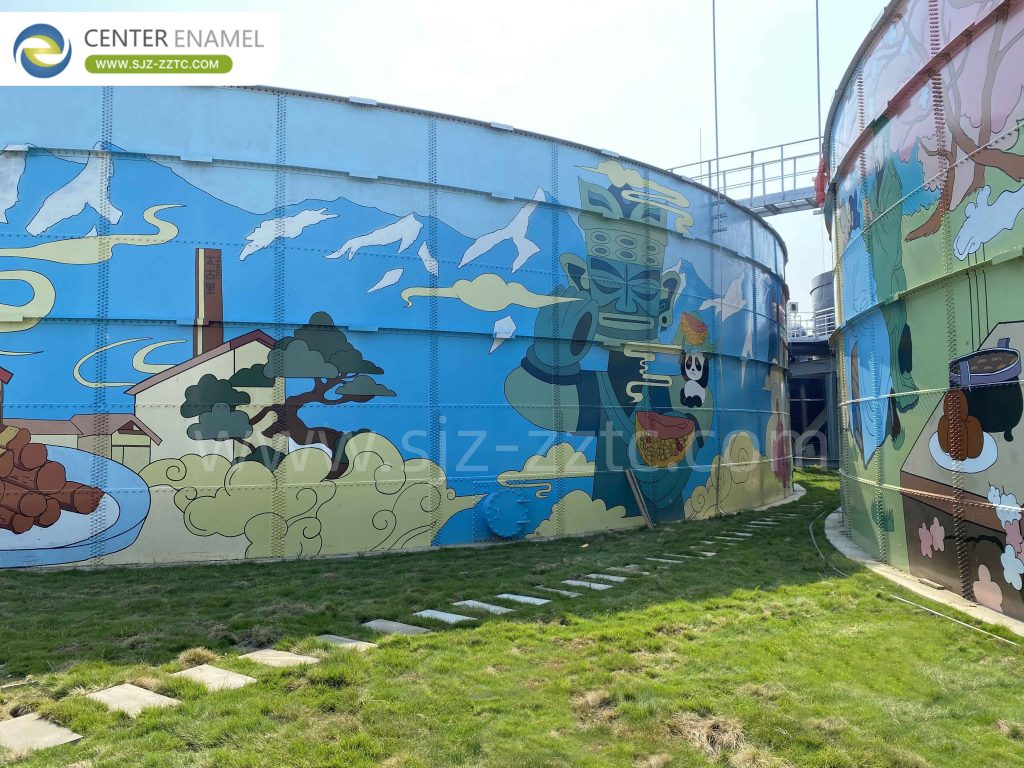
As a China Dairy Wastewater Treatment Project EPC Contractor, Center Enamel combines Glass-Fused-to-Steel (GFS) tanks, anaerobic treatment technologies, and integrated engineering capabilities to support industrial wastewater projects. By selecting suitable anaerobic processes-including the IC Process for appropriate high-strength liquid wastewater-and integrating them with pretreatment and downstream treatment, Center Enamel helps customers develop treatment systems tailored to complex operating conditions.
Global Wastewater Regulations Are Driving More Advanced Treatment
Industrial wastewater management is moving beyond basic compliance discharge toward water reuse, resource recovery, and, in some sectors and regions, zero or near-zero liquid discharge. These developments are increasing the need for treatment systems that combine reliable pollutant removal with efficient resource utilization.
Regulatory approaches differ across markets. The European Union has promoted circular-economy principles and greater attention to resource efficiency. China continues to strengthen industrial pollutant discharge requirements, including controls on nutrients and industry-specific pollutants. Germany applies industry-specific pretreatment requirements to ensure industrial wastewater meets defined conditions before entering municipal treatment systems.
For dairy producers operating across different markets, these developments create several engineering priorities:
Stable treatment performance: Systems must handle variations in wastewater flow, organic concentration, pH, and temperature.
Resource recovery: Anaerobic treatment can convert biodegradable organic matter into biogas for potential on-site energy use.
Water reuse readiness: Additional polishing or membrane treatment may be needed where treated water is intended for reuse.
Adaptability: Tank capacity, process configuration, and equipment selection should reflect local regulations and future production needs.
A capable EPC partner must therefore consider both the wastewater itself and the regulatory and operating environment in which the treatment plant will function.
Understanding the Challenges of Complex Dairy Wastewater
Dairy wastewater is generally rich in biodegradable organic matter, making it a suitable candidate for biological treatment. However, its composition can vary considerably between facilities and even between production shifts.
Lactose and soluble proteins contribute to high chemical oxygen demand (COD) and biochemical oxygen demand (BOD). Milk fats and oils can accumulate in pipes and reactors or interfere with microbial activity. Meanwhile, CIP cleaning cycles may introduce acidic or alkaline wastewater that causes sudden pH changes.
These characteristics make pretreatment and process selection essential. In particular, high concentrations of fats, oils, grease, and suspended solids should be managed before wastewater enters a high-rate anaerobic reactor.
A practical treatment strategy should address the following challenges:
High organic loading: High COD and BOD require an appropriately sized biological treatment system.
FOG accumulation: Excessive fats and oils can create floating layers, coat biomass, and affect reactor operation.
Variable pH and temperature: Cleaning and production cycles can cause conditions to fluctuate beyond the preferred range of anaerobic microorganisms.
Intermittent wastewater discharge: Equalization is needed to smooth flow and concentration peaks.
Effluent quality requirements: Anaerobic treatment is generally followed by aerobic or advanced treatment when additional pollutant removal is required.
Understanding these factors allows the EPC contractor to determine whether IC technology, another anaerobic process, or a combination of technologies is most appropriate.
Selecting the Right Anaerobic Digestion Technology
Anaerobic digestion is an important treatment option for high-strength organic wastewater. In the absence of oxygen, microorganisms break down biodegradable organic compounds and generate biogas, which can potentially be recovered for heating or power generation.
However, not every anaerobic reactor is suitable for every dairy wastewater stream. The choice depends on organic concentration, suspended solids, viscosity, fat content, hydraulic loading, and the stability of the influent.
IC Process for High-Strength, Soluble Wastewater
The IC Process (Internal Circulation Process) is designed primarily for high-concentration, high-flow soluble organic wastewater. It can be considered for suitable dairy processing effluent, particularly after effective screening and fat separation have reduced the solids and FOG load.
Its internal circulation mechanism uses biogas generated during anaerobic digestion to drive wastewater and sludge circulation within the reactor. This promotes contact between microorganisms and organic pollutants without relying on a conventional external recirculation system.
Key application advantages include:
Compact plant layout: The source material identifies a substantially smaller footprint than traditional anaerobic processes at comparable treatment capacity.
High organic loading capability: IC reactors are designed for high-strength soluble wastewater and rapid COD/BOD reduction.
Internal hydraulic mixing: Gas-driven circulation supports contact between wastewater and active anaerobic sludge.
Application in large treatment facilities: IC technology can be considered for industrial plants and centralized industrial park wastewater treatment systems.
Potential for energy recovery: Anaerobic degradation generates biogas that can be collected and used where suitable gas utilization infrastructure is available.
There is an important limitation: the IC Process is not suitable for every dairy wastewater stream. The supplied technical material identifies high-solids and high-viscosity wastewater as unsuitable applications. For dairy wastewater containing substantial manure solids or other difficult-to-handle materials, solids separation or an alternative process, such as CSTR, may be more appropriate.
Matching Anaerobic Technology to Wastewater Characteristics
| Wastewater condition | Potential process selection | Key engineering consideration |
| High-strength, soluble organic wastewater | IC, UASB, or EGSB | Control FOG and suspended solids before the reactor |
| Wastewater with relatively high suspended solids | CSTR or other suitable mixed reactors | Provide effective mixing and solids management |
| High-flow industrial wastewater with limited site area | IC Process may be considered | Confirm influent suitability and hydraulic conditions |
| Highly variable wastewater from production and CIP | Equalization followed by a suitable anaerobic process | Stabilize flow, pH, and organic loading |
The final selection should be based on wastewater testing and process design rather than technology preference alone. For a dairy facility, an EPC contractor should evaluate the full treatment train before specifying the anaerobic reactor.
GFS Tanks for Durable Anaerobic Treatment Infrastructure
Selecting the right biological process is only part of the project. Anaerobic treatment also requires reliable containment equipment that can withstand wastewater exposure, process conditions, and long-term operation.
Center Enamel's Glass-Fused-to-Steel (GFS) tanks combine the structural strength of steel with a fused glass coating. This creates a protective surface suitable for demanding storage and treatment applications, including selected anaerobic reactor and wastewater treatment systems.
Corrosion Resistance for Demanding Operating Conditions
Dairy wastewater may contain organic acids and residues from cleaning operations. Anaerobic digestion can also generate biogas containing corrosive components such as hydrogen sulfide. The glass coating on GFS tanks provides a protective barrier against these operating conditions when the tank is correctly specified for the application.
Modular Construction and Flexible Capacity
GFS tanks are manufactured from prefabricated panels and assembled at the project site. Their modular design supports different tank dimensions and capacities, making them adaptable to facilities with limited or irregularly shaped land.
According to the supplied company material, Center Enamel offers customized GFS tank capacities ranging from dozens of cubic meters to 50,000 m³. Tank height and diameter can be configured according to process requirements and site conditions.
Better Adaptability for Plant Expansion
Unlike monolithic concrete tanks, modular GFS tanks offer greater flexibility when a facility needs to adjust its layout or expand treatment capacity. This can be valuable for dairy plants planning production upgrades or staged wastewater treatment investment.
For an EPC contractor, this flexibility helps coordinate tank selection with process requirements, available land, construction schedules, and future operating plans.
Integrated Treatment Process for Dairy Wastewater
A complete dairy wastewater treatment system usually combines physical pretreatment, anaerobic digestion, and downstream biological or advanced treatment. Each stage protects the next one and contributes to stable overall performance.
The following process framework can be adapted to the wastewater characteristics and discharge targets of an individual dairy facility.
| Treatment stage | Main purpose | Typical equipment or process |
| Screening and solids separation | Remove coarse particles and suspended materials | Screens, grit removal, solids separators |
| FOG removal | Reduce fats, oils, and grease before biological treatment | Dissolved Air Flotation (DAF), oil separation |
| Equalization and pH adjustment | Balance flow and stabilize influent conditions | Equalization tanks, pumps, dosing systems |
| Anaerobic digestion | Reduce high organic loads and generate biogas | IC, UASB, EGSB, or CSTR, depending on wastewater |
| Aerobic treatment | Further reduce residual organic pollutants and nutrients | Activated sludge, SBR, MBBR, or MBR |
| Advanced treatment | Improve effluent quality for discharge or potential reuse | Clarification, filtration, UF/RO, or disinfection as required |
Pretreatment: Protecting the Anaerobic Reactor
Pretreatment is especially important when dairy wastewater contains high levels of fats, oils, grease, and suspended solids. Screening removes larger particles, while DAF or other suitable separation equipment can reduce FOG before biological treatment.
Equalization tanks help manage intermittent wastewater discharge from production and CIP cleaning. Where required, pH adjustment and temperature control can further stabilize the influent.
These steps help reduce the risk of hydraulic and organic shock loads and create more suitable conditions for anaerobic microorganisms.
Anaerobic Digestion: Reducing Organic Loads and Recovering Biogas
After pretreatment, wastewater enters the selected anaerobic reactor. For suitable high-strength soluble wastewater, an IC reactor can provide high-rate biological treatment through internal circulation. Other wastewater characteristics may require UASB, EGSB, or CSTR technology.
During anaerobic digestion, microorganisms break down biodegradable organic matter and generate biogas. The gas can be collected, treated, and used for suitable energy applications, depending on its composition and the facility's energy infrastructure.
Aerobic Polishing and Water Quality Improvement
Anaerobic treatment is not necessarily the final stage. Aerobic processes can further reduce residual COD and BOD and, where required, support nitrogen removal. Additional filtration or membrane treatment may be incorporated when more stringent discharge or water reuse targets apply.
The complete process should be designed around the facility's discharge permit, local regulations, and intended use of the treated water.
Biogas Collection and Aluminum Dome Roof Technology
Biogas recovery is one of the potential benefits of anaerobic digestion. However, generating biogas is only part of the task: the gas must also be collected, contained, and managed safely.
Center Enamel's product portfolio includes aluminum geodesic dome roofs designed for large-span tank coverage. The roof uses high-strength aluminum alloy plates in a triangular-grid, self-supporting structure that does not require internal support columns.
According to the supplied product information, the design offers several features:
Lightweight construction: The roof weighs approximately one-third to one-half as much as a steel roof with the same span, reducing the load placed on the tank structure.
Weather resistance: Aluminum alloy provides resistance to outdoor exposure, including acid rain, salt spray, and ultraviolet radiation.
Structural performance: The supplied material states that the design complies with AWWA D108 and uses finite element stress analysis to verify key structural components.
Sealing performance: Specialized sealant strips and mechanical interlocking between panels support enclosed tank applications.
Unobstructed internal space: The self-supporting design avoids internal columns that could interfere with mixers and water distribution equipment.
For anaerobic treatment projects, roof selection must match the intended function. A geodesic dome roof designed for tank coverage should not automatically be treated as a substitute for a dedicated variable-volume biogas storage system. Where biogas storage is required, the appropriate gas-holder or double-membrane system, pressure controls, and safety equipment should be specified separately.
Managing Dairy Wastewater Operating and Maintenance Costs
Treatment costs depend on influent characteristics, process configuration, energy consumption, chemical use, sludge management, and local operating conditions. Dairy wastewater can offer favorable opportunities for resource recovery because much of its organic content is biodegradable.
The supplied source identifies several factors that may help control operating costs:
Lower chemical demand: Biodegradable dairy wastewater may not require expensive oxidants or detoxification agents for biological treatment. Chemical use is still necessary where pH adjustment, coagulation, or other pretreatment is required.
Biogas utilization: Anaerobic digestion can produce biogas for potential use in plant heating or power generation. The economic benefit depends on gas yield, gas quality, collection efficiency, and the facility's ability to use the recovered energy.
Oil recovery: Where suitable separation systems are installed, recovered fats and oils may have potential value, subject to their quality and local handling requirements.
More stable operation: Equalization can balance intermittent CIP discharge and reduce sudden changes in influent conditions. This may help limit process instability and unnecessary operator intervention.
Equipment maintenance: Proper equipment selection, installation, and preventive maintenance can help reduce failures and extend service life.
The source suggests that biogas and recovered oil revenues may offset a substantial share of operating costs. However, this should not be treated as a guaranteed outcome: an actual cost-benefit assessment requires site-specific data on wastewater volume, organic loading, energy prices, recovery rates, and operating expenses.
Center Enamel's Global Project Experience and EPC Support
A dairy wastewater treatment plant requires coordination between process design, tank manufacturing, equipment procurement, construction, and commissioning. An experienced EPC contractor can help align these activities and reduce the technical and scheduling risks that arise when multiple suppliers are involved.
Center Enamel reports a global business presence covering more than 100 countries and regions, with over 30,000 overseas projects. Its projects span Europe, the Americas, the Middle East, Africa, Southeast Asia, and Latin America.
| Company-reported experience | Scale |
| Countries and regions served | 100+ |
| Overseas projects | 30,000+ |
| Major international markets | Europe, the Americas, Middle East, Africa, Southeast Asia, and Latin America |
The company's supplied project information also references large-volume GFS tanks in Italy, 20-meter tower water supply tanks in Colombia, coastal seawater treatment tanks in Costa Rica, and aluminum dome projects for municipal wastewater applications in Saudi Arabia.
These examples demonstrate broader international tank and environmental infrastructure experience; they should not be interpreted as dairy wastewater project references.
From Engineering and Procurement to Construction
As a China Dairy Wastewater Treatment Project EPC Contractor, Center Enamel can support the coordination of tank systems, anaerobic treatment equipment, and related environmental engineering requirements.
Project support may include:
Reviewing wastewater characteristics, treatment capacity, and site conditions.
Developing a process configuration suited to the wastewater and discharge requirements.
Selecting GFS tanks and other equipment for the intended treatment stages.
Coordinating manufacturing, equipment supply, and project installation.
Supporting commissioning and technical adjustments.
Providing operational guidance and after-sales technical support.
The specific EPC scope and performance responsibilities should be clearly defined in the project agreement, including the design basis, treatment guarantees, supply boundaries, and commissioning criteria.
After-Sales Service and Long-Term Technical Support
The performance of a wastewater treatment plant depends not only on its initial design but also on consistent operation and maintenance. After commissioning, operators may need assistance with equipment inspections, process adjustments, tank maintenance, and anaerobic system optimization.
Center Enamel's supplied service information describes a 24/7 technical support approach for international customers, including:
Remote technical assistance: Fault diagnosis, process parameter adjustments, and tank maintenance guidance.
On-site service: Technical personnel can be dispatched for inspections, annual maintenance, and equipment refurbishment when required.
Operational follow-up: Customer feedback and equipment operating data are collected to support ongoing product and service improvements.
Specialist process support: External technical experts can assist with anaerobic process commissioning, biogas upgrading operation, and wastewater treatment upgrades.
This full-cycle service approach helps customers address operational issues and maintain their treatment infrastructure over the long term.
Why Choose Center Enamel for Dairy Wastewater Treatment Projects?
Choosing a China Dairy Wastewater Treatment Project EPC Contractor means finding a partner that understands the relationship between wastewater characteristics, treatment technology, equipment durability, and project execution.
Center Enamel brings together several capabilities:
GFS tank manufacturing: Modular tank solutions for selected wastewater storage and anaerobic treatment applications.
Anaerobic process integration: Support for IC, UASB, CSTR, and other process configurations according to wastewater characteristics.
Integrated equipment solutions: Tank systems, roof structures, and supporting environmental equipment.
International project experience: A reported presence across more than 100 countries and regions.
Technical and after-sales support: Remote assistance, on-site services, and specialist process support.
Most importantly, technology selection should be based on the actual wastewater. IC reactors are suitable for certain high-strength soluble wastewater streams, while high-solids dairy wastewater may require different anaerobic technologies. Center Enamel's integrated engineering approach helps customers evaluate these differences when developing a treatment solution.
For dairy manufacturers seeking to improve wastewater management, recover energy, and prepare for stricter environmental requirements, a properly engineered system can turn a complex treatment challenge into a more resource-efficient operation.
Frequently Asked Questions
Is the IC Process suitable for all dairy wastewater?
No. The IC Process is mainly suitable for high-strength, high-flow soluble organic wastewater. Dairy wastewater containing excessive suspended solids, manure, or high-viscosity materials may require additional solids separation or an alternative process such as CSTR. Wastewater testing should guide the final selection.
How does anaerobic digestion benefit dairy wastewater treatment?
Anaerobic digestion uses microorganisms to break down biodegradable organic pollutants without oxygen. It reduces organic loading and generates biogas, which may be recovered for heating or electricity generation. This can help reduce energy costs, depending on gas production and utilization conditions.
Why choose GFS tanks for dairy wastewater projects?
GFS tanks combine steel structural strength with a fused glass coating that provides corrosion protection. Their modular construction allows flexible capacity and configuration, supports efficient installation, and offers adaptability for future plant expansion. They are suitable for selected wastewater treatment and anaerobic digestion applications.
Develop Your Dairy Wastewater Project with Center Enamel
Planning a new dairy wastewater treatment facility or upgrading an existing system? Contact Center Enamel to discuss your wastewater characteristics, treatment capacity, IC Process suitability, and customized GFS tank requirements.
Looking for a reliable China Dairy Wastewater Treatment Project EPC Contractor? Connect with our engineering team to explore an integrated solution covering process selection, equipment supply, project installation, and long-term technical support.