
How Can an EPC Contractor Using GFS Tanks for Complex Industrial Wastewater?
The global industrial wastewater market is undergoing a profound shift. As environmental regulations tighten and discharge limits become more stringent, the competitive landscape shows clear divergence. Leading companies are building integrated service capabilities through technical integration and capital operations, and industry concentration is gradually increasing.
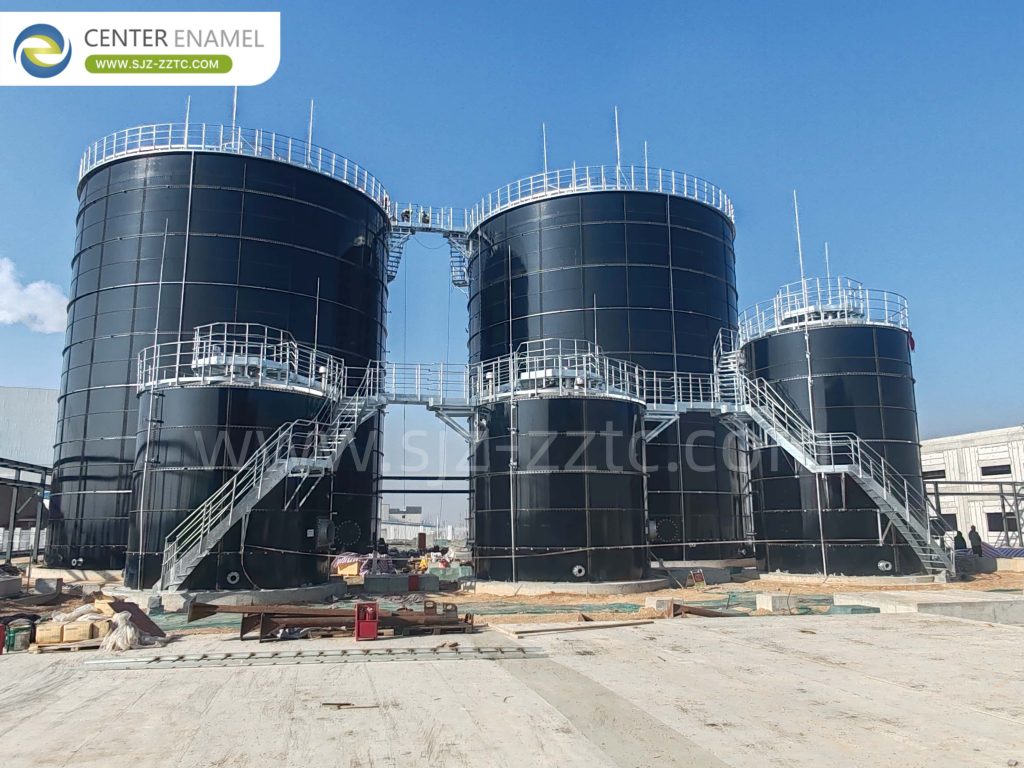
Within this evolving market, the role of an EPC Contractor has become pivotal. Success no longer depends solely on isolated equipment; it requires a unified approach that integrates robust containment-such as advanced GFS Tanks-with highly efficient biological processes. By combining material innovation, engineering design, and on-site execution, a specialized EPC Contractor ensures long-term operational stability, particularly when treating highly aggressive and complex chemical wastewater.
What Defines the Market Landscape for Anaerobic Reactors?
Understanding the competitive dynamics helps project owners make informed decisions. Currently, Chinese companies continue to consolidate their advantages in mid-tier equipment exports. International giants target high-end customers and complex industrial wastewater markets, while local players occupy the mid-to-low-end and industrial park centralized treatment markets with service responsiveness and cost advantages.
In the anaerobic process segment, UASB, EGSB, and IC anaerobic reactors are widely used for high-concentration organic wastewater pretreatment in food processing, pharmaceutical fermentation, alcohol brewing, and chemical industries. These reactors rely on steel tank shells, meaning their corrosion resistance and gas-tightness directly determine long-term operational stability. This is precisely where the application value of GFS Tanks becomes increasingly prominent, offering the durability required to protect these critical biological processes.
Why Is the IC Process a Game-Changer for High-Strength Wastewater?
At the heart of modern anaerobic treatment is the IC Process (Internal Circulation Anaerobic Reactor), the third-generation high-efficiency anaerobic technology built upon the UASB design. Its core innovation is a built-in gas-lift internal circulation system, enabling autonomous wastewater recirculation without the need for external return pumps.
The reactor features a dual-zone configuration: a lower main reaction zone and an upper polishing zone. The biogas gas-lift creates a hydraulic internal circulation, significantly increasing upflow velocity and enhancing contact between the sludge and wastewater. With extremely high compactness, it is specifically designed for high-concentration, high-flow industrial organic wastewater. By combining high efficiency, energy savings, and a minimal footprint, the IC Process stands as the core technology for modern industrial high-strength wastewater treatment.
How Do GFS Tanks Provide Unmatched Flexibility and Durability?
To house these advanced processes, the containment structure must be equally advanced. GFS Tanks are assembled on-site from prefabricated panels, offering short construction periods and support for expansion, relocation, and reuse-advantages distinctly different from immovable concrete tanks. Concrete tank pouring requires formwork, rebar tying, pouring, and long curing periods, with a single tank construction taking months. Weather conditions like rain, snow, and low temperatures can force work stoppages, and once poured, they are permanent structures that cannot be dismantled or relocated.
In contrast, GFS tank panels are factory-prefabricated, transported to the site, and directly assembled with simple procedures. Construction can proceed even in low-temperature, light-rain conditions, with installation time only one-third that of concrete tanks, keeping schedules highly controllable. If expansion is needed, additional steel panels can be installed to increase volume. For plant relocations, tanks can be fully disassembled and transported to new sites for reassembly, significantly reducing material and construction costs. This makes GFS Tanks ideally suited for short-term environmental projects, phased expansions, and relocated construction projects.
What Drives the Complexity of Chemical Wastewater Treatment?
The need for robust, flexible infrastructure is most acute when dealing with chemical wastewater. This stream originates from the entire production chain of petrochemicals, coal chemicals, fine chemicals, fertilizers, and pesticides-making it one of the heaviest pollution loads and most complex wastewater categories in the industry. Key pollution stages include chemical reaction synthesis, raw material refining, product purification, catalyst regeneration, and solvent recovery.
Petrochemical wastewater is primarily oily wastewater and alkaline residue, rich in hydrocarbons, phenols, and sulfides. Coal chemical wastewater is mainly coal gasification scrubber water, rich in ammonia nitrogen, cyanides, phenols, and heterocyclic compounds. Fine chemical wastewater has diverse compositions with various synthesis intermediates and byproducts, while pesticide wastewater contains organophosphorus and organochlorine residues. Generation is continuous, with significant fluctuations as product lines change. Large plants have high continuous discharge volumes, whereas small and medium-sized plants have intermittent discharges with extremely unstable water quality. An experienced EPC Contractor must design systems that can withstand these volatile and corrosive conditions.
How Does Center Enamel Ensure Construction Quality and Material Longevity?
Executing projects in such demanding environments requires specialized manpower and advanced materials. Center Enamel has established its own domestic and international certified construction teams, with regular practical training on GFS tank installation and overseas construction standards. Domestically, regional teams cover multiple zones, while internationally, cross-border professional installation teams are equipped to various country standards. This sufficient manpower reserve ensures uninterrupted construction delivery for remote African sites, high-standard European/American facilities, and projects across the globe.
| Operational Capability | Details |
| Domestic Construction | Regional teams covering multiple zones; capable of deploying multiple teams for large tank farm projects simultaneously. |
| International Construction | Cross-border professional installation teams trained in local standards (e.g., Africa, Europe, Americas). |
| Material Technology | 200+ independently developed anti-corrosion enamel formulations. |
| Service Life | GFS tank anti-corrosion service life exceeds 30 years, far surpassing concrete and ordinary equipment. |
This material technology is suitable for global high-corrosion wastewater and biogas fermentation conditions, ensuring that the infrastructure outlasts the toughest environments.
What Are the Advantages of the Aluminum Geodesic Dome Roof?
Completing the containment system requires an effective cover. The Aluminum Geodesic Dome Roof, independently developed by Center Enamel, is manufactured using high-strength aluminum alloy plates through integral stamping. It features a triangular grid spherical self-supporting structure, enabling large-span full coverage without internal support columns. The roof offers excellent weather resistance and corrosion resistance, capable of long-term protection against acid rain, salt spray, and UV radiation, suitable for extreme outdoor climate conditions.
The structural design complies with international AWWA D108 standards, with plate thickness, rib cross-sections, and joint connections verified by finite element stress analysis. Weighing only one-third to one-half of a steel roof with the same span, it significantly reduces the load on the tank top, allowing direct installation without tank wall reinforcement. The roof provides superior overall sealing performance with double sealing between panels, enabling both airtight gas storage and enclosed odor control-perfect for biogas collection, wastewater tank odor control, and drinking water contamination prevention. The support-column-free design does not interfere with internal equipment like mixers and water distributors, and the aluminum material does not support microbial growth, requiring no anti-corrosion maintenance over long-term use.
Frequently Asked Questions
What is the advantage of using an EPC Contractor?
An EPC Contractor provides a single point of responsibility, integrating design, manufacturing (like GFS Tanks), and on-site construction. This ensures seamless project delivery, reduces coordination risks, and guarantees long-term performance.
Why are GFS Tanks preferred over concrete for chemical wastewater?
GFS Tanks offer superior corrosion resistance, gas-tightness, and modularity. They can be installed in one-third the time of concrete tanks, easily expanded, and even relocated, making them highly cost-effective for aggressive chemical environments.
Does the IC Process require specialized tank materials?
Yes. The IC Process generates highly corrosive environments. Utilizing GFS Tanks with proprietary enamel technology ensures the reactor shell resists acids, alkalis, and microbial corrosion, maintaining structural integrity for over 30 years.
Are you ready to elevate your industrial wastewater project with a partner who integrates advanced GFS Tanks and proven anaerobic processes? Contact Center Enamel's engineering team today to discuss how our turnkey EPC Contractor services can bring your facility to life.
Let us help you navigate the complexities of chemical wastewater treatment-reach out to Center Enamel now to request a customized technical proposal and secure your project's long-term success.