
Evolution and Development of Palm Oil Mill Effluent (POME) Treatment Technologies
The global palm oil industry plays a critical economic role across Southeast Asia, Latin America, and West Africa, but it has historically faced severe environmental scrutiny due to the massive generation of Palm Oil Mill Effluent (POME). Raw POME is a highly polluting, acidic colloidal suspension characterized by extraordinary biochemical oxygen demand (BOD) and chemical oxygen demand (COD).
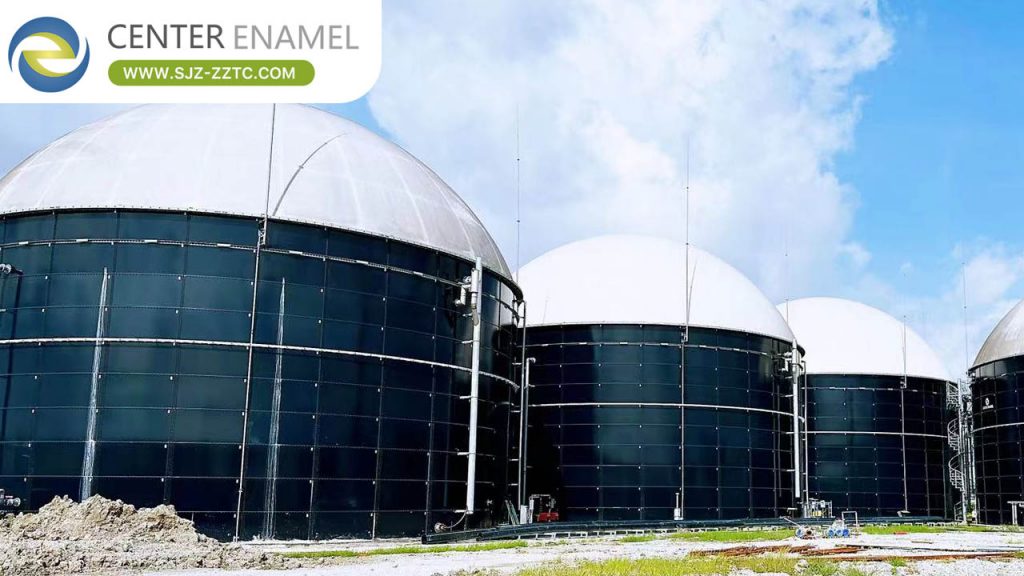
Over the decades, the development of palm oil mill effluent (POME) treatment has undergone a massive technological transformation—shifting from archaic, land-intensive open lagoons to high-rate anaerobic digestion with biogas recovery and sophisticated tertiary polishing frameworks.
Phase 1: The Era of Conventional Open Pond Systems (Early Historical Phase)
In the early stages of industrial palm oil milling, environmental regulations were less rigid, and the primary focus was on low-cost volume reduction.
- The System: Mills relied extensively on multi-stage open ponding systems, which typically included cooling and mixing ponds, anaerobic ponds, facultative ponds, and final aerobic polishing ponds.
- The Limitations: While inexpensive to construct, open ponds required vast tracts of land, suffered from long hydraulic retention times (HRT), and—most critically—emitted massive quantities of fugitive greenhouse gases (such as methane and hydrogen sulfide) directly into the atmosphere. Furthermore, they frequently failed to consistently meet tightening regulatory discharge limits.
Phase 2: Shift to Closed High-Rate Anaerobic Digestion & Biogas Capture
As environmental agencies introduced stringent environmental standards regarding chemical discharge and greenhouse gas tracking, the industry evolved toward engineered biological systems.
- The Technological Leap: Open ponds were systematically upgraded or replaced with enclosed high-rate anaerobic reactors, such as Continuously Stirred Tank Reactors (CSTR) and Upflow Anaerobic Sludge Blanket (UASB) systems.
- Energy Recovery: These closed reactors revolutionized POME management by achieving 85% to 95% COD reduction while capturing methane-rich biogas. Mills began utilizing this captured gas in combined heat and power (CHP) engines, transforming a major environmental liability into a renewable energy source.
Phase 3: Modern Tertiary Polishing & Advanced Integration (Current Landscape)
Even after effective anaerobic and aerobic biological treatment, residual organic compounds, suspended solids, color bodies, and nutrients often remain above modern discharge thresholds. Recent developments emphasize advanced effluent polishing technologies:
- Membrane Technologies: The integration of ultrafiltration (UF), microfiltration (MF), and Membrane Bioreactors (MBR) ensures high-purity water separation, removing trace colloids and pathogens.
- Physicochemical Innovations: Coagulation-flocculation, advanced oxidation processes (AOPs), and palm-based bio-adsorbents (using oil palm empty fruit bunches) are widely deployed to strip out residual color and recalcitrant pollutants.
- Zero Liquid Discharge (ZLD): Leading-edge mills are moving toward complete water circularity via evaporation and crystallization systems, eliminating liquid wastewater discharge altogether.
Comparative Data Table: Evolution of POME Treatment Generations
| Generation / Era | Dominant Technology | Primary Advantage | Major Limitation | Environmental Impact |
| First Generation | Open Ponding Systems (Anaerobic & Aerobic) | Low initial capital and operating costs | Massive land footprint, long HRT, fugitive emissions | High greenhouse gas emissions (methane leakage) |
| Second Generation | Closed Anaerobic Digesters (CSTR / UASB) | High COD reduction & biogas energy recovery | Requires mechanical upkeep and strict temperature control | Moderate emission reduction via biogas capture |
| Third Generation (Current) | Advanced MBR, Membrane Filtration, & ZLD | Exceptional effluent quality, water reuse capability | High energy demand and potential membrane fouling | Minimal environmental footprint; circular water management |
Frequently Asked Questions (FAQ)
Q1: Why did the palm oil industry transition away from open pond systems for POME treatment?
A: Open ponds require massive land footprints, have very long hydraulic retention times, and emit large quantities of uncontrolled greenhouse gases (methane) into the atmosphere. Stricter environmental regulations forced mills to adopt enclosed, high-performance biological systems.
Q2: How has energy recovery changed the economics of POME treatment?
A: The integration of closed high-rate anaerobic digesters (such as UASB and CSTR units) allows mills to capture methane-rich biogas. This biogas is converted into electricity and thermal energy, offsetting operational energy costs and transforming waste management into a net-energy asset.
Q3: What role do membrane technologies play in modern POME treatment developments?
A: Membrane technologies—including ultrafiltration, microfiltration, and membrane bioreactors (MBRs)—act as advanced tertiary polishing steps. They physically block microscopic suspended solids, color bodies, and pathogens, enabling mills to produce clean water suitable for industrial reuse or compliance with strict discharge standards.