
Expert Biogas Solution Provider: Leveraging GFS Tanks and UASB Process for Livestock Manure Treatment
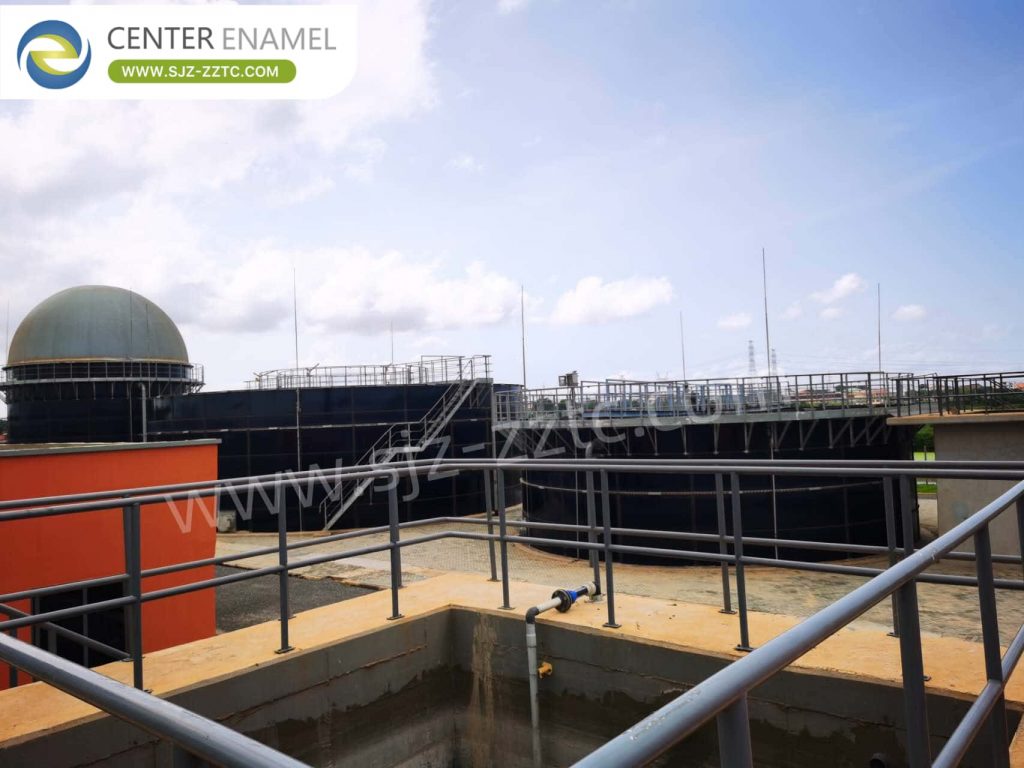
The livestock manure treatment market is transitioning from environmental compliance-driven to dual-value-driven by energy and fertilizer valorization. The European digestate concentration fertilizer market is mature, and large-scale biogas projects in North America commonly include digestate processing centers. In terms of business model innovation, the asset-light model of farmers paying per volume treated has been piloted successfully in some countries. China's "biogas operation outsourcing" model is beginning to penetrate county-level projects.
Digital technology-driven precision nutrient management platforms are emerging as new industry links connecting farms, treatment centers, and agricultural end-users. In terms of process equipment, CSTR is the mainstream anaerobic digestion process for treating livestock manure. After anaerobic digestion, manure produces biogas for power generation or grid-injection purification, while digestate is processed into organic fertilizer for farmland application. GFS tanks, with strong corrosion resistance and low maintenance costs, are widely used in manure treatment projects on large-scale farms in North America, Europe, and China, particularly suited to the corrosive environments of high ammonia-nitrogen and high hydrogen sulfide in manure.
As the industry evolves, selecting the right infrastructure becomes critical for operational success. To ensure that these complex manure treatment systems function at their peak efficiency, operators must rely on robust tank technology. This is where a professional Biogas Solution Provider plays a pivotal role in ensuring structural integrity and longevity.
GFS Tanks: Superior Corrosion Resistance Compared to Traditional Concrete
Center Enamel's independently developed double-sided double-layer enameling technology is the industry's leading coating anti-corrosion technology, with corrosion resistance completely surpassing concrete tanks. Concrete tank interiors are riddled with pores, allowing wastewater and acid/alkaline media to easily penetrate and corrode the structural layer. Long-term use leads to irreversible problems such as internal wall spalling, water seepage, and rebar corrosion, which are difficult to repair and cannot be fundamentally resolved.
GFS tanks feature high-temperature enameling on both the interior and exterior surfaces of steel panels, with a dense, non-porous enamel finish that completely blocks corrosive liquids and biogas permeation. The enamel layer has extremely strong chemical stability, resisting acids, alkalis, salts, and microbial corrosion. Concrete tanks will develop extensive corrosion and leakage after 5-8 years of use, while GFS tank anti-corrosion service life can exceed 30 years, with no need for frequent internal lining repairs throughout the service life, significantly reducing long-term anti-corrosion maintenance investment and fundamentally eliminating environmental risks of medium leakage contaminating sites and groundwater. Compared to traditional concrete and FRP tanks, GFS tank coatings have no risk of peeling or blistering, and are adaptable to highly corrosive conditions such as palm oil mill effluent, livestock manure, and chemical high-salinity wastewater, with outstanding long-term comprehensive cost advantages.
Beyond the durability of the tank itself, the efficiency of the biological treatment process is equally vital for a successful biogas plant. Integrating advanced anaerobic technologies allows facilities to maximize their output and environmental impact. Understanding the specific applications of different treatment methodologies is essential for any modern biogas facility.
UASB Process: Applicable Scenarios and Advantages
Suitable for soluble medium-to-high concentration organic wastewater, covering light industrial wastewater from brewing, sugar refining, starch, papermaking, food processing, printing and dyeing, etc. Suitable for wastewater where organics are predominantly soluble with low suspended solids content, not suitable for high-solids, high-viscosity wastewater. Can be used alone as the primary treatment process or as a pretreatment for high-strength wastewater to reduce downstream aerobic load. Suitable for municipal wastewater anaerobic pretreatment and low-solids livestock wastewater treatment. With its low cost and stable operation advantages, it is suitable for long-term continuous, large-flow industrial wastewater treatment projects. The UASB Process is recognized globally for its effectiveness in high-strength organic degradation.
Implementing these robust systems requires careful financial planning to ensure long-term sustainability. By optimizing the maintenance and operational routines, facility owners can significantly enhance their return on investment. This analysis highlights how operational excellence supports the project's bottom line.
Livestock Wastewater Operation and Maintenance Cost Analysis
O&M costs are relatively low with excellent input-output ratio-the highest cost-effectiveness among the five wastewater types. Core treatment units are primarily physical separation, anaerobic digestion, and ecological polishing-no high-end precision equipment or expensive chemicals. Equipment is simple with low failure rates and low maintenance costs. Anaerobic digestion produces stable biogas for plant heating and power generation, offsetting energy costs. Ecological treatment units have virtually no ongoing O&M costs. Only periodic cleaning of sedimentation tanks and polishing ponds is required, with low labor costs. Manure solids, sludge, and digestate can be sold as resources, further reducing net treatment costs.
Real-world applications demonstrate the tangible benefits of these technologies, especially when managed by an experienced team. The following case study illustrates how customized engineering solutions transform industrial challenges into sustainable energy opportunities. This serves as a testament to the expertise of a reliable partner in the field.
Case Study: Indonesia Palm Oil Biogas Project
Specifically designed for high-concentration palm oil wastewater treatment with 3 GFS fermentation tanks, each 19.86 m diameter × 8.4 m height. Installation began November 2009 with only 7 construction personnel, completing all tank assembly in 40 days-highly efficient and time-saving. Tanks are fitted with dual-membrane gas storage covers for POME anaerobic digestion-degrading organics and recovering biogas energy while eliminating palm industry pollution. This is an early benchmark POME biogas treatment project in Southeast Asia.
Success on this scale requires a comprehensive support system that extends far beyond individual projects. Global reach ensures that clients receive consistent quality and expertise, regardless of their location. This expansive service network is a core pillar of our operational philosophy.
Center Enamel's Global Market Presence
Center Enamel's global business covers over 100 countries and regions, with 30,000+ successful overseas projects. Products are exported to all major regions including Europe, the Americas, the Middle East, Africa, Southeast Asia, and Latin America, with a well-established global localized service network.
Domestically, the company is organized into North, South, Central, East, and Southwest marketing regions, covering environmental, water utility, livestock, and petrochemical customers nationwide. Internationally, the company adopts a "standardized products + localized adaptation" model-adjusting tank corrosion protection, sealing, and pressure standards for different national water quality and environmental regulations-with multiple global landmark projects: large-volume GFS tanks in Italy, 20 m tower water supply tanks in Colombia, coastal seawater treatment tanks in Costa Rica, large municipal wastewater aluminum dome projects in Saudi Arabia, etc. The company has established long-term stable strategic partnerships with many Fortune 500 companies.
Finally, the ability to execute these projects under diverse conditions proves the adaptability and professional maturity of our services. Our commitment to excellence in installation and delivery ensures that every client receives a world-class solution. We remain dedicated to setting new industry standards for environmental infrastructure.
Center Enamel Overseas Installation Coverage and Delivery Capability
Center Enamel is the pioneer of Chinese GFS equipment exports, with installation service coverage across over 100 countries and regions-possessing full delivery capability across climates, regulations, and geographies.
Overseas coverage includes Southeast Asia (Vietnam, Thailand, Malaysia, Indonesia, Cambodia, Bangladesh, Nepal, etc.), Africa (Ghana, South Africa, Mali, Guinea, Zambia, Kenya, Pakistan, etc.), Europe/Americas (Sweden, USA, Russia, etc.), the Middle East, and Latin America-adaptable to tropical rainy high-salt spray, high-altitude mountainous, Nordic severe cold, and high-standard European/American facility conditions.
The company uses a dual-service model of "own cross-border construction teams + overseas local agent coordination"-whether clients are in developed countries or remote developing regions-providing one-stop services including on-site survey, on-site installation, process commissioning, and operator training. Complete coverage covers biogas engineering, municipal wastewater, industrial wastewater, livestock manure, drinking water storage, and other global mainstream environmental engineering projects-possessing the full delivery capability to undertake large-scale tank farm projects in any country worldwide.
FAQ
1.Why is Center Enamel considered a premier Biogas Solution Provider?
Center Enamel is a leading Biogas Solution Provider because it integrates high-performance GFS tank technology with professional engineering services, delivering 30,000+ successful projects in over 100 countries, ensuring durability, efficiency, and full-service support tailored to specific environmental and regulatory requirements across diverse global markets.
2.How does the UASB Process benefit industrial wastewater treatment?
The UASB Process is highly effective for treating medium-to-high concentration organic wastewater from industries like brewing and food processing. It offers low-cost, stable operation by efficiently degrading organics in a compact system, serving as an excellent primary treatment or pretreatment to significantly reduce downstream aerobic load.
3.What advantages do GFS tanks offer over traditional concrete tanks?
GFS tanks provide superior corrosion resistance and a service life exceeding 30 years compared to the 5-8 years of concrete tanks. Their non-porous enamel finish prevents leakage and spalling, requiring minimal maintenance, which significantly lowers long-term operational costs and eliminates the environmental risks associated with concrete structural degradation.