
Expert EPC and Biogas Technology for Thailand Agricultural Waste Biogas Project
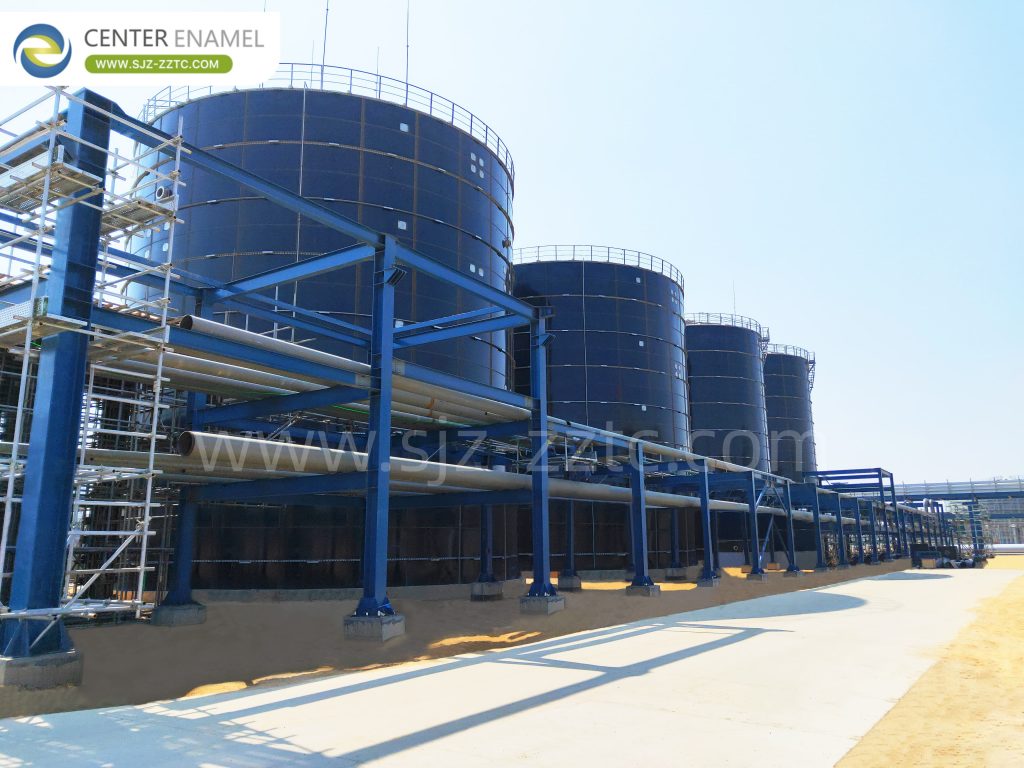
As a core agricultural powerhouse of Southeast Asia with tropical monsoon climate and booming crop cultivation plus intensive livestock breeding, Thailand generates massive volumes of untreated agricultural waste annually nationwide, from central Chao Phraya River Plain rice fields to northern Chiang Mai fruit plantations and southern palm farms. Conventional open-air incineration and random stacking of farm residues trigger severe haze pollution, PM2.5 surge and soil degradation, while Thailand’s rising domestic fossil fuel import cost and national renewable energy roadmap toward 2030 carbon neutrality jointly drive explosive market demand for standardized Agricultural Waste Biogas Project based on mature Biogas Technology and robust GFS Tanks storage infrastructure.
As a worldwide trusted EPC specialist focused on biomass anaerobic recycling, Center Enamel tailors full-cycle customized biogas plant solutions matching Thailand’s high-temperature, high-humidity tropical conditions, integrating multi-type advanced anaerobic reactors and corrosion-resistant GFS Tanks to realize full closed-loop resource conversion from discarded farm waste into clean biogas, organic fertilizer and recycled water, facilitating Thailand’s rural circular agriculture upgrade and domestic clean energy independence.
Major Sources of Thailand’s Agricultural Waste
Thailand’s diversified planting and breeding industry forms abundant raw feedstock for Agricultural Waste Biogas Project, classified into four core waste categories with distinct physical and organic features suitable for anaerobic digestion via Biogas Technology:
Crop cultivation residues: Dominated by rice straw, sugarcane bagasse and leaves, cassava stalk, corn cob and oil palm empty fruit bunch. Thailand ranks among global top rice and sugar exporters, producing millions of tons of rice straw post annual harvest from November to April across central farmlands; over 20 million tons of sugarcane residues are generated yearly from national sugar industrial zones, alongside massive discarded cassava and palm waste from southern industrial crop bases. Substandard leftover fruits including unqualified mango, durian and pineapple discarded by fruit orchards also fall into this group, rich in easily degradable carbohydrates.
Livestock breeding manure waste: Concentrated cow dung, chicken manure, pig slurry from intensive poultry and cattle farms spreading over northern and eastern Thailand. Hundreds of large-scale chicken and dairy breeding bases produce tons of high-organic manure daily, previously dumped randomly near breeding sites to cause soil and underground water eutrophication.
Agro-processing residual waste: Byproducts from domestic rice mills, sugar refineries and fruit juice factories like rice husk, molasses, fruit peel and pomace, most of which are abandoned near processing plants without proper disposal.
Field garden biomass waste: Pruned branches, fallen leaves and crop weeds from orchard maintenance across tropical planting areas, featuring high fiber content ideal for mixed anaerobic fermentation with livestock manure.
All above waste carries high biodegradable organic substances, making them premium raw materials to produce biogas through professional Biogas Technology and form circular economy via complete Agricultural Waste Biogas Project.
Crucial Challenges of Agricultural Waste Disposal Facing Thailand
Despite abundant biomass resources, outdated waste disposal approaches create environmental and economic hurdles, accelerating the popularization of the Agricultural Waste Biogas Project:
Severe air pollution from open burning
Most small farmers burn crop straw to save disposal labor during harvests. This practice lifts PM2.5 concentration in Chiang Mai, suburban Bangkok and other core regions, creating widespread smog, threatening public respiratory health and violating Thailand’s haze control policies.
Soil and groundwater contamination by piled waste
Unprocessed livestock manure and spoiled fruit residues seep into soil and shallow aquifers under tropical rainfall, resulting in nitrogen and phosphorus overload and contaminating farmland and rural drinking water.
Heavy expenditure on imported fossil fuels
Thailand depends largely on imported coal and natural gas for rural electricity and heating, lifting farming costs and limiting countryside industrial growth. Abundant unused agricultural biomass is wasted as potential renewable energy.
Hard centralized collection due to scattered waste sources
Dispersed smallholder farms in northern mountainous areas produce fragmented waste. Poor transport infrastructure and inconsistent collection criteria hinder centralized disposal, which can be improved by modular biogas plants equipped with flexible GFS Tanks.
Low resource recycling leading to economic losses
Only under 12% of Thai agricultural waste is recycled currently. Most usable biomass is discarded instead of being processed into biogas or organic fertilizer, resulting in substantial losses of circular economy benefits.
Core Mechanism: How Agricultural Waste Converts into Biogas via Biogas Technology
The whole biogas generation process relies strictly on mature anaerobic digestion core of Biogas Technology, operating under fully oxygen-free enclosed environment inside reactor and GFS Tanks, going through four consecutive biochemical degradation phases driven by specialized anaerobic microbes to transform solid agricultural waste into usable biogas (55%~70% methane, 25%~40% carbon dioxide plus trace hydrogen sulfide:
- Hydrolysis stage: Hydrolytic bacteria secrete extracellular enzymes to break down large-molecule organic matters like cellulose, protein and fat from straw and manure into soluble small molecular organics such as glucose and amino acid, turning solid waste into liquid organic substrate suitable for subsequent microbial absorption.
- Acidification stage: Acid-forming bacteria further decompose soluble intermediate products into short-chain volatile fatty acids including acetic acid, propionic acid and butyric acid, alongside partial carbon dioxide and hydrogen gas release.
- Acetogenic transformation stage: Acetogenic microbes convert leftover higher fatty acids into acetic acid, the key direct substrate for methanogens to produce methane.
- Methanogenic stage (core of Biogas Technology): Strictly anaerobic methanogenic archaea consume acetic acid, hydrogen and carbon dioxide under stable temperature (30~38℃ medium-temperature fermentation fitting Thailand’s tropical ambient) to synthesize methane, forming mixed raw biogas captured and stored by airtight GFS Tanks.
Post-fermentation, residual digestate (digested sludge and slurry) from reactors is processed into high-quality organic fertilizer for local farmland, finishing full waste-to-resource circulation of the entire Agricultural Waste Biogas Project. Raw biogas stored in GFS Tanks undergoes desulfurization, dehydration and compression to acquire purified biogas for on-site power generation, farm boiler heating or refined Bio-CNG for rural vehicle fuel.
Four Core Advanced Anaerobic Processes for Thailand’s Agricultural Waste Biogas Project
Center Enamel equips Thailand’s diversified biogas projects with four mature anaerobic reactor technologies customizable for different waste concentration, project scale and regional tropical conditions, serving as core hardware matching supporting GFS Tanks system:
CSTR (Continuous Stirred-Tank Reactor)
Installed with full-set mechanical internal stirring devices to realize uniform raw waste mixing inside tank, avoiding feedstock stratification and crusting under Thailand’s high-temperature humid climate. Strong anti-shock loading capacity adapts to high-solid-content mixed feedstock of livestock manure plus fruit pomace, securing steady daily biogas output, specially applicable for large centralized breeding farm biogas plants with over 500-head cattle or ten-thousand-scale chicken farms nationwide. All CSTR reactor main bodies can be constructed by assembled GFS Tanks.
UASB (Upflow Anaerobic Sludge Blanket)
Depends on self-formed high-activity granular sludge bed to decompose pre-treated low-suspended-solid agricultural waste such as mill rice husk and diluted pig slurry. Features compact footprint, low auxiliary power consumption and stable COD removal efficiency; fits medium-sized centralized biogas projects built beside agro-processing factories in central Thailand’s industrial crop belts, with matched regulating and biogas storage GFS Tanks as auxiliary facilities.
USR (Upflow Solid Reactor)
Structurally simplified low-investment reactor targeting high-solid raw materials like dry rice straw and orchard pruned branches without complicated pre-crushing pretreatment. Outstanding anti-clogging performance and low daily operation & maintenance cost perfectly match small scattered rural family and village-level decentralized Agricultural Waste Biogas Project in remote northern mountainous Thailand, greatly lowering small farmers’ initial construction expense.
IC (Internal Circulation Anaerobic Reactor)
High-load high-efficiency reactor with built-in internal gas-liquid-solid circulation system, organic load efficiency reaches 3~5 times of conventional anaerobic equipment, occupying less construction land and delivering high biogas yield. Ideal for ultra-large-scale regional centralized biogas hubs near Thailand’s major sugarcane industrial parks and giant integrated livestock industrial zones, paired with large-volume bulk GFS Tanks for massive biogas stockpiling.
Inherent Superiorities of GFS Tanks Deployed in Thai Agricultural Waste Biogas Project
GFS Tanks (Glass-Fused-to-Steel Tanks) act as indispensable core supporting equipment covering anaerobic fermentation tank, biogas storage tank, waste regulating tank and digestate storage tank across full Agricultural Waste Biogas Project flow, uniquely suited for Thailand’s year-round high-temperature, heavy rainfall and high-humidity tropical ambient with six prominent strengths:
- Excellent anti-corrosion property: High-temperature sintered double-layer enamel coating effectively resists erosion from acidic fermented slurry, sulfur-containing raw biogas and humid tropical atmosphere, solving rust damage pain point of traditional concrete and carbon steel tanks in Thailand’s rainy season environment.
- Premium airtight sealing performance: Professional customized bolt-sealing structure prevents biogas leakage during storage and fermentation, maximizing biogas collection rate and eliminating explosive gas hidden danger for on-site biogas plant operation.
- Modular prefabricated bolted assembly design: All enamel steel panels are pre-produced in Center Enamel’s standardized factory and assembled on construction site via bolt connection without field welding, greatly shortening construction period and avoiding welding quality failure caused by Thailand’s high air humidity and sudden heavy rain.
- Ultra-long service lifespan exceeding 30 years: Smooth inner enamel surface prevents organic sludge scaling and residue adhesion, cutting routine tank cleaning and maintenance cost for Thai farm operators in long-term project running.
- Superior thermal stability: Stable physical property under wide temperature fluctuation from Thailand’s dry-season high heat to rainy-season low temperature, guaranteeing constant internal fermentation temperature of anaerobic reactors to sustain steady Biogas Technology operation and continuous biogas production.
- Multi-scenario wide compatibility: Single set of GFS Tanks can flexibly switch application between raw waste equalization, anaerobic digestion, biogas containment and organic digestate storage, seamlessly matching all four above-mentioned CSTR/UASB/USR/IC anaerobic processes for diversified Thai biogas project demands.
Why Select Center Enamel as Exclusive EPC Contractor of Agricultural Waste Biogas Project
As global leading full-service EPC provider specialized in biomass anaerobic recycling and GFS Tanks manufacturing, Center Enamel owns six core competitive edges to deliver tailor-made Thai biogas turnkey projects:
- Solid R&D and in-house production with over 200 patents, products certified to ISO and AWWA standards.
- Full one-stop turnkey service covering design, production, shipment, installation, commissioning and after-sales support.
- Customized engineering matching Thailand’s waste traits, tropical weather and site conditions.
- Rich ASEAN project experience and familiarity with Thailand’s local laws and construction rules.
- Cost-effective Biogas Technology to boost gas output, cut running costs and shorten investment payback time.
- Regional after-sales teams in Southeast Asia for prompt on-site maintenance and technical upgrades.
Center Enamel’s Professional GFS Tanks Installation
Center Enamel develops installation system exclusively adapted to Thailand’s rainy, high-temperature construction environment to guarantee fast, safe and high-quality on-site GFS Tanks assembly:
- Hydraulic jacking top-down installation technology: Avoids high-altitude scaffold erection during tank building, remarkably improving construction safety especially for narrow-space farm biogas plants inside dense Thai rural villages or limited-land orchard project sites.
- Full modular bolt assembly construction: Cancel field hot welding procedure entirely to eliminate weld corrosion risk induced by Thailand’s high air moisture and sudden downpour, ensuring long-term tank sealing and anti-corrosion performance.
- Experienced local-oriented professional construction team: Engineers with abundant Southeast Asian construction experience lead whole on-site installation work and provide systematic operation training for Thai local maintenance personnel after project handover.
- Strict multi-dimensional pre-delivery acceptance testing: Complete comprehensive air tightness test, hydraulic pressure test and corrosion resistance inspection on finished GFS Tanks before formal system connection, making all tank indexes fully meet Thai national environmental engineering acceptance standards.
Global Successful Project Cases of Center Enamel
Case1: Malaysia Biogas Project
Tank Dimensions: φ22.93 × 12.325 m (H) — 1 Unit
Total Volume: 5,087 m³ — 1 Unit
Completion Date: 2025
Case2: Sweden Biogas Project
Tank Dimensions: φ19.11 × 19.2 m (H) — 1 Unit
Total Volume: 5,510 m³
Completion Date: 2024
Integrating optimized Biogas Technology, diversified advanced anaerobic reactors and high-performance GFS Tanks, standardized Agricultural Waste Biogas Project becomes Thailand’s most practical solution to tackle farm waste pollution, mitigate national energy shortage and boost rural circular economy development amid its tropical agricultural characteristics.
As reliable full-cycle EPC partner, Center Enamel leverages mature overseas project experience, localized customized design and high-durability GFS Tanks equipment to deliver cost-effective biogas plant construction services for Thai farmers and agricultural enterprises. Continuous nationwide promotion of such biogas projects will further cut Thailand’s agricultural carbon emission, reduce fossil fuel import reliance and realize win-win gains of rural environmental restoration and sustainable agricultural economic growth in long run.