
Expert EPC and GFS Tanks for Bangladesh Agricultural Waste Biogas Project
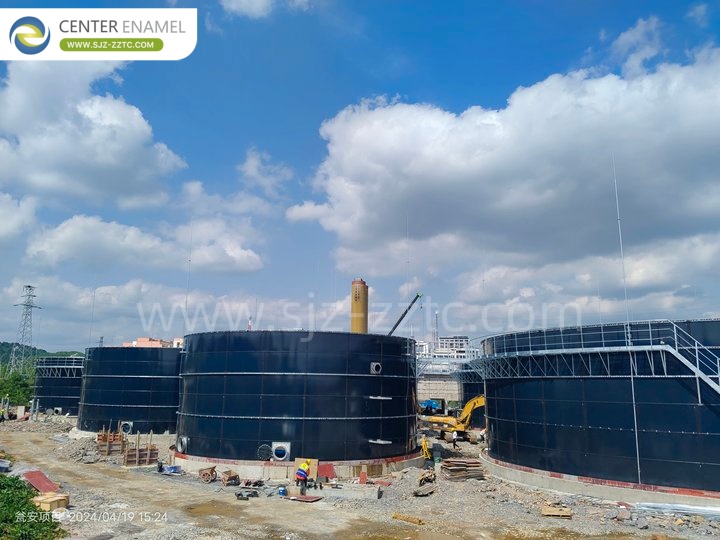
As a populous agricultural nation built on fertile Ganges Delta plain with humid tropical monsoon climate, Bangladesh’s agriculture contributes nearly 16% of national GDP and employs half of domestic labor force, generating massive volumes of untreated agricultural residues across rice belts, jute plantations and scattered livestock farms nationwide. Conventional open straw incineration and random manure stacking trigger frequent seasonal haze, river eutrophication and underground arsenic-contaminated water deterioration, while the country’s severe nationwide power shortage and heavy reliance on pricey imported fossil fuels accelerate market demand for mature Agricultural Waste Biogas Project to generate sustainable Biogas Power, supported by robust corrosion-proof GFS Tanks and proven anaerobic technologies.
As a globally trusted full-chain EPC contractor specializing in biomass recycling and biogas power construction, Center Enamel develops site-tailored biogas plant solutions fully adapted to Bangladesh’s high-temperature, rainy delta terrain. By integrating four advanced anaerobic reactors and long-lifespan GFS Tanks, the company constructs closed-loop resource systems that convert useless farm waste into clean Biogas Power, organic fertilizer and recycled irrigation water, effectively easing Bangladesh’s chronic rural power deficiency and pushing forward its national renewable energy roadmap targeting 40% green power share by 2041.
Major Sources of Bangladesh’s Agricultural Waste
Bangladesh’s diversified planting and breeding sectors produce abundant biodegradable feedstock ideal for raw material supply of Agricultural Waste Biogas Project and subsequent Biogas Power generation, categorized into four core types:
- Grain & cash crop residues: Ranking among world’s top rice and jute producers, Bangladesh yields enormous rice straw, rice husk and dry jute stalk annually across vast delta croplands; leftover corn stalk, sugarcane bagasse and discarded tropical fruits (mango, jackfruit, banana) from fruit orchards are also rich in fermentable organics.
- Livestock breeding manure waste: Massive cow dung, buffalo manure and poultry slurry from intensive dairy and chicken farms concentrated around Dhaka, Chittagong and Khulna; most manure was dumped casually beside breeding yards without harmless disposal, polluting nearby watercourses.
- Agro-processing by-products: Fruit pomace, molasses, grain bran and jute pulp leftovers discarded from local rice mills, sugar refineries and jute processing factories spread across major agricultural industrial zones.
- Orchard and field green waste: Pruned fruit branches, fallen leaves and farm weeds from regular orchard maintenance in hilly Sylhet region, usually blended with livestock manure to improve fermentation efficiency for stable Biogas Power output.
All these waste materials feature high organic content and become cost-effective feedstock to produce biogas for power with matched GFS Tanks configuration.
Critical Agricultural Waste Disposal Challenges in Bangladesh
Despite abundant biomass reserves, outdated waste management creates five prominent bottlenecks and speeds up nationwide promotion of standardized Agricultural Waste Biogas Project:
- Seasonal air pollution from open crop burning: Most rural farmers burn rice and jute residues post-harvest to cut disposal expenses, triggering pervasive smog across central delta areas, lifting PM2.5 index and violating Bangladesh’s anti-open-burning environmental regulations.
- Soil and groundwater contamination: Unprocessed manure and rotten fruit waste infiltrate into delta topsoil and shallow aquifers during annual heavy monsoon rains, worsening existing underground arsenic pollution and threatening rural drinking water safety.
- Huge fossil fuel import burden & chronic power deficit: Around 95% of Bangladesh’s crude oil and half of natural gas depend on expensive overseas import; domestic power demand rises nearly 10% yearly, frequent daily blackouts (up to 6 hours in big cities) severely hinder rural and industrial development, while tons of usable farm biomass are abandoned unused.
- Fragmented raw material collection barriers: Scattered smallholder family farms spread widely over remote Sylhet hill zones; underdeveloped rural logistics and inconsistent collection standards block centralized waste gathering, while modular biogas plants equipped with flexible GFS Tanks efficiently solve decentralized treatment pain points.
- Ultra-low biomass recycling rate: Less than 8% of Bangladesh’s agricultural waste is recycled currently; valuable organic feedstock is wasted instead of being turned into biogas for Biogas Power or organic fertilizer, causing massive circular economic losses every year.
Core Mechanism of Agricultural Waste Converting into Biogas for Biogas Power
Waste-to-biogas conversion relies on four-stage oxygen-free anaerobic digestion inside sealed reactors and airtight GFS Tanks, maintained at 30~38℃ medium temperature fitting Bangladesh’s tropical ambient; finished raw biogas contains 55%~70% methane as core fuel for on-site Biogas Power generation alongside CO₂ and trace hydrogen sulfide:
- Hydrolysis stage: Hydrolytic bacteria break down macromolecular cellulose, protein and fat from straw and manure into soluble small organic molecules.
- Acidification stage: Acid-forming microbes further decompose soluble intermediates into short-chain volatile fatty acids.
- Acetogenic stage: Higher fatty acids are transformed into acetic acid, the key substrate for methane production.
- Methanogenic stage: Strictly anaerobic methanogens consume acetic acid, hydrogen and CO₂ to produce raw biogas safely stored inside airtight GFS Tanks.
After fermentation, leftover digestate is processed into premium organic fertilizer for local farmland; stored raw biogas is purified via desulfurization and dehydration before feeding into generator units to produce steady Biogas Power, finishing full resource recycling of the whole Agricultural Waste Biogas Project.
Four Advanced Anaerobic Processes for Bangladesh’s Agricultural Waste Biogas Project
Center Enamel customizes four mature anaerobic reactor options matching diverse project scale, waste composition and delta climate, all perfectly paired with supporting GFS Tanks:
CSTR (Continuous Stirred-Tank Reactor)
Equipped with full internal mechanical stirring to prevent raw material stratification and crusting under Bangladesh’s humid delta weather; strong anti-shock loading fits high-solid mixed feed of cow dung plus fruit pomace, securing continuous stable Biogas Power for large-scale dairy and jute factory biogas projects; reactor main bodies can be assembled with bolt-connected GFS Tanks.
UASB (Upflow Anaerobic Sludge Blanket)
Depends on self-cultivated high-activity granular sludge to degrade pre-treated low-concentration waste like diluted pig slurry and rice husk, featuring compact footprint and low auxiliary power cost; ideal for medium-sized biogas plants beside grain processing factories with matched regulating and biogas storage GFS Tanks.
USR (Upflow Solid Reactor)
Low-investment simplified design with outstanding anti-clogging performance, requiring no complicated pre-crushing; perfectly fits high-fiber dry jute stalk and rice straw for small village-level decentralized Agricultural Waste Biogas Project in remote hilly regions and greatly reduces farmers’ initial construction investment.
IC (Internal Circulation Anaerobic Reactor)
High-efficiency internal-circulation reactor with organic removal efficiency 3–5 times higher than conventional equipment, occupying smaller land space and delivering higher biogas yield; suitable for oversized centralized biogas hubs near major sugar and jute industrial parks equipped with large-volume bulk GFS Tanks for massive biogas stockpiling and stable Biogas Power output.
Unique Advantages of GFS Tanks in Bangladesh’s Agricultural Waste Biogas Project
As core supporting facilities covering fermentation tank, conditioning tank, biogas storage and digestate tank across full project flow, GFS Tanks (Glass-Fused-to-Steel Tanks) have six prominent strengths adapting to Bangladesh’s year-round hot, rainy delta climate:
- Outstanding anti-corrosion property: High-temperature sintered enamel coating resists erosion from acidic fermentation slurry, sulfur-containing biogas and humid coastal air, avoiding rust damage plaguing ordinary concrete and carbon steel tanks in long monsoon seasons.
- Premium airtight sealing: Professional bolt sealing structure eliminates biogas leakage during storage and fermentation, maximizing biogas collection rate to guarantee stable continuous Biogas Power generation and remove on-site explosion risks.
- Modular prefabricated bolt assembly: All enamel panels are factory-produced and bolted on-site without field welding, shortening construction period and preventing defective welding caused by sudden delta heavy rains and high ambient moisture.
- Over 30-year service life: Smooth inner enamel surface stops sludge scaling and residue adhesion, cutting long-term daily maintenance expenditure for Bangladeshi plant operators.
- Stable thermal adaptability: Consistent physical performance amid drastic temperature fluctuation between scorching dry season and cool rainy period, stabilizing anaerobic fermentation temperature for steady biogas supply and uninterrupted Biogas Power.
- Wide multi-scenario compatibility: Single set of GFS Tanks can flexibly switch functions for waste regulation, anaerobic digestion and biogas storage, seamlessly compatible with all four CSTR/UASB/USR/IC anaerobic processes.
Key Reasons to Choose Center Enamel as Exclusive EPC for Bangladesh Biogas Projects
As global leading EPC manufacturer of biomass recycling equipment and GFS Tanks, Center Enamel owns six core competitive edges for local Agricultural Waste Biogas Project:
- Independent R&D capacity with over 200 enamel patents; all tank products comply with ISO and AWWA international quality specifications.
- Full one-stop turnkey EPC service covering site survey, customized design, equipment manufacturing, cross-border shipment, installation, commissioning, operator training and lifelong after-sales maintenance.
- Localized parameter adjustment for anaerobic processes and GFS Tanks layout based on Bangladesh’s delta terrain, waste features and tropical climate across Dhaka, Khulna and Sylhet regions.
- Rich South Asian construction experience and in-depth mastery of Bangladesh’s agricultural policies, renewable energy laws and local construction standards.
- Optimized process configuration to lift unit waste biogas yield, cut plant running power consumption and shorten investors’ payback cycle of Biogas Power projects.
- Southeast Asia localized after-sales team providing timely nationwide on-site troubleshooting and technical upgrades for running biogas facilities.
Center Enamel’s Professional Tropical-Adapted GFS Tanks Installation
Center Enamel develops exclusive installation standards customized for Bangladesh’s rainy delta construction environment:
- Hydraulic jacking top-down installation removes high-rise scaffold setup, improving construction safety for narrow rural farm and riverside project sites.
- Full bolt assembly completely cancels on-site hot welding to avoid weld corrosion triggered by high air humidity and unexpected monsoon downpours.
- Experienced South Asian construction engineers supervise full on-site assembly and deliver systematic operation training to local Bangladeshi maintenance personnel after project handover.
- Strict multi-index acceptance test including airtightness, hydraulic pressure and anti-corrosion inspection to fully meet Bangladesh’s domestic environmental engineering acceptance codes.
Verified Global Successful EPC Project Cases
Case1: Indonesia Biogas Project
Tank Application: Palm Oil Wastewater Treatment Plant
Tank Model: Ø19.86 × 8.4 m
Number of Tanks: 3 GFS Tanks
Installation: 7 personnel, 40 days
Installation Date: November 2009
Case2: Turkey Food Waste Biogas Project
Process: CSTR
Tank Dimensions: φ16.81 × 16.8 m (H) — 2 Units Units
Total Volume: 7,452 m³
Completion Date: 2020
Backed by four mature anaerobic technologies, high-performance GFS Tanks and optimized process design, standardized Agricultural Waste Biogas Project becomes Bangladesh’s feasible solution to curb farm waste pollution, ease severe national power shortage and deliver affordable clean Biogas Power.
As reliable full-cycle EPC partner, Center Enamel leverages abundant South Asian project experience and localized custom design to deliver cost-effective biogas plant construction services for Bangladeshi agricultural investors. Expanding such biogas projects nationwide will continuously cut Bangladesh’s fossil fuel import cost, lower agricultural carbon emissions and realize sustainable win-win development of rural ecological restoration and circular agricultural economy.