
Feedstock and Substrates for Biogas Projects: Choosing the Right Organic Material
The success, economic viability, and efficiency of any anaerobic digestion (AD) or waste-to-energy facility depend heavily on the choice of feedstock and substrates. Biodegradable organic matter serves as the primary fuel source for the microbial consortia driving biogas production. Selecting the correct mix of materials dictates methane yield, reactor sizing, pre-treatment requirements, and the overall stability of the biological process.
Understanding the various categories of biogas substrates, their biochemical properties, and optimization parameters is essential for engineers, project developers, and facility operators.
Major Categories of Biogas Feedstocks
Biogas substrates span a diverse spectrum of organic materials, typically grouped into four primary industrial categories:
1. Animal Manure and Slurries
- Characteristics: Animal manure from cattle, pigs, and poultry is a traditional and highly reliable feedstock. It provides essential buffering capacity and a balanced microbial nutrient profile.
- Operational Considerations: Manure often has high water content (slurry) and moderate methane yields. It is frequently utilized in co-digestion setups to balance high-strength organic wastes.
2. Agricultural Residues and Energy Crops
- Characteristics: Crop residues such as wheat straw, rice husks, corn stover, and dedicated energy crops like maize silage are rich in lignocellulosic carbohydrates.
- Operational Considerations: While offering high potential gas yields, these substrates often require mechanical or chemical pre-processing to break down complex plant fibers (cellulose and lignin) for efficient microbial breakdown.
3. Municipal Solid Waste (MSW) and Food Waste
- Characteristics: Organic fractions of municipal solid waste, commercial kitchen waste, and supermarket discards possess high volatile solids content.
- Operational Considerations: Food waste delivers exceptional methane yields but carries risks of rapid acidification, oil accumulation, and physical contamination (plastics, glass), necessitating thorough sorting and pre-treatment.
4. Industrial Wastewater and Sludge
- Characteristics: High-load effluents from food processing, ethanol plants, pharmaceutical fermentation, and Palm Oil Mill Effluent (POME), alongside municipal sewage sludge.
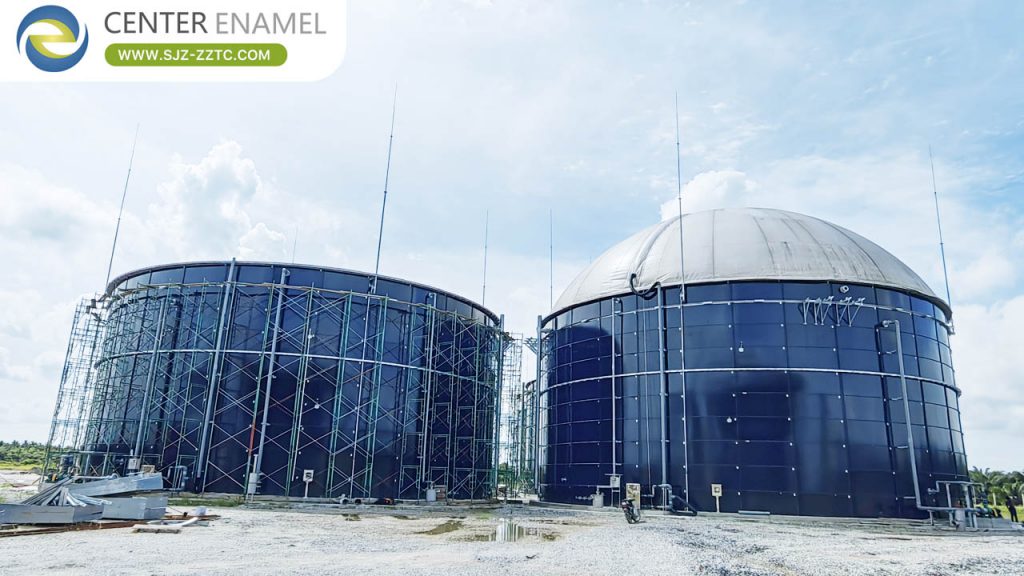
- Operational Considerations: These liquid substrates possess ultra-high Chemical Oxygen Demand (COD) and are ideally suited for high-rate enclosed reactors (such as UASB, USR, or IC systems) housed in corrosion-resistant Glass-Fused-to-Steel (GFS) tanks.
Comparative Data Table: Common Biogas Substrates and Yields
| Substrate Type | Total Solids (TS) Range | Biogas Yield (m3/ton fresh matter) | Methane Content (%) | Key Operational Advantage |
| Animal Manure (Cattle/Pig) | 5% – 12% | 20 – 65 | 55% – 60% | Excellent buffering capacity and process stability |
| Maize Silage | 30% – 35% | 190 – 220 | 52% – 55% | High carbohydrate content and reliable gas yield |
| Food Waste (Commercial) | 15% – 30% | 100 – 150 | 60% – 70% | High energy density and superior methane potential |
| Industrial Organic Effluent | 1% – 5% (Liquid) | 50 – 120 per $m^3$ | 65% – 75% | Rapid conversion in high-rate anaerobic reactors |
| Sewage Sludge (Municipal) | 3% – 7% | 30 – 50 | 55% – 65% | Steady year-round supply for municipal plants |
Critical Parameters for Feedstock Selection
Optimizing a biogas project requires careful management of specific biochemical indicators:
- Carbon-to-Nitrogen (C:N) Ratio: The optimal C:N ratio for anaerobic digestion ranges between 25:1 and 30:1. Excess nitrogen can cause ammonia inhibition and raise pH levels to toxic thresholds, while too much carbon slows down microbial growth.
- Total Solids (TS) and Volatile Solids (VS): TS dictates whether a system operates under wet digestion (<15% TS) or dry digestion (>20% TS). VS represents the organic fraction available for biological conversion into biogas.
- pH and Alkalinity: Stable digestion requires a neutral to slightly alkaline pH range (6.8 to 8.0). High volatile fatty acid (VFA) accumulation from over-feeding can cause acidification and reactor failure.
Frequently Asked Questions (FAQ)
Q1: What is the best feedstock for a biogas project?
A: There is no single "best" feedstock, as optimal selection depends on local availability, economic cost, and facility design. However, co-digesting multiple substrates—such as combining nutrient-rich animal manure with high-energy food waste—creates a balanced C:N ratio and maximizes overall methane yield.
Q2: Why is pre-treatment necessary for certain biogas substrates?
A: Substrates like agricultural crop residues, straw, and complex industrial waste contain tough lignocellulosic fibers or heavy suspended solids that are difficult for bacteria to break down directly. Pre-treatment (thermal, mechanical, or chemical) tears down these complex cell walls, speeding up hydrolysis and increasing total gas production.
Q3: Can industrial wastewater be used as a standalone biogas substrate?
A: Yes. High-strength industrial wastewaters—such as fermentation effluents and palm oil mill effluent (POME)—contain high concentrations of dissolved organic pollutants (COD). When processed in specialized high-rate anaerobic bioreactors (like USR or IC systems), these liquid streams yield significant quantities of clean renewable biogas without requiring solid organic additions.