
Fermentation for Biogas Projects: The Biology and Process Control Behind Methane Yield
Every cubic meter of biogas begins as biology. Fermentation for biogas projects—more precisely, anaerobic fermentation by a consortium of bacteria and archaea—converts complex organic polymers into methane and CO2 through a tightly coupled four-stage process. Engineers can pour concrete and bolt in engines, but the microbial population sets the ceiling on yield, and it responds to management within hours.
The practical stakes of fermentation mastery are large: identical plants fed identical feedstocks differ by 20-40% in output based purely on fermentation control—retention time, temperature stability, loading discipline, micronutrient availability, and early detection of inhibition. Understanding the biology converts a black box into a manageable production system.
This guide explains fermentation for biogas projects from the microbial level up: the four stages and their key organisms, the operating window for each, inhibition mechanisms with quantitative thresholds, mesophilic versus thermophilic strategy, and the process-control levers that maximize stable methane yield.
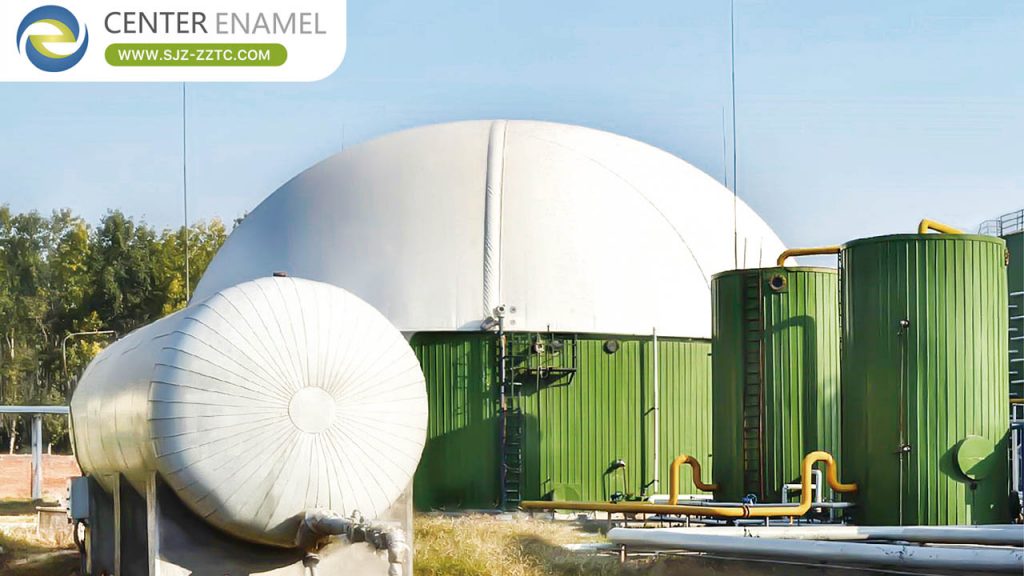
The Four Stages of Anaerobic Fermentation
Fermentation for biogas projects proceeds through four sequential microbial stages. Hydrolysis: fermentative bacteria secrete enzymes that break carbohydrates, proteins, and fats into sugars, amino acids, and fatty acids—usually the rate-limiting step for fibrous feedstock. Acidogenesis: acidogenic bacteria convert those monomers into volatile fatty acids (propionate, butyrate, acetate), plus hydrogen and CO2. Acetogenesis: syntrophic acetogens transform higher VFAs into acetate and hydrogen—a thermodynamically delicate step requiring low hydrogen partial pressure. Methanogenesis: methanogenic archaea (acetoclastic and hydrogenotrophic routes) finally produce CH4, completing roughly 70% of methane via the acetate pathway.
The Operating Window: Conditions That Maximize Yield
Methane fermentation performs at its peak inside a narrow window: pH 7.0-8.0, mesophilic temperature 35-38 degrees C (or thermophilic 50-55 degrees C) held within ±1 degree, C:N ratio between 20:1 and 30:1, organic loading within 2-5 kg VS/m3/day, and oxidation-reduction potential below -300 mV. Inside this window, the syntrophic partnerships between acetogens and methanogens run efficiently; outside it, intermediates accumulate and yield falls—even though gas keeps flowing at reduced quality.
1. Hydraulic Retention Time: 20-30 days mesophilic; shorter HRT washes out slow-growing methanogens, the classic failure of over-pumped digesters.
2. Mixing Intensity: Enough to prevent stratification without shearing flocs or disrupting syntrophy—typically 0.2-1.5 W/m3 depending on system.
3. Feedstock Particle Size: Reducing particles below 2-5 mm accelerates hydrolysis, often lifting yield 5-15% on fibrous substrates.
4. Feeding Rhythm: Continuous or frequent small feeds outperform once-daily dumping, smoothing VFA production for the methanogens to consume.
Comparative Data Table: Fermentation Inhibition Thresholds
| Inhibitor | Threshold Range | Effect on Fermentation | Mitigation |
| Free ammonia (NH3) | 250-400 mg/L | Methanogen inhibition, VFA buildup | Dilute, lower pH slightly, add carbon substrate |
| Total ammonia nitrogen (TAN) | 3,000-5,000 mg/L (acclimated) | Gradual yield decline | Acclimation at reduced load, struvite extraction |
| VFA (as acetic acid) | Above 3,000 mg/L unstable | Souring risk when alkalinity low | Stop feed, dose alkalinity, wait |
| Hydrogen sulfide (H2S) | Above 200-1,000 mg/L (gas phase) | Toxicity to methanogens in recycle streams | Iron dosing, biological desulfurization |
| Light metals (Na, K, Mg, Ca) | Above 2,000-8,000 mg/L each | Osmotic stress, reduced activity | Dilution, feedstock management |
| Trace inhibitors (antibiotics, detergents) | Feedstock-dependent | Acute population damage | Acceptance testing, supplier contracts |
Mesophilic versus Thermophilic Fermentation Strategy
Mesophilic fermentation (35-38 degrees C) is the global default: more stable, tolerant of shocks, and lower net heat demand. Thermophilic fermentation (50-55 degrees C) roughly doubles microbial kinetics—cutting HRT to 12-18 days and improving pathogen kill for digestate hygiene—but costs 30-50% more heating energy and fails faster when temperature or loading wobbles. The pragmatic selection: thermophilic where feedstock is already hot (industrial effluents), where sanitation regulations demand it, or where digester volume is the binding constraint; mesophilic everywhere else.
Frequently Asked Questions (FAQ)
Q1: Why has my digester's gas production dropped even though feeding is unchanged?
A: The most frequent culprit is silent inhibition—ammonia or VFA creeping past thresholds while gas flow declines gradually. Check the VFA-to-alkalinity ratio first (above 0.4 signals trouble), then TAN and temperature stability. Less common causes include feedstock composition drift (a supplier sending richer protein loads) and accumulated grit reducing effective volume. Fermentation problems are almost always visible in lab data before they are visible in gas flow.
Q2: Do trace metals really matter for biogas fermentation?
A: Yes—cobalt, nickel, iron, molybdenum, and selenium are enzyme cofactors for methanogens, and deficiencies measurably slow fermentation, particularly propionate turnover. Deficiency is common on substrate-mono-digestion (e.g., maize silage alone). Lab testing followed by dosing at grams per tonne level costs very little relative to typical 5-15% yield recoveries.
Q3: Can I speed up fermentation to process more feedstock in the same digester?
A: Only to a point. Mechanical or thermal pre-treatment of fibrous feedstock accelerates hydrolysis safely; biological additives show mixed results. But retention time cannot be pushed below the methanogens' growth rate without biomass washout. If throughput is the goal, prefer pre-treatment plus modest loading increases with vigilant VFA monitoring over aggressive HRT cuts.
Q4: How does fermentation differ in a covered lagoon versus a heated tank?
A: Covered lagoons run unmixed, unheated ambient fermentation at very long retention (60-120+ days) with 30-60 days of active biology—dilute, slow, but robust. Heated complete-mix fermenters concentrate the same biology into 20-30 days at controlled temperature, trading CAPEX for throughput and yield predictability. The microbes are the same; the engineering changes their environment.