
CSTR Reactor for Industrial Wastewater Treatment Project
Industrial wastewater treatment is a critical challenge for sectors ranging from food processing to chemical manufacturing, yet it also represents a significant opportunity for energy recovery and cost reduction. This article explores how Center Enamel's Continuous Stirred Tank Reactor (CSTR) technology delivers efficient anaerobic digestion, converting high-strength organic waste into biogas while ensuring environmental compliance.
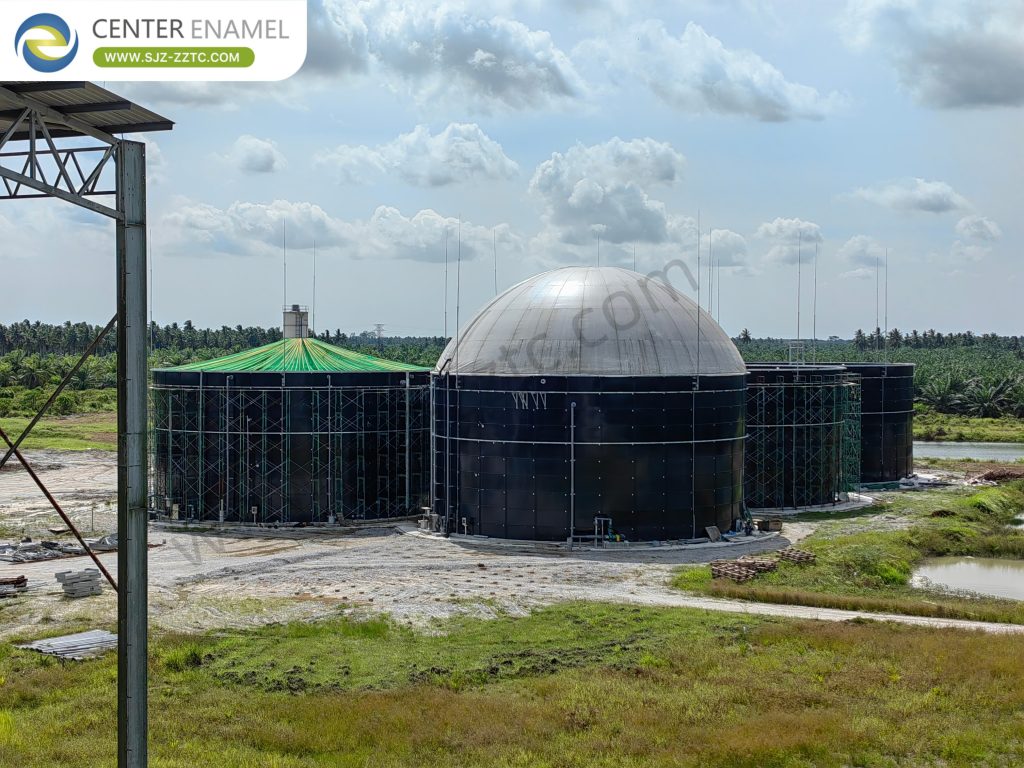
What Are the Advantages of Flexible CSTR Reactors?
CSTR reactors are known for their versatility and robustness in wastewater treatment, offering a range of benefits that make them an attractive choice for industries seeking reliable and sustainable solutions for organic waste degradation.
Efficient Wastewater Treatment
The continuous mixing action in a CSTR reactor ensures uniform conditions for the anaerobic bacteria, which effectively break down organic materials in wastewater. This efficient degradation results in the reduction of pollutants such as Chemical Oxygen Demand (COD) and Biological Oxygen Demand (BOD), which are common indicators of wastewater pollution. The reactor's ability to consistently handle large volumes of wastewater makes it ideal for industries generating high organic loads.
Scalability and Flexibility
CSTR reactors are highly adaptable to varying treatment capacities, making them suitable for both small and large-scale operations. Whether the industry deals with moderate or large wastewater volumes, these reactors can be designed to scale up or down based on specific treatment needs. This scalability ensures that the system can grow with the business, making it a long-term solution for diverse industries.
Sustainable and Low-Maintenance
CSTR reactors require less maintenance compared to other wastewater treatment technologies, such as aerobic systems, which demand constant energy inputs for aeration. The anaerobic process in CSTR reactors operates at lower energy consumption, making it an environmentally friendly option. Their minimal maintenance requirements contribute to reduced operational downtime and costs.
| Advantage | CSTR Reactor | Aerobic Treatment | Conventional Anaerobic |
| Energy Consumption | Low | High (aeration) | Low |
| Biogas Production | Yes | No | Yes |
| Sludge Production | Low | High | Low |
| Maintenance Requirements | Low | High | Medium |
| High Solids Tolerance | Excellent | Poor | Moderate |
| Scalability | High | Moderate | Moderate |
Why Are CSTR Reactors Important in Various Industries?
CSTR reactors have become a vital part of wastewater treatment across numerous industries, particularly in those that generate significant amounts of organic waste. Their flexibility allows them to be integrated into a wide array of applications, ranging from municipal wastewater treatment to industrial applications like food processing and chemicals.
Sustainability in Industrial Operations
CSTR reactors support sustainable industrial practices by providing a cost-effective and environmentally responsible solution for wastewater treatment. The ability to produce biogas offers industries a renewable energy source that can be used to offset their energy consumption, contributing to their overall sustainability goals. This is particularly important for industries in sectors with high energy demands or those looking to reduce their carbon footprint.
Cost-Effective Treatment
The anaerobic digestion process in CSTR reactors is not only energy-efficient but also cost-effective in terms of operational expenses. Compared to traditional aerobic treatment methods that require continuous aeration, CSTR reactors require much less energy, resulting in significant savings. Additionally, the biogas produced can be used to power the facility, further reducing operational costs and increasing energy independence.
Protection of Public Health
Effective wastewater treatment plays a crucial role in safeguarding public health. CSTR reactors reduce harmful pathogens and contaminants from wastewater, ensuring that treated effluent meets safety standards. This is especially important in industries located near communities or agricultural areas, where the impact of untreated wastewater on the local environment and population can be detrimental.
What Factors Should Be Considered When Implementing CSTR Reactors?
While CSTR reactors offer many advantages, their successful implementation in industrial settings requires careful consideration of several factors to ensure optimal performance and efficiency.
Wastewater Composition
Different industries produce wastewater with varying characteristics, such as the concentration of organic matter, chemical composition, pH levels, and the presence of toxic substances. Understanding the specific composition of wastewater is critical for designing a CSTR reactor that will effectively treat the water. Industries should conduct thorough water quality analyses to ensure that the reactor is adequately designed for the waste it will treat.
System Integration and Space Constraints
Integrating a CSTR reactor into existing industrial infrastructure requires planning and consideration of available space. Larger reactors may require significant space, and industries must ensure that the system fits within the plant's layout without disrupting operations. Efficient integration with other wastewater treatment equipment is also essential to ensure a smooth treatment process.
Temperature and pH Control
The efficiency of the anaerobic digestion process in a CSTR reactor is highly sensitive to temperature and pH levels. Ensuring that the reactor maintains optimal conditions for microbial activity is crucial for maximizing treatment efficiency. Industries must implement temperature and pH control systems to ensure stable operation, particularly in locations with fluctuating environmental conditions.
| Parameter | Optimal Range | Impact of Deviation |
| Temperature (Mesophilic) | 35-38°C | Reduced microbial activity |
| Temperature (Thermophilic) | 50-55°C | Process instability |
| pH | 6.8-7.4 | Acidification, process failure |
| Organic Loading Rate | 1-6 kg COD/m³/day | Overloading, VFA accumulation |
| Hydraulic Retention Time | 15-30 days | Insufficient degradation |
Project Overview
| Project | Location | Client/Industry | Application | Solution | Units | Total Capacity | Significance |
| Muyuan Group Hubei Suizhou Livestock Wastewater Project | Suizhou, Hubei, China | Muyuan Group / Livestock | Livestock wastewater treatment | CSTR reactor with GFS containment | 4 | 10,750 m³ | Expertise in treating large volumes of livestock wastewater |
| Henan Shuanghui Group Wastewater Treatment Project | Henan, China | Shuanghui Group / Meat Processing | Meat processing wastewater treatment | CSTR reactor with GFS containment | 3 | 4,142 m³ | Foundational and reliable solution for major meat processor |
| Coca-Cola (Jiangsu) Beverage Wastewater Treatment Project | Jiangsu, China | Coca-Cola / Beverage | Beverage production wastewater treatment | CSTR reactor with GFS containment | 2 | 3,026 m³ | Tailored solution for demanding public utility |
| Inner Mongolia Dairy Wastewater Treatment Project | Inner Mongolia, China | Dairy Industry | Dairy wastewater treatment | CSTR reactor with GFS containment | 1 | 1,162 m³ | Reliable solution for the dairy industry |
| Beijing Urban Wastewater Treatment Project | Beijing, China | Municipal | Municipal wastewater treatment | CSTR reactor with GFS containment | 1 | 1,010 m³ | Meets rigorous demands of urban water management |
| Caijiaying Gold Mine Wastewater Treatment Project | Hebei, China | Mining | Mining effluent treatment | CSTR reactor with GFS containment | 2 | 2,020 m³ | Expertise in treating complex mining effluents |
Client Testimonials
"Center Enamel's CSTR reactors have provided reliable, efficient performance for our wastewater treatment operations. Their customized approach and comprehensive support have made them a trusted partner in our sustainability journey."
— Operations Director, Major Food Processing Company
"The scalability and low maintenance requirements of Center Enamel's CSTR systems have significantly reduced our operational costs while ensuring compliance with environmental regulations. We highly recommend their solutions."
— Plant Manager, Chemical Manufacturing Facility
Why Choose Center Enamel for CSTR Reactor and Storage Tank Solutions?
Center Enamel is a leading manufacturer and supplier of CSTR reactors and storage tank solutions, offering tailored systems that meet the diverse needs of various industries. With years of experience and expertise, we are well-positioned to provide high-quality wastewater treatment solutions that deliver sustainable and cost-effective results.
Customized Solutions
At Center Enamel, we understand that every industry has unique wastewater treatment needs. Our team works closely with clients to design and manufacture customized CSTR reactors that are specifically tailored to meet the requirements of each application. Whether it's adjusting the reactor size, flow rate, or biogas recovery potential, we ensure that our solutions deliver optimal results.
Proven Track Record
With a strong history of successful projects across various industries, Center Enamel has earned a reputation for providing reliable and high-performance wastewater treatment solutions. Our clients trust us to deliver systems that meet the highest standards of quality and efficiency, ensuring long-term operational success.
Comprehensive Support
Center Enamel provides full-service support from the initial design and installation of CSTR reactors to ongoing maintenance and system optimization. Our expert team is available to assist with integration, commissioning, and troubleshooting, ensuring your wastewater treatment system operates at peak efficiency throughout its lifespan.
Conclusion: The Future of Industrial Wastewater Treatment
Center Enamel's CSTR reactors represent the pinnacle of innovation in wastewater treatment, combining efficiency, durability, and sustainability. Whether you are managing high-strength effluent from a food processing facility or treating complex industrial wastewater, our CSTR reactors provide a reliable and cost-effective solution.
By choosing Center Enamel, you are not only investing in advanced technology but also in a long-term partnership with a company committed to your success and the health of the environment.
Contact Center Enamel today to learn more about our wastewater treatment technologies and how we can support your industrial effluent management needs.
Frequently Asked Questions (FAQ)
What is a CSTR reactor in industrial wastewater treatment?
A Continuous Stirred Tank Reactor (CSTR) is an anaerobic digestion system that uses continuous mixing to maintain uniform conditions for anaerobic bacteria. These microorganisms break down organic materials in wastewater, reducing Chemical Oxygen Demand (COD) and Biological Oxygen Demand (BOD) while producing methane-rich biogas. CSTR reactors are widely used in chemical manufacturing, food processing, and municipal wastewater treatment for their efficiency, scalability, and low maintenance requirements.
How does a CSTR reactor differ from other anaerobic treatment systems?
CSTR reactors differ from other anaerobic systems primarily through their continuous mixing mechanism, which ensures uniform temperature, pH, and substrate distribution throughout the reactor. Unlike UASB or IC reactors that rely on sludge granulation and stratification, CSTR reactors maintain a completely mixed environment, making them more tolerant of high solids content and variable feedstock composition. This makes CSTR particularly suitable for industrial waste streams with high suspended solids.
What industries benefit most from CSTR reactor technology?
CSTR reactors benefit industries generating high organic loads, including: (1) Food and beverage processing — dairy, meat processing, breweries, and beverage production; (2) Chemical manufacturing — pharmaceutical, petrochemical, and specialty chemical production; (3) Municipal wastewater treatment — urban sewage and sludge digestion; (4) Livestock and agricultural waste — swine, poultry, and cattle operations; (5) Mining — complex mining effluents requiring robust treatment.
What are the key advantages of CSTR reactors over aerobic treatment?
CSTR reactors offer four key advantages over traditional aerobic treatment: (1) Lower energy consumption — anaerobic digestion requires no aeration, reducing operational costs by 50-70%; (2) Biogas production — generates renewable methane for heat and power, offsetting facility energy costs; (3) Lower sludge production — anaerobic processes produce 5-10x less excess sludge than aerobic systems; (4) Higher organic loading tolerance — CSTR handles high-strength wastewater that would overwhelm aerobic systems.
What factors should be considered when implementing a CSTR reactor?
Successful CSTR implementation requires careful consideration of: (1) Wastewater composition — organic concentration, chemical composition, pH, and toxic substances; (2) System integration and space constraints — available plant layout and integration with existing treatment equipment; (3) Temperature and pH control — maintaining optimal conditions for microbial activity (mesophilic 35-38°C or thermophilic 50-55°C); (4) Hydraulic retention time — sufficient contact time for organic degradation; (5) Biogas handling — gas collection, cleaning, and utilization infrastructure.
How long does a CSTR reactor project take from design to operation?
A typical CSTR reactor project ranges from 6 to 14 months from contract signing to commercial operation, depending on project scale, site conditions, and integration complexity. Center Enamel's modular GFS tank construction significantly accelerates timelines compared to cast-in-place concrete, as factory-finished panels are rapidly assembled on-site, allowing facilities to begin biogas recovery and cost savings sooner.