
Food-Waste Biogas Technology: Turning Commercial and Municipal Scraps into Renewable Energy
As global populations expand and urbanization accelerates, managing the mounting volume of organic discards has become a critical environmental and economic challenge. Municipalities, commercial kitchens, grocery chains, and food processing plants generate billions of tons of organic waste annually. Traditionally routed to landfills—where unmanaged decomposition releases potent greenhouse gases—this waste stream represents an untapped resource.
Food-waste biogas technology harnesses advanced anaerobic digestion (AD) to capture this organic material, breaking it down in oxygen-free environments to generate high-yield renewable biogas and nutrient-rich organic bio-fertilizer. Mastering this technology is essential for project developers, environmental engineers, and waste management authorities striving to achieve circular economy goals and net-zero emissions.
The Unique Nature of Food Waste as a Biogas Substrate
Unlike uniform agricultural manure or sewage sludge, food waste has distinct chemical and physical characteristics that require specialized engineering configurations:
- High Biodegradability and Rapid Hydrolysis: Food waste is exceptionally rich in soluble carbohydrates, starches, and proteins, allowing microorganisms to break it down much faster than woody or fibrous biomass.
- High Methane Potential: Due to its nutrient-dense profile, food waste yields significantly higher volumes of methane (CH4) per ton compared to traditional farm slurries.
- Risk of Acidification (Sourness): Because acid-forming bacteria break down food waste sugars rapidly, volatile fatty acids (VFAs) can accumulate faster than methanogenic archaea can consume them. This risk of rapid acidification requires robust buffering agents or co-digestion strategies.
- Contamination Challenges: Commercial food waste often contains packaging contaminants like plastics, glass, and metals, necessitating rigorous pre-treatment and sorting mechanisms.
Key Stages of Food-Waste Biogas Processing
Converting discarded food into clean energy involves a multi-step engineering pipeline:
- Sorting and Mechanical Pre-Treatment: Raw food waste undergoes depackaging, screening, and wet maceration to remove inorganic contaminants and blend the solids into a pumpable slurry with an optimal total solids (TS) concentration.
- Pasteurization / Hygiene Unit: To comply with environmental and agricultural health standards, the slurry is often subjected to thermal pasteurization (e.g., 70°C for one hour) to eliminate harmful pathogens and weed seeds.
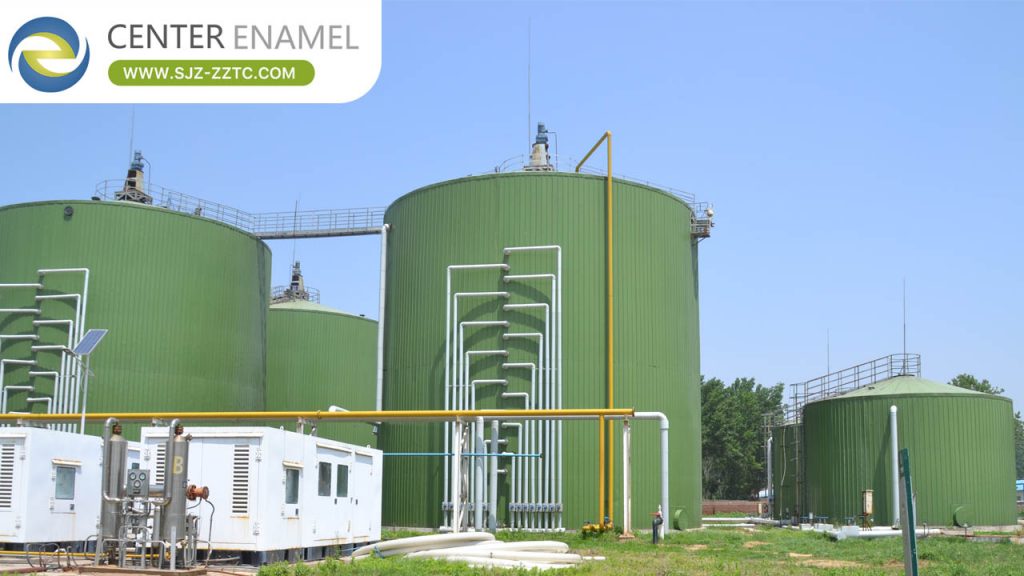
- Anaerobic Digestion (Bioreactor): The pathogen-free slurry is pumped into heated industrial bioreactors—such as Complete Mix Continuous Stirred-Tank Reactors (CSTR) or high-solid dry digesters—where microbial communities execute hydrolysis, acidogenesis, acetogenesis, and methanogenesis.
- Biogas Upgrading & Utilization: Raw biogas (containing roughly 50% to 75% methane) is scrubbed to remove moisture, hydrogen sulfide (H2S), and carbon dioxide (CO2), yielding high-purity biomethane for natural gas grid injection or combined heat and power (CHP) generation.
Comparative Data Table: Food Waste vs. Traditional Substrates
| Substrate Parameter | Food Waste (Isolated) | Livestock Manure | Co-Digested Mix (Food Waste + Manure) |
| Methane Potential | Very High (400–600 m3/ton VS) | Low to Moderate (200–300 m3/ton VS) | High and Balanced |
| Buffer Capacity | Low (High risk of VFA acidification) | High (Natural ammonium buffering) | Optimal stability |
| Pre-treatment Needs | Heavy sorting, depackaging, and maceration | Minimal (Direct pumpable slurry) | Moderate screening |
| Primary Risk Factor | Reactor souring via rapid acid buildup | Low biogas yield if processed alone | Managed operational oversight |
Frequently Asked Questions (FAQ)
Q1: Why is food waste considered an ideal substrate for biogas production?
A: Food waste has exceptional biodegradability and a high concentration of volatile solids, allowing anaerobic microorganisms to generate significantly larger volumes of methane gas per ton compared to traditional agricultural feedstocks.
Q2: How do food-waste biogas plants prevent system acidification or "sourness"?
A: Because food waste degrades rapidly into volatile fatty acids (VFAs), plants prevent souring by carefully balancing the organic loading rate, utilizing co-digestion (mixing food waste with alkaline manure), and continuously monitoring the FOS/TAC ratio.
Q3: What happens to non-organic packaging contaminants in commercial food waste?
A: Modern food-waste biogas facilities utilize specialized depackaging equipment, hydro-cyclones, and industrial macerators on the front-end to screen, separate, and eject plastics, glass, metals, and other non-organic debris before the material enters the anaerobic digester.