
From Byproduct to Bioenergy: Optimizing Anaerobic Digestion of Cheese Whey Wastewater
The global dairy industry is experiencing a period of rapid expansion and rigorous environmental scrutiny. Among the various waste streams generated by dairy processing, Cheese Whey Wastewater stands out as one of the most challenging due to its high organic strength and volume. Historically, cheese whey was often treated as a low-value byproduct or a disposal burden. However, as the world moves toward a circular economy, the focus has shifted toward resource recovery. Through the implementation of Anaerobic Digestion of Cheese Whey Wastewater, dairy producers can move beyond simple compliance and achieve high-efficiency energy recovery, turning a potential environmental liability into a steady source of renewable bioenergy.
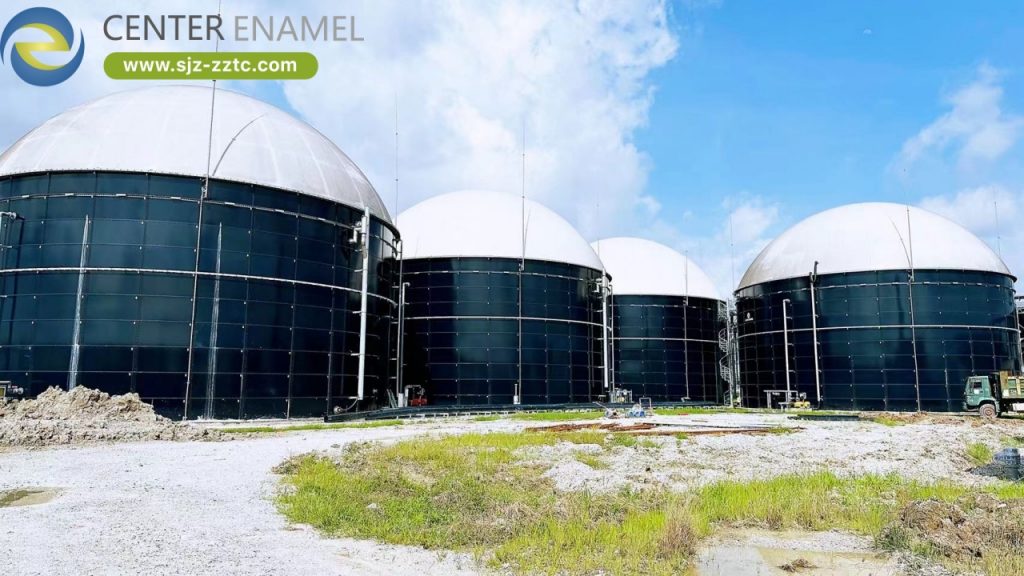
Shijiazhuang Zhengzhong Technology Co., Ltd, operating under the industry-leading brand Center Enamel, provides world-class Engineering, Procurement, and Construction (EPC) services specifically designed to address the complexities of dairy waste management. With over thirty years of innovation and a project footprint in more than one hundred countries, we combine advanced process design with our flagship Glass-Fused-to-Steel (GFS) technology and specialized Aluminum Dome Roofs to deliver turnkey solutions that are durable, efficient, and sustainable.
The Challenge and Opportunity of Cheese Whey Wastewater
To optimize the Anaerobic Digestion of Cheese Whey Wastewater, one must first understand the unique chemical profile of this feedstock. Cheese Whey Wastewater is characterized by a high Chemical Oxygen Demand (COD) and a low pH, primarily due to high concentrations of lactose, proteins, and lipids.
1. High Organic Load and Rapid Acidification
The lactose in Cheese Whey Wastewater is highly biodegradable, which leads to rapid acidification within a reactor. If the system is not precisely engineered, the pH can drop quickly, inhibiting the sensitive methanogenic bacteria required for biogas production. Center Enamel’s EPC services prioritize advanced buffering and pH control systems to ensure the biological stability of the reactor under high-loading conditions.
2. Salt and Mineral Concentrations
Whey processing often results in high concentrations of salts and minerals. Without proper containment engineering, these elements can accelerate the corrosion of standard steel tanks. Our solution utilizes inert GFS technology to provide a permanent barrier against the aggressive nature of dairy residues.
Technical Foundations of Advanced Anaerobic Digestion
Transforming cheese residues into bioenergy requires a sophisticated biological sequence. The success of the project depends on the stability of the environment and the efficiency of the reactor configuration.
1. The Biological Sequence of Treatment
Hydrolysis: Breaking down complex lactose and proteins into simple soluble monomers.
Acidogenesis: Converting those monomers into volatile fatty acids and alcohols.
Acetogenesis: Further refining the intermediates into acetic acid and hydrogen.
Methanogenesis: The final stage where specialized microorganisms convert precursors into methane. In cheese whey treatment, this stage must be shielded from the acidic shocks typical of dairy waste.
2. High-Rate Reactor Technology
Center Enamel utilizes high-rate anaerobic configurations, such as Upflow Anaerobic Sludge Blanket (UASB) and Internal Circulation (IC) reactors, for Cheese Whey Wastewater. These systems are designed to maximize the contact between the wastewater and the anaerobic sludge, ensuring maximum COD removal and high biogas yields in a compact footprint.
Center Enamel: Engineering the Future of Containment
The containment of Cheese Whey Wastewater requires materials that can withstand extreme organic acids and variable pH levels.
1. Glass-Fused-to-Steel (GFS) Technology: The Premier Choice
Our GFS tanks are the gold standard for dairy biogas reactors. By fusing glass enamel to steel at temperatures exceeding 800 degrees, we create a material with:
Superior Acid Resistance: The glass surface is inert and resistant to the organic acids produced during the digestion of Cheese Whey Wastewater.
Hardness and Durability: Our GFS coating scores a 6.0 on the Mohs scale, resisting both chemical attack and physical wear.
Global Quality Standards: Our tanks comply with AWWA D103-09, ISO 28765, and NSF/ANSI 61, ensuring bankability for international dairy infrastructure projects.
2. Integrated Gas Management with Double Membrane Roofs
The biogas generated from dairy waste is a valuable asset. Our Double Membrane Roofs function as an integrated, variable-volume gas holder. The flexible inner membrane expands to store biogas, while the air-pressurized outer membrane provides a robust protective shell against wind, rain, and snow.
3. Aluminum Dome Roofs: Geodesic Excellence
For the storage of raw Cheese Whey Wastewater or treated effluent, Center Enamel provides specialized Aluminum Dome Roofs .
Self-Supporting Engineering: These domes require no internal columns, which is essential because internal supports would corrode rapidly in a dairy waste environment.
Maintenance-Free Longevity: Constructed from high-strength aluminum alloy, these domes are naturally resistant to the humid, corrosive gases rising from the liquid and provide a service life exceeding thirty years.
Odour Control: The tight seal provided by the aluminum dome ensures that unpleasant odors are contained, maintaining positive relations with neighboring communities.
Sustainability and Economic ROI for Dairy Producers
Implementing Anaerobic Digestion of Cheese Whey Wastewater is a strategic economic decision that delivers significant value.
Energy Self-Sufficiency: The biogas produced can be used to generate steam for dairy processing or electricity for the plant, reducing reliance on expensive grid power.
Reduction in Treatment Surcharges: By treating whey on-site, dairy plants can avoid the high surcharges associated with discharging high-COD waste into municipal sewer systems.
Carbon Credits and ESG Compliance: Capturing methane allows producers to qualify for international carbon credits and meet their corporate sustainability targets, appealing to eco-conscious consumers.
Global Project Excellence: Center Enamel in Action
Our EPC expertise is demonstrated through successful installations in diverse environments. These non-fictitious projects highlight our capacity to deliver infrastructure for high-efficiency energy recovery:
Shandong Heze Biogas Project This major regional initiative utilized 3 units of our high-performance GFS tanks. The project successfully handles complex organic residues, transforming them into a stable energy stream and showcasing our reliability in industrial-scale recovery.
Inner Mongolia Hinggan League Bio-Natural Gas Project In a region with extreme temperature fluctuations, this installation integrated 4 units of our bolted steel tanks. These vessels provide the stable environment necessary for the high-efficiency production of bio-natural gas from agricultural and dairy-related residues.
Jiangsu Xuzhou Biogas Project This project involved the deployment of 4 units of our advanced GFS containment technology. It serves as a model for how Center Enamel’s EPC services can be used to rapidly build essential infrastructure for modern waste management and anaerobic digestion needs.
Leading the Global Dairy Energy Revolution
The transition to advanced Anaerobic Digestion of Cheese Whey Wastewater is essential for a sustainable and profitable dairy industry. By converting a waste byproduct into a renewable energy asset, producers can protect the environment while securing their energy future.
At Shijiazhuang Zhengzhong Technology Co., Ltd (Center Enamel), we are dedicated to providing the innovation and EPC excellence that make these projects possible. From our premier GFS tanks to our specialized Double Membrane Roofs and Aluminum Dome Roofs, we offer a total solution designed for the future of the planet.