
Brewing Wastewater Treatment Anaerobic Digestion Process – Sustainable Energy Solutions for the Brewing Industry
The global brewing industry, a timeless craft that delights palates worldwide, faces an increasingly important challenge: managing its substantial wastewater output. Brewing wastewater is typically characterized by high concentrations of organic matter (sugars, alcohols, yeast, proteins), suspended solids, and often fluctuating pH levels and temperatures. If discharged without adequate treatment, this effluent can significantly deplete oxygen in receiving water bodies, leading to severe environmental harm and substantial regulatory penalties.
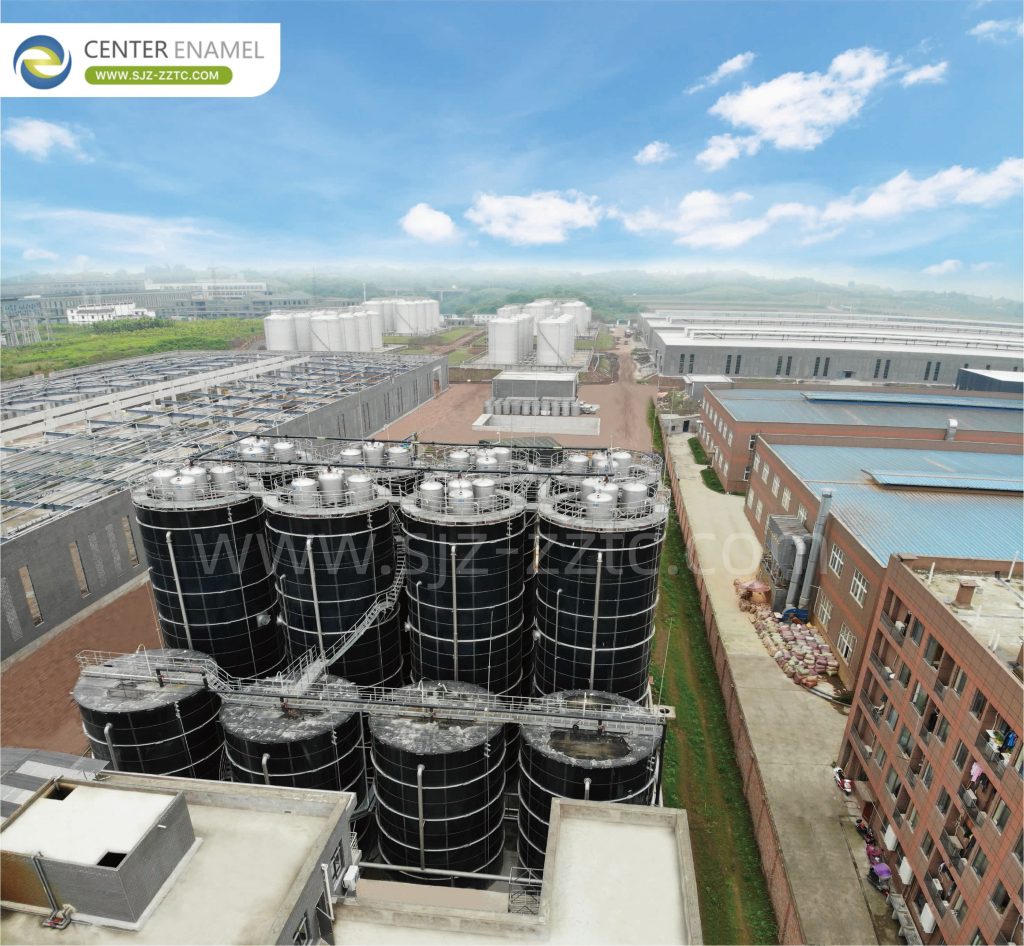
As breweries worldwide commit to enhanced sustainability, resource efficiency, and reduced operational costs, there is a critical need for advanced, efficient, and reliable treatment solutions. The Brewing Wastewater Treatment Anaerobic Digestion Process has emerged as a groundbreaking technology, allowing breweries to not only effectively treat their wastewater but also transform it into valuable renewable energy.
Brewing Wastewater Treatment Tank
At the forefront of sustainable environmental solutions for the brewing sector, Shijiazhuang Zhengzhong Technology Co., Ltd (Center Enamel) is globally recognized as a Full-Service Brewing Wastewater Treatment Anaerobic Digestion Process Contractor. As a distinguished China Brewing Wastewater Treatment Anaerobic Digestion Process Contractor, Center Enamel brings unparalleled expertise in Glass-Fused-to-Steel (GFS) tank manufacturing and comprehensive environmental project execution.
We specialize in designing, constructing, and commissioning advanced anaerobic digestion systems meticulously tailored for diverse breweries – from craft operations to large-scale industrial producers – across the globe. Our extensive experience, unwavering commitment to precision engineering, and proven success in delivering high-performance, cost-effective solutions firmly establish us as the trusted partner for brewers striving for rigorous environmental compliance, energy self-sufficiency, and enhanced operational sustainability.
Understanding the Unique Characteristics of Brewing Wastewater
Brewing wastewater exhibits several key characteristics that make it particularly well-suited for anaerobic digestion:
| Characteristic | Description | Treatment Implication |
| High Organic Load (COD/BOD) | Primarily composed of readily biodegradable sugars, yeast, alcohol, and dissolved organic solids from wort production, fermentation, and cleaning processes | Results in very high BOD and COD levels, making it an excellent feedstock for biogas production |
| High Biodegradability | High content of easily digestible organic compounds | Ensures excellent biodegradability, leading to efficient and rapid biogas generation in anaerobic systems |
| Varying Flow and Load | Wastewater characteristics fluctuate significantly depending on brewing schedules, batch sizes, CIP cycles, and seasonal demand | Requires robust equalization and homogenization systems |
| Fluctuating pH and Temperature | Processes like wort boiling and cleaning lead to variations in pH (often acidic) and elevated temperatures | Demands pH neutralization and temperature conditioning systems |
| High Suspended Solids (TSS) | Contains residual yeast, spent grains, and other insoluble organic matter | Contributes to high TSS levels requiring effective solids removal |
Effectively addressing these complexities, while simultaneously recovering valuable resources, is where the Brewing Wastewater Treatment Anaerobic Digestion Process provides immense value, and where Center Enamel offers its full-service expertise.
Center Enamel's Full-Service Brewing Wastewater Treatment Anaerobic Digestion Process
As a Full-Service Brewing Wastewater Treatment Anaerobic Digestion Process Contractor, Center Enamel employs a meticulously designed, multi-stage approach that optimizes the entire Brewing Wastewater Treatment Anaerobic Digestion Process for maximum efficiency, biogas production, and stringent environmental compliance. Our solutions are engineered based on extensive experience and the superior performance of our Glass-Fused-to-Steel (GFS) tank technology.
Specialized Pre-treatment for Brewery Effluent
Robust pre-treatment is crucial for brewing wastewater to mitigate challenges posed by high solids, and pH/temperature fluctuations, ensuring stable and efficient digester performance. Our customized solutions include:
Screening and Solids Removal: Essential for removing spent grains, hops, and larger suspended particles. This protects downstream equipment and prevents clogging in anaerobic reactors.
Fat, Oil, and Grease (FOG) Separation (if applicable): While not as prominent as in other food industries, some FOG may be present from cleaning or specific processes, requiring removal to prevent digester inhibition.
Equalization and Homogenization: Employing our highly durable GFS tanks as equalization basins. Their superior chemical resistance to varying pH levels and robust structural integrity ensure a consistent and buffered feed to the digester. This is vital for managing the variable flow and organic load characteristic of brewing operations, promoting stable anaerobic conditions.
pH Neutralization and Temperature Conditioning: Automated systems for precisely adjusting pH to optimal levels for anaerobic microbes (typically neutral to slightly alkaline) and managing influent temperature to suit the chosen digestion process (mesophilic or thermophilic). Often, the warm nature of brewing wastewater can be leveraged to maintain optimal digester temperatures, reducing external heating requirements.
High-Efficiency Anaerobic Digester Design for Brewing Applications
The anaerobic digester is the core of the Brewing Wastewater Treatment Anaerobic Digestion Process. Center Enamel engineers select, design, and construct robust, high-performance reactors specifically suited for the unique characteristics of brewing wastewater:
High-Rate Anaerobic Reactors (UASB, IC, EGSB): These are particularly well-suited for high-strength, readily biodegradable organic loads found in brewing wastewater. They offer compact footprints, high organic loading rates, and excellent COD removal efficiencies, crucial for breweries often located in urban or space-constrained areas. Their ability to handle high concentrations of soluble organics makes them extremely effective for brewery effluent.
Glass-Fused-to-Steel (GFS) Tanks: The Superior Digester Vessel
Our proprietary GFS tanks are the cornerstone of our anaerobic digesters for breweries. As a pioneer in developing advanced enameling technology, Center Enamel offers tanks with:
| Feature | Benefit |
| Unmatched Corrosion Resistance | The vitrified glass coating provides an inert, impermeable barrier against the potentially corrosive nature of brewing wastewater (due to organic acids formed during anaerobic fermentation and cleaning chemicals) and the produced biogas (e.g., H₂S), ensuring structural integrity and a long operational life with minimal maintenance |
| Exceptional Gas-Tightness | Precision engineering and advanced sealants guarantee minimal biogas leakage, maximizing recovery for energy use and preventing fugitive methane emissions – crucial for both energy efficiency and environmental compliance |
| Hygiene and Easy Maintenance | The smooth, inert surface prevents bio-fouling and simplifies cleaning, promoting a healthy microbial environment, which is vital for continuous industrial operations requiring high standards |
| Rapid, Modular Construction | GFS tanks offer significantly faster installation times compared to concrete, minimizing disruption to sensitive brewing production schedules. Their modularity allows for flexible design layouts and efficient future expansion |
Comprehensive Biogas Recovery and On-site Energy Utilization
A major economic and environmental advantage of the Brewing Wastewater Treatment Anaerobic Digestion Process is Biogas Recovery. Center Enamel integrates complete systems for capturing, purifying, and beneficially utilizing this valuable renewable energy directly within the brewery facility:
Biogas Collection and Storage: Secure, gas-tight GFS tanks are essential for efficient biogas collection and buffering.
Biogas Purification: Systems for removing impurities like hydrogen sulfide (H₂S), moisture, and carbon dioxide (CO₂), producing a cleaner, higher-quality fuel that protects downstream equipment.
Energy Conversion: We commonly integrate Combined Heat and Power (CHP) units, allowing breweries to generate their own electricity and heat from biogas. This can significantly reduce reliance on grid power and fossil fuels, lower energy costs for process heating (e.g., wort boiling, pasteurization), and enhance the brewery's energy independence and economic viability. Biogas can also be directly used as boiler fuel, replacing conventional natural gas or other fossil fuels.
Post-treatment and Water/Sludge Management
The treated effluent from the Brewing Wastewater Treatment Anaerobic Digestion Process is significantly cleaner, but due to stringent discharge standards, further polishing is often required for final discharge or even water reuse within the facility. The stabilized sludge (digestate) is also managed for appropriate disposal or beneficial reuse:
Secondary/Tertiary Treatment (Aerobic Polishing/Nutrient Removal): Typically involves aerobic processes like activated sludge, Membrane Bioreactors (MBR), or Moving Bed Biofilm Reactors (MBBR) for residual COD/BOD and nutrient removal (nitrogen and phosphorus).
Sludge Volume and Odor Reduction: Anaerobic digestion drastically reduces the volume of sludge requiring further handling and significantly minimizes foul odors, improving the brewery's overall environmental footprint.
Nutrient-Rich Digestate: The remaining digestate, rich in organic matter and nutrients, can potentially be utilized as a valuable bio-fertilizer for agricultural land, completing the circular economy loop.
Typical Treatment Performance Data
The following table illustrates the typical treatment performance across different stages of a brewing wastewater treatment system:
| Treatment Stage | BOD (mg/L) | COD (mg/L) | TSS (mg/L) | Removal Efficiency |
| Raw Wastewater | 1,000-5,000 | 2,000-10,000 | 500-2,000 | — |
| After Screening | 800-4,000 | 1,600-8,000 | 300-1,200 | 40-50% TSS |
| After Equalization | 700-3,500 | 1,400-7,000 | 250-1,000 | 10-20% BOD |
| After Anaerobic Digestion | 60-300 | 120-600 | 80-300 | 80-90% COD |
| After Aerobic Polishing | <20-50 | <50-150 | <20-50 | 90-95% BOD |
| Final Effluent | <20 | <125 | <35 | 98-99% Overall |
Typical values based on industry standards and Center Enamel project data.
Center Enamel: Your Full-Service China Brewing Wastewater Treatment Contractor
Center Enamel's distinction as a Full-Service Brewing Wastewater Treatment Anaerobic Digestion Process Contractor is built upon our integrated "Full Chain Service" EPC (Engineering, Procurement, and Construction) model. We offer a seamless, single-point-of-responsibility solution that ensures project success from conceptualization to operational reality:
Expert Consultation & Process Design: Our highly experienced environmental engineers and process specialists provide in-depth technical consultation, developing customized anaerobic digestion schemes tailored to the specific characteristics, volumes, and peak loads of your brewing wastewater. Our designs strictly adhere to international engineering standards, including AWWA D103-09, OSHA, and ISO/EN28765.
High-Capacity Production & Certified Quality: Our state-of-the-art manufacturing facilities ensure rapid and precise fabrication of GFS tanks and other components. Our commitment to quality is validated by a comprehensive suite of international certifications, including ISO 9001, ISO 14001, ISO 45001, NSF/ANSI 61, WRAS, CE/EN1090, ISO 28765, and FDA compliance.
Global Installation & Commissioning Expertise: With more than 30,000 engineering projects completed in over 100 countries, our skilled installation teams ensure swift, safe, and quality-controlled on-site assembly and meticulous commissioning. We guarantee that the entire anaerobic digestion system operates efficiently and reliably from day one.
Responsive After-Sales Support: Our robust global sales and service network provides rapid response for professional and efficient after-sales support, ensuring the long-term reliability and peak performance of your brewery wastewater treatment plant.
Proven Success: Driving Sustainability in the Global Brewing Industry
Center Enamel's extensive project portfolio showcases our unparalleled experience as a China Brewing Wastewater Treatment Anaerobic Digestion Process Contractor with a proven global track record, consistently delivering high-performance solutions for diverse industrial clients, particularly within the food and beverage sector.
Project Portfolio Overview
| Project Name | Location | Capacity | Technologies Used | Key Outcomes |
| Sichuan Brewing Wastewater Treatment Project | Sichuan, China | 6 units, total 14,648 m³ | Anaerobic digestion + GFS tanks | Large-scale brewery effluent treatment; high organic load management; biogas recovery |
| Jiangxiaobai Chongqing Jiangjin Distillery Wastewater Treatment Project | Chongqing, China | 12 units, total 10,606 m³ | Anaerobic digestion system | Effective treatment of high-concentration distillery wastewater |
| Budweiser Beer Group Mozambique Brewery Project | Mozambique | 11 units, total 9,437 m³ | Anaerobic digestion + EPC | Met highest standards for efficiency and compliance in international brewing operations |
| Sichuan Yibin Brewing Wastewater Project | Sichuan, China | 2 units, total 4,133 m³; 1 unit, 838 m³ | Anaerobic digestion | Versatility across different scales of brewing facilities |
| Luzhou Gulin Baijiu Wastewater Treatment Project | Sichuan, China | 1 unit, total 2,515 m³ | Anaerobic treatment | High-strength wastewater treatment from alcoholic beverage production |
| Coca-Cola Company Malaysia Factory Project | Malaysia | 2 units, total 1,905 m³ | Wastewater treatment | Robust solutions for major global beverage companies with high-volume organic effluents |
| Guizhou Food Wastewater Treatment Project | Guizhou, China | 4 units, total 1,991 m³ | Anaerobic digestion | Expertise in food industry high-strength organic waste streams |
| Xinjiang Aksu Brewing Wastewater Treatment Project | Xinjiang, China | 1 unit, total 780 m³ | Anaerobic digestion | Diverse geographical presence in the brewing sector |
Client Testimonial:
"Center Enamel demonstrated exceptional technical expertise and project management capabilities throughout the Sichuan brewing wastewater project. Their GFS tank technology provided the corrosion resistance and gas-tightness we required for our high-strength brewery effluent. The biogas recovery system has substantially reduced our energy costs while ensuring we meet all environmental regulations. We consider them a trusted partner for our sustainability initiatives." – Senior Environmental Manager, Major Brewing Group
Frequently Asked Questions (FAQ)
Q1: Why is anaerobic digestion suitable for brewing wastewater treatment?
A: Brewing wastewater is characterized by high organic concentration, high biodegradability, and elevated temperatures – conditions that align perfectly with anaerobic digestion advantages. The high concentrations of soluble sugars and alcohols serve as excellent substrates for methanogenic bacteria. High-rate reactors like UASB can achieve 80-90% COD removal with biogas yields of 0.35-0.5 m³ per kg COD removed.
Q2: What treatment performance can be expected from anaerobic digestion of brewing wastewater?
A: Typical high-rate anaerobic reactors (UASB, IC) achieve 80-90% COD removal from brewing wastewater. In actual projects, COD can be reduced from 9,000 mg/L to below 125 mg/L, and BOD from 4,000 mg/L to below 30 mg/L. With subsequent aerobic polishing, final effluent can meet stringent discharge standards.
Q3: What advantages do GFS (Glass-Fused-to-Steel) tanks offer compared to concrete tanks?
A: GFS tanks provide superior corrosion resistance (pH range 1-14), gas-tightness for biogas containment, long service life (≥30 years), low maintenance requirements, and rapid modular installation. For brewing wastewater applications, the vitrified glass coating resists organic acids formed during anaerobic fermentation and H₂S corrosion, while the smooth surface prevents bio-fouling and simplifies cleaning.
Q4: How can the biogas generated from anaerobic digestion be utilized?
A: Biogas is most commonly used in Combined Heat and Power (CHP) systems to generate electricity and heat for brewery operations – powering processes like wort boiling and pasteurization. Biogas can also be used directly as boiler fuel to replace natural gas, or upgraded to biomethane (approximately 99% methane purity) for injection into natural gas networks or use as vehicle fuel.
Q5: How is stable operation of the anaerobic digestion system ensured?
A: Stable operation depends on consistent influent quality (requiring equalization tanks), appropriate pH and temperature (mesophilic 35-37°C or thermophilic), adequate nutrients and trace elements, and regular sludge removal and mixing. The warm nature of brewing wastewater can be leveraged to reduce external heating requirements. Professional system design with automated controls is essential for reliable performance.