
Gas Upgrading with Biogas Projects: From Raw Biogas to Pipeline-Grade Biomethane
Gas upgrading with biogas project development is the fastest-growing value segment of the biogas industry. Upgrading converts raw biogas - roughly 50 to 70 percent methane mixed with carbon dioxide and trace impurities - into biomethane of 95 to 98 percent purity, unlocking pipeline injection, vehicle fuel, and renewable gas certificates.
Operators who skip upgrading are locked into low-margin electricity sales and must absorb the cost of flaring surplus gas. Those who upgrade tap into the highest-value market for renewable gas: a drop-in substitute for fossil natural gas sold at a premium.
This guide explains why upgrading matters, compares the leading technologies, and outlines how to integrate a gas upgrading unit into a biogas project for maximum reliability and return.
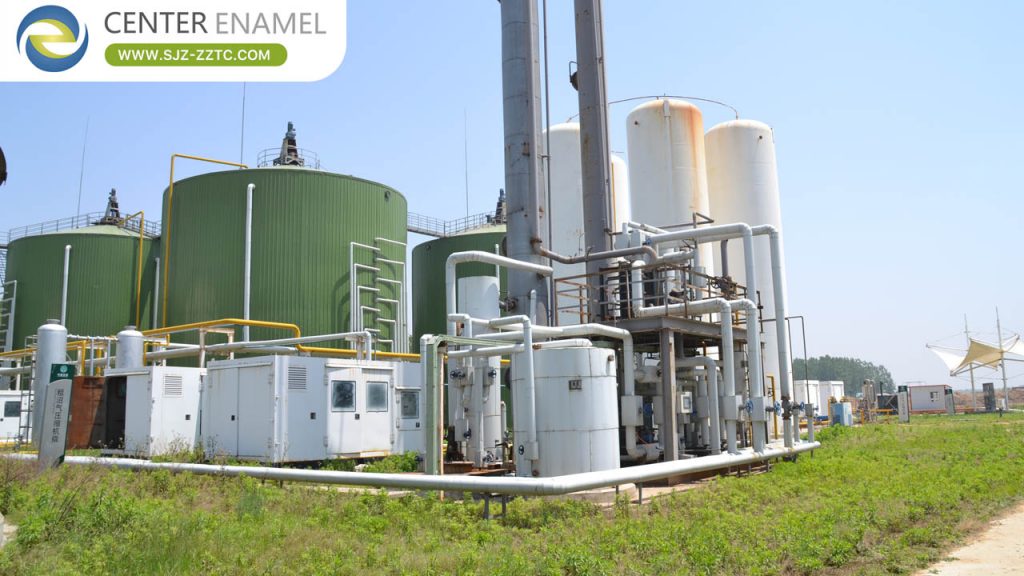
Understanding Why Gas Upgrading Matters
Raw biogas cannot be injected into gas networks or used as vehicle fuel because its energy density is too low and its impurities damage engines and infrastructure. The two biggest culprits are carbon dioxide, which dilutes methane, and hydrogen sulfide, which is corrosive and toxic.
Upgrading solves both problems in one process train, producing a gas that meets pipeline specifications such as a methane content above 95 percent, a moisture dew point below pipeline limits, and hydrogen sulfide below 5 ppm.
- Energy density: removing CO₂ lifts methane content from 50-70% to 95-98%, nearly doubling the energy content per volume.
- Equipment protection: desulfurization protects CHP engines, upgrading membranes, and compressors from H₂S corrosion.
- Market access: upgraded biomethane qualifies for renewable fuel credits, green gas certificates, and premium offtake contracts.
How the Upgrading Process Train Works
Modern upgrading plants achieve methane recovery rates of 96 to 99 percent, meaning nearly all the energy in the raw biogas is captured in the final product - the key metric that separates good from average upgrading performance.
- Desulfurization: hydrogen sulfide is removed biologically (bio-trickling filters) or chemically (iron oxide or activated carbon media) to below 5 ppm.
- CO₂ removal: the core upgrading step, where the gas is separated into a methane-rich product and a CO₂-rich off-gas.
- Drying: water vapor is condensed and removed to meet pipeline dew-point specifications.
- Polishing and compression: trace siloxanes and particulates are filtered, then the biomethane is compressed for injection or fuel dispensing.
Comparative Data Table: Upgrading Technology Selection
The right choice for a gas upgrading with biogas project depends on gas volume, desired product (grid gas, CBG, or LBM), and operating budget. For most projects in the 100-1,000 Nm³/h range, PSA and membrane systems offer the best balance of cost, simplicity, and reliability.
| Technology | Methane Purity | Methane Recovery | Energy Demand | Key Trade-off |
| Pressure Swing Adsorption (PSA) | 96-98% | 96-98% | 0.25-0.30 kWh/Nm³ | Simple, modular; requires clean inlet gas |
| Membrane Separation | 95-98% | 95-97% | 0.20-0.30 kWh/Nm³ | Compact footprint; staged membranes for high purity |
| Water Scrubbing | 96-98% | 96-99% | 0.25-0.45 kWh/Nm³ | Robust and cheap to run; higher water and power use |
| Cryogenic Distillation | 98%+ | 99%+ | 0.50-1.00 kWh/Nm³ | Highest purity; can co-produce liquid biomethane (LBM) |
Integrating Upgrading into Your Biogas Project
With renewable fuel mandates tightening worldwide, gas upgrading with biogas projects is no longer a niche option - it is increasingly the default business model for new biogas developments with any grid access.
- Confirm grid access early: interconnection capacity and gas quality specifications vary by network operator; secure a connection agreement before equipment procurement.
- Match upgrading capacity to biogas production: oversizing wastes capital, while undersizing forces flaring; design for peak seasonal gas production.
- Plan off-gas treatment: CO₂-rich off-gas and odour management must be designed in from the start for permit compliance.
- Budget for energy and maintenance: upgrading consumes 0.2-0.5 kWh per Nm³ and requires membrane or media replacement every 5-10 years.
Frequently Asked Questions (FAQ)
Q1: What is the difference between biogas cleaning and biogas upgrading?
A: Cleaning removes trace impurities such as hydrogen sulfide and water to protect equipment, while upgrading removes carbon dioxide to raise the methane content above 95 percent. Cleaning is required for all biogas uses; upgrading is required specifically for pipeline injection and vehicle fuel.
Q2: Which gas upgrading technology is the cheapest?
A: For most mid-size projects, water scrubbing has the lowest operating cost and membrane systems the lowest capital cost. The total cost depends on gas flow rate, electricity price, and desired purity - a proper techno-economic comparison should be run for each project.
Q3: Can a biogas project upgrade without grid access?
A: Yes. Upgraded biomethane can be compressed into CNG or CBG for vehicle refueling, or liquefied as bio-LNG for heavy transport and maritime use. These routes avoid pipeline interconnection entirely while still capturing premium fuel value.