
How Do GFS Tanks and Anaerobic Solutions Meet the World's Fastest-Growing Wastewater Demands?
The global industrial wastewater treatment market is shifting from construction toward long-term operational management, and the regional dynamics tell a clear story. The Asia-Pacific region, particularly China, has become the world's largest industrial wastewater treatment market, with the operation and maintenance service segment's contribution continuing to rise-marking a shift from project construction to long-term operational management. The North American market focuses on upgrading existing facilities, while Europe emphasizes high-value-added resource recovery technologies.
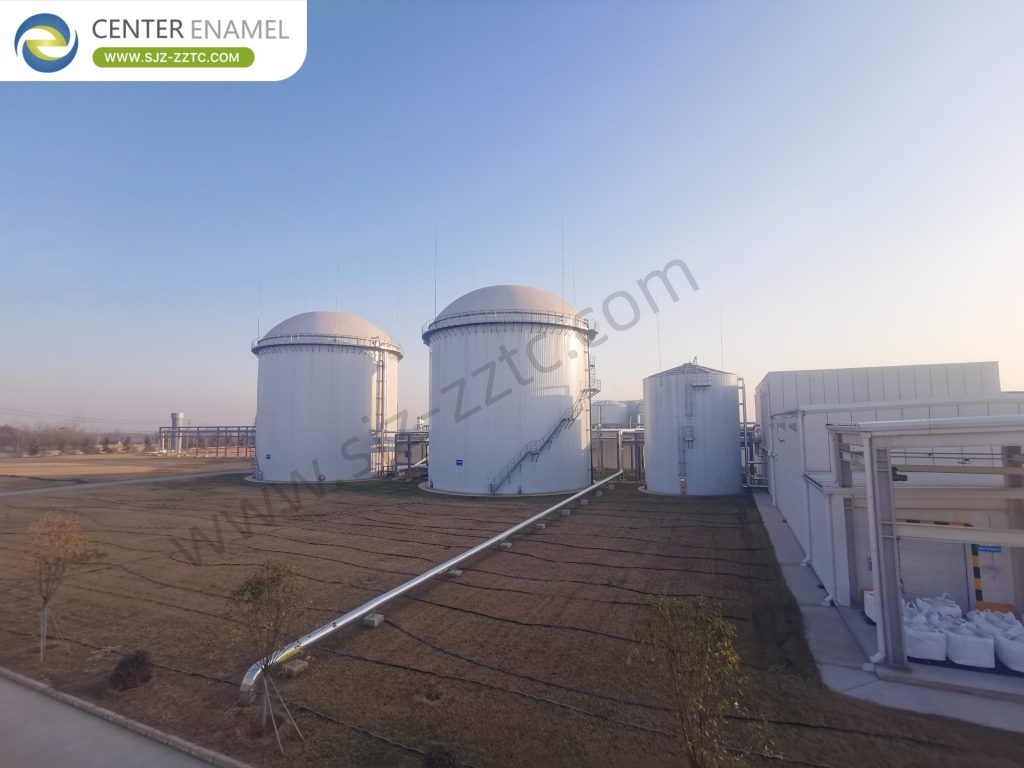
Wastewater from the new energy industry chain-lithium batteries, photovoltaics, and hydrogen-has become the most notable emerging growth area due to its complex composition and high treatment difficulty, generating significant demand for customized solutions. The maturity of third-party treatment models in industrial parks continues to improve, driving consolidation in the professional operation market. The Middle East has strong demand for advanced treatment and reuse of industrial wastewater due to water scarcity, while manufacturing transfer in Southeast Asia drives local industrial wastewater treatment facility construction demand. Across all these markets, two technology pillars determine long-term success: corrosion-resistant GFS Tanks that survive decades of aggressive media, and proven Anaerobic Solutions that convert pollution load into recoverable energy.
Regional Market Shifts and What They Mean for Equipment Selection
Each region's priorities shape equipment specifications. Asia-Pacific buyers increasingly demand low-maintenance systems backed by long-term service agreements, since operational costs now dominate lifecycle economics. North American upgrades favor drop-in replacements and modular bolted tanks that minimize downtime. European projects prioritize resource recovery, pushing anaerobic design toward higher biogas yield and tighter gas containment. New energy chain wastewater-lithium battery, photovoltaic, and hydrogen production effluent-brings complex compositions that punish standard coatings and demand customized material selection. Middle East water scarcity makes reuse and advanced treatment non-negotiable, while Southeast Asia's manufacturing relocation wave requires fast construction and flexible assembly. In every case, the tank is the longest-lived asset in the plant, making its corrosion performance the single most consequential procurement decision.
GFS Tanks vs. Concrete: A Corrosion Comparison That Spans Decades
Center Enamel's independently developed double-sided double-layer enameling technology is the industry's leading coating anti-corrosion technology, with corrosion resistance completely surpassing concrete tanks. Concrete tank interiors are riddled with pores, allowing wastewater and acid/alkaline media to easily penetrate and corrode the structural layer. Long-term use leads to irreversible problems such as internal wall spalling, water seepage, and rebar corrosion, which are difficult to repair and cannot be fundamentally resolved.
GFS Tanks feature high-temperature enameling on both the interior and exterior surfaces of steel panels, with a dense, non-porous enamel finish that completely blocks corrosive liquids and biogas permeation. The enamel layer has extremely strong chemical stability, resisting acids, alkalis, salts, and microbial corrosion. Concrete tanks will develop extensive corrosion and leakage after 5–8 years of use, while GFS tank anti-corrosion service life can exceed 30 years, with no need for frequent internal lining repairs throughout the service life. This significantly reduces long-term anti-corrosion maintenance investment and fundamentally eliminates environmental risks of medium leakage contaminating sites and groundwater. Compared to traditional concrete and FRP tanks, GFS tank coatings have no risk of peeling or blistering, and are adaptable to highly corrosive conditions such as palm oil mill effluent, livestock manure, and chemical high-salinity wastewater, with outstanding long-term comprehensive cost advantages.
| Performance Parameter | Concrete Tank | GFS Tank |
| Surface structure | Porous, permeable | Dense, non-porous enamel |
| First major corrosion/leakage | 5–8 years | Not expected within design life |
| Anti-corrosion service life | Requires recurring lining repair | 30+ years |
| Resistance to acids, alkalis, salts | Limited; structural penetration | High chemical stability |
| Biogas permeation resistance | Poor | Fully blocked |
| Internal lining maintenance | Frequent, costly | Not required |
| Risk of groundwater contamination | Significant | Fundamentally eliminated |
| Suitable for high-salinity chemical wastewater | Marginal | Excellent |
IC Process Advantages: Compact Anaerobic Solutions Built for Shock Loads
Within the anaerobic category, the IC reactor defines what modern Anaerobic Solutions can achieve. It delivers top-tier treatment efficiency, with a footprint only one-third that of traditional anaerobic processes for the same treatment capacity-a significant compactness advantage. Its built-in gas-lift internal circulation requires no external recirculation equipment, providing autonomous forced mixing of sludge and water. Strong hydraulic mixing ensures thorough microbe-pollutant contact, greatly improving degradation efficiency and withstanding high water quality and hydraulic shock loads. The dual-zone configuration combines high-efficiency degradation with deep polishing for stable effluent quality. The process achieves a high degree of sludge granulation, strong activity, and very low washout. Automation is high, operation is stable, failure rates are low, biogas production is large, and resource recovery benefits are outstanding. Long-term energy and O&M costs are far lower than traditional anaerobic processes, making the IC reactor suitable for large-flow, high-concentration industrial wastewater treatment.
Chemical Wastewater Toxicity: Why Robust Anaerobic Solutions Are Non-Negotiable
Chemical wastewater has the strongest environmental toxicity and highest ecological risk among all industrial wastewater types, with significant acute toxicity, chronic toxicity, and environmental persistence. Toxic organics such as benzene series, phenols, cyanides, and halogenated hydrocarbons at high concentrations are strongly inhibitory and lethal to aquatic organisms and microbial communities-even trace discharge can cause irreversible damage to aquatic ecosystems. Phenols and cyanides are highly toxic and directly lethal to aquatic life. Halogenated hydrocarbons and polycyclic aromatic hydrocarbons are persistent organic pollutants that are difficult to biodegrade, remaining in the environment for extended periods with bioaccumulation and carcinogenic, teratogenic, and mutagenic risks. High-salinity discharge causes soil salinization and groundwater mineralization, damaging soil-water ecosystems. Heavy metal ions accumulate in sediments over the long term and magnify through the food chain, endangering human health. Some chemical wastewater contains endocrine disruptors that at trace levels can interfere with aquatic organism reproduction and development, with far-reaching and persistent ecological impacts. Containing such streams safely requires both corrosion-proof tank shells and biologically resilient Anaerobic Solutions-a combination that only integrated manufacturers can guarantee.
South Africa Brewery Project: GFS and Stainless Steel Working Together
The South Africa Brewery High-Strength Wastewater Treatment Project focuses on high-concentration organic wastewater treatment in the brewing industry, featuring both Center Enamel GFS Tanks and stainless steel tanks as core equipment. GFS tanks serve as the primary anaerobic digestion system, suited to brewery wastewater's high-COD, high-sugar, readily decomposable characteristics for efficient organic pollutant degradation. Stainless steel tanks are used for wastewater transfer and chemical storage supporting processes. The complete equipment package has excellent corrosion resistance and flexible assembly, providing long-term stable treatment of brewery production and cleaning wastewater and solving local brewing industry pollution challenges. This is a mature brewery wastewater treatment case in Africa.
| Project Parameter | Specification |
| Project | South Africa Brewery High-Strength Wastewater Treatment |
| Core equipment | GFS tanks + stainless steel tanks |
| GFS tank role | Primary anaerobic digestion system |
| Stainless steel tank role | Wastewater transfer and chemical storage |
| Wastewater type | High-COD, high-sugar brewery production and cleaning water |
| Key benefits | Corrosion resistance, flexible assembly, long-term stable treatment |
| Regional significance | Mature brewery wastewater reference case in Africa |
R&D Depth and Global Certifications
Technology R&D is Center Enamel's core competitive advantage and the foundation beneath every Anaerobic Solution and GFS Tank delivered. The company independently masters over 200 differentiated anti-corrosion enamel formulations, with full self-control over the enamel raw material chain, holding nearly 100 invention and utility patents. Products have passed NSF, WRAS, ASME, BSCI, CE, ISO9001, and other global certifications. Company certifications and honors include National High-Tech Enterprise, National Specialized and Sophisticated "Little Giant," Hebei Manufacturing Single Champion, Provincial Smart Factory, and Provincial Green Factory, alongside complete environmental engineering and special equipment manufacturing compliance qualifications. The company maintains long-term collaborative research with multiple universities through joint materials laboratories, continuously iterating anti-corrosion coatings and large bolted tank structural design technologies. This proprietary material technology barrier creates an irreplaceable competitive advantage, with product performance comparable to high-end imported European and American storage equipment.
Standardized Installation Quality Control Across Four Stages
High-standard installation quality is demonstrated through long-term stable global project performance. Center Enamel has established full-chain quality control standards across four dimensions: factory protection, on-site assembly construction, completion inspection, and long-term warranty-ensuring quality control for every GFS tank. At the factory stage, all enameled panels, seals, and structural components receive rust-proof and moisture-proof independent packaging with dedicated protective supports, preventing damage during sea and land transport and avoiding enamel coating damage. On-site construction strictly follows unified assembly process specifications-panel-by-panel tightening and leak testing in layers, with air-tightness and verticality testing after each tank section completion; dual-membrane covers and anaerobic piping undergo simultaneous pressure testing and acceptance.
Differentiated quality acceptance standards are customized for different regions: EU and US projects follow stringent CE/NSF inspection criteria; Southeast Asian hot humid regions receive enhanced corrosion protection and sealing acceptance; remote African sites have additional foundation settlement re-inspection procedures. Upon project completion, complete construction inspection reports, pressure test records, and anti-corrosion appearance acceptance documents are issued, with full photo and video archives retained. Over 10,000 tanks delivered globally have operated long-term without large-scale leakage or structural deformation, preventing future O&M issues at source.
Frequently Asked Questions
How long do GFS Tanks last compared with concrete tanks?
GFS tanks offer an anti-corrosion service life exceeding 30 years, while concrete tanks typically develop extensive corrosion and leakage after 5–8 years and require recurring lining repairs.
What makes IC reactors efficient Anaerobic Solutions for high-strength wastewater?
IC reactors use one-third the footprint of traditional anaerobic systems, need no external recirculation, tolerate shock loads through gas-lift internal circulation, and produce high biogas yields at lower O&M cost.
Can GFS Tanks handle chemical wastewater with high salinity?
Yes. The dense, non-porous enamel layer resists acids, alkalis, salts, and microbial corrosion, making GFS tanks suitable for chemical high-salinity wastewater and other aggressive industrial streams.
Planning a wastewater project and unsure which Anaerobic Solutions configuration fits your effluent profile? Contact to Center Enamel's engineering team for a tailored recommendation. You are also invited to request our global project references to see how GFS Tanks have performed across more than 100 countries and 30,000 projects.