
How Do GFS Tanks+ IC Process Provide Cost-Effective Solutions for Chemical Wastewater?
The industrial wastewater sector is currently navigating a difficult landscape defined by the "three highs"-high difficulty, high cost, and high energy consumption. For industries such as new energy, chemicals, and pharmaceuticals, wastewater streams are highly complex and laden with stubborn characteristic pollutants that traditional treatment methods struggle to remove.
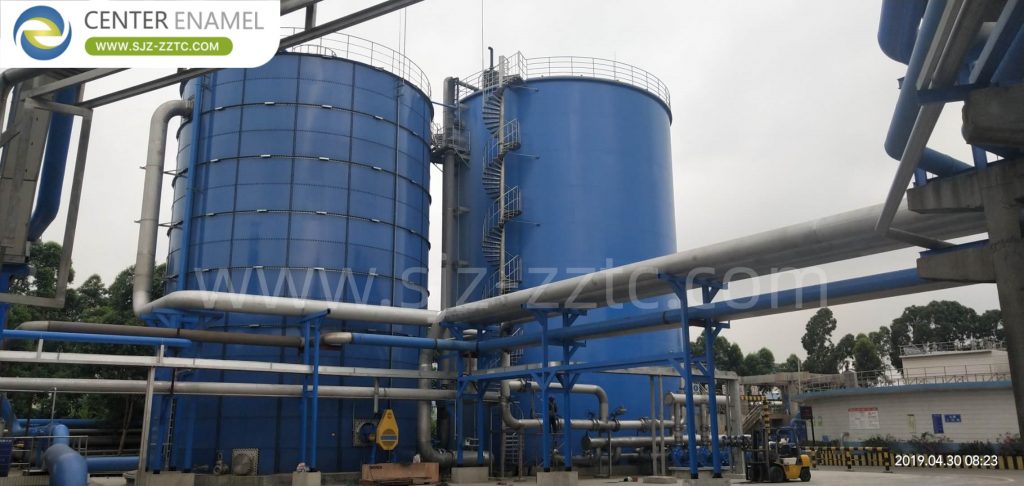
Consequently, operators face immense pressure from increasingly stringent emission standards and simultaneous demands for digital and low-carbon transformation. Addressing these multifaceted challenges requires robust infrastructure. GFS Tanks (Glass-Fused-to-Steel) offer a highly resilient, modular alternative to traditional concrete structures, specifically engineered to handle the aggressive, corrosive environments inherent in Chemical Wastewater treatment while significantly reducing operational burdens.
Why Are Modular GFS Tanks Superior to Concrete for Wastewater Projects?
Selecting the right containment material is foundational to managing the high costs and logistical complexities of industrial projects. GFS Tanks are assembled on-site from prefabricated panels, offering short construction periods and the distinct advantage of being easily expanded, relocated, or reused. In stark contrast, concrete tank pouring requires formwork, rebar tying, pouring, and lengthy curing periods, often taking months for a single tank. Weather conditions like rain, snow, and low temperatures frequently force work stoppages. Once poured, concrete structures are permanent; they cannot be dismantled or relocated, meaning a project relocation results in complete abandonment of the asset.
Conversely, GFS tank panels are factory-prefabricated and delivered ready for direct assembly using simple procedures. Installation can proceed even in low-temperature or light-rain conditions, with construction time running at only one-third that of concrete tanks, making schedules highly controllable. When capacity demands increase, additional steel panels can be bolted on to expand volume. If a plant relocates, the tanks can be fully disassembled, transported, and reassembled at the new site. This modularity significantly reduces material and construction costs, making GFS Tanks ideally suited for short-term environmental projects, phased expansions, and relocated facilities.
How Do GFS Tanks and IC Technology Handle Aggressive Chemical Wastewater?
The true test of wastewater infrastructure is its ability to withstand harsh chemical streams while maintaining treatment efficiency. The IC (Internal Circulation) Applicable Scenarios are primarily focused on high-concentration, high-flow soluble industrial organic wastewater, including high-strength discharges from breweries, beverage production, starch processing, pharmaceuticals, chemicals, and papermaking. It is particularly suited for land-constrained projects in large industrial wastewater facilities that require high treatment efficiency and rapid COD/BOD removal. It functions exceptionally well as a centralized treatment process for industrial parks or large enterprise systems dealing with significant quality fluctuations and extremely high pollutant concentrations. However, it is not suitable for high-solids or high-viscosity wastewater.
To survive these aggressive environments, the containment structure must be flawless. GFS Tanks provide the necessary corrosion resistance for these severe conditions, ensuring that the biological processes inside the IC reactor remain protected from the highly corrosive, high-salinity, and toxic elements found in Chemical Wastewater.
What Drives the High O&M Costs of Chemical Wastewater?
Operating and maintaining Chemical Wastewater treatment systems ranks among the most expensive of all wastewater types, with economic viability second only to pharmaceutical wastewater in its difficulty. The strong toxicity and high salinity of the water require extensive segregated pretreatment equipment, leading to high capital investment and complex operations. Advanced oxidation processes demand the continuous addition of expensive chemicals like hydrogen peroxide, ozone, and catalysts. Furthermore, high-salinity wastewater requires evaporation crystallization and reverse osmosis membrane treatment, which consume enormous amounts of electricity and steam.
Adding to the burden, salt-bearing and toxic sludge is classified as hazardous waste, with compliance disposal costs often accounting for over 30% of total operating expenses. Equipment situated in high-salt, highly corrosive, and strongly oxidizing environments suffers frequent corrosion damage, driving up repair and replacement costs and necessitating premium corrosion protection like that provided by GFS Tanks. Frequent water quality fluctuations also require dedicated 24/7 monitoring, while resource recovery benefits remain minimal, making overall investment far exceed returns. GFS Tanks help mitigate these costs by virtually eliminating the need for internal anti-corrosion maintenance over their long service life.
Where Has Center Enamel Proven Its Global Expertise?
Center Enamel’s global business covers over 100 countries and regions, with 30,000+ successful overseas projects. Products are exported to all major regions including Europe, the Americas, the Middle East, Africa, Southeast Asia, and Latin America, supported by a well-established localized service network. Domestically, the company operates through North, South, Central, East, and Southwest marketing regions. Internationally, it adopts a "standardized products + localized adaptation" model, adjusting tank corrosion protection and sealing standards to meet specific national regulations.
| Region | Key Project Example | Application Details |
| Europe | Italy | Large-volume GFS Tanks |
| South America | Colombia | 20 m tower water supply tanks |
| Central America | Costa Rica | Coastal seawater treatment tanks |
| Middle East | Saudi Arabia | Large municipal wastewater aluminum dome projects |
The company has established long-term strategic partnerships with many Fortune 500 companies, proving its capability to deliver reliable infrastructure across diverse global environments.
How Does Center Enamel Support Its Infrastructure Long-Term?
Deploying advanced GFS Tanks is only the beginning; ongoing support is critical for sustained performance. The after-sales team adheres to the principles of rapid response, professional efficiency, and full-cycle support, providing 24/7 full-lifecycle O&M support to global clients. Standard remote services include fault diagnosis, process parameter adjustment, and tank anti-corrosion maintenance guidance. For domestic and long-distance overseas clients, technical service personnel can be dispatched for on-site inspection, annual audits, and equipment refurbishment.
Furthermore, the team maintains long-term client feedback tracking mechanisms, regularly collecting operational data from tanks and anaerobic equipment to continuously optimize product structures. Supporting external technical expert teams provide specialized support for anaerobic process commissioning, biogas upgrading O&M, and wastewater upgrade/retrofit projects. This comprehensive approach ensures the long-term stable operation of projects, continuously improving global client satisfaction.
What Makes the Aluminum Alloy Trough Deck Roof an Economical Choice?
For specific clean water and wastewater storage scenarios, the Aluminum Alloy Trough Deck Roof provides a cost-effective tank cover solution. Designed primarily for drinking water, production wastewater, and firewater reserve tanks, it perfectly balances practicality and cost. The main body is integrally formed from anti-corrosion aluminum alloy plates paired with aluminum support trusses. Its lightweight design imposes less load on the tank foundation, reducing civil construction investment.
The roof naturally forms a dense oxide protective layer that resists rain and mild wastewater corrosion, effectively blocking wind, rain, insects, and odor volatilization to prevent secondary contamination. The flat roof structure allows for the installation of maintenance walkways, guardrails, vents, and level monitoring ports, facilitating easy daily inspection. Its simple sealing structure ensures straightforward installation with short construction timelines, virtually eliminating anti-corrosion painting maintenance. It is highly compatible with water storage applications that do not require biogas collection or high-pressure sealing, such as waterworks clear water tanks and industrial circulating water tanks.
Frequently Asked Questions
How do GFS Tanks reduce construction time?
GFS Tanks use factory-prefabricated panels assembled on-site. This bolted assembly method takes only one-third of the time required for traditional concrete tanks and is less affected by weather.
Are GFS Tanks suitable for high-salinity Chemical Wastewater?
Yes. The premium glass-fused-to-steel coating provides exceptional resistance to strong acids, alkalis, high salinity, and microbial corrosion, protecting the tank structure from the aggressive nature of chemical streams.
Can GFS Tanks be relocated if a plant moves?
Absolutely. Unlike permanent concrete structures, GFS Tanks can be fully disassembled, transported to a new site, and reassembled, significantly reducing costs for reconstruction and plant relocations.
Are you ready to optimize your Chemical Wastewater treatment infrastructure with durable, cost-effective GFS Tanks? Contact Center Enamel today to discuss how our modular solutions can streamline your project timeline and reduce O&M burdens.
Reach out to our engineering team to request a customized proposal and discover why leading Fortune 500 companies trust Center Enamel for their most challenging wastewater containment needs.