
Durable GFS Tanks and Economic Solutions for Every Beverage Wastewater Treatment Project
The global industrial wastewater landscape is shifting rapidly. The Asia-Pacific region, particularly China, has become the world's largest industrial wastewater treatment market, with the operation and maintenance service segment's contribution continuing to rise, marking a shift from project construction to long-term operational management. The North American market focuses on upgrading existing facilities, while Europe emphasizes high-value-added resource recovery technologies.
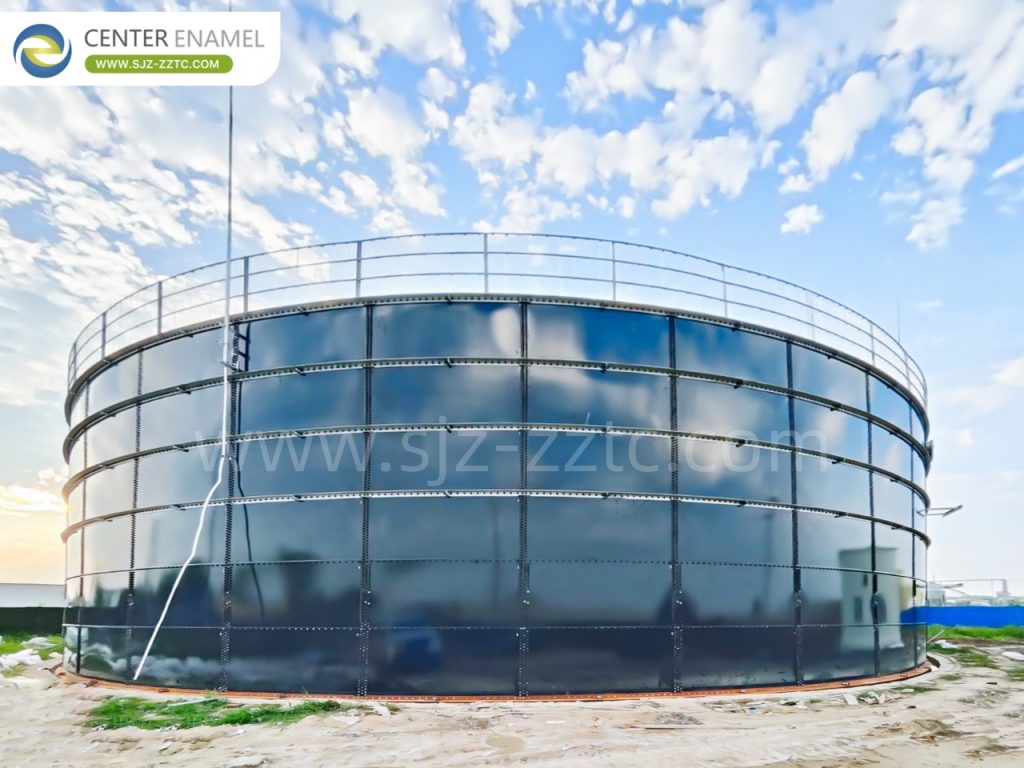
Wastewater from the new energy industry chain (lithium batteries, photovoltaics, hydrogen) has become the most notable emerging growth area due to its complex composition and high treatment difficulty, generating significant demand for customized solutions. Meanwhile, the maturity of third-party treatment models in industrial parks continues to improve. The Middle East has strong demand for advanced treatment and reuse due to water scarcity, and manufacturing transfer in Southeast Asia drives local facility construction demand. Amid this global evolution, selecting the right infrastructure-specifically GFS Tanks-is critical to the success of any Beverage Wastewater Treatment Project.
Structural Superiority: GFS Tanks in Extreme Climates
Environmental adaptability is a defining factor in project success, and GFS tanks are engineered to far surpass the limitations of concrete tanks. Concrete tanks are cast-in-place monolithic structures, with seismic and wind resistance entirely dependent on on-site construction quality. In remote areas, typhoon-prone zones, and earthquake belts, construction quality is difficult to control. Under strong earthquakes or typhoons, concrete tanks are prone to cracking and base settlement damage, with subsequent reinforcement costs equivalent to rebuilding.
GFS tanks undergo collection of local seismic intensity, maximum wind pressure, and foundation bearing capacity data before construction. They are customized with thickened steel panels, stiffening ribs, and anchored base components-all factory-prefabricated to standardized specifications. The bolted panel structure has excellent stress distribution capability, making it less prone to overall fracture under seismic and typhoon impacts. Minor foundation settlement will not cause through-cracking. Structural parameters can be flexibly adjusted for mountainous, coastal typhoon-zone, and high-seismic-zone projects, providing long-term protection against extreme natural climate damage.
The IC Process: Engine of Efficiency
At the heart of modern high-strength wastewater treatment is the IC (Internal Circulation) process. It is primarily designed for high-concentration, high-flow soluble industrial organic wastewater, covering brewery, beverage, starch, pharmaceutical, chemical, and papermaking high-strength wastewater. It is highly suitable for land-constrained projects with high treatment efficiency requirements in large industrial wastewater treatment facilities. It can serve as the primary process for high-strength wastewater with rapid COD/BOD removal.
The IC process is ideal for centralized industrial park WWTPs and large enterprise proprietary treatment systems, particularly for wastewater with significant quality fluctuations and extremely high pollutant concentrations. It is not suitable for high-solids, high-viscosity wastewater. For the right applications, it is the preferred anaerobic process for modern high-efficiency industrial wastewater treatment.
Economic Advantages for Beverage Effluent
Applying these technologies to a Beverage Wastewater Treatment Project yields exceptional economic returns. O&M costs are very low with outstanding resource recovery benefits-industry-leading economics. Beverage wastewater has excellent biodegradability; sugars are the best anaerobic digestion substrate. This means no specialty chemicals are needed, only small amounts of pH adjusters and flocculants-keeping chemical costs very low.
Anaerobic digestion produces large, stable biogas volumes for plant heating and power generation-significant energy recovery benefits that can greatly offset or fully cover O&M energy costs. Equipment is simple and durable-conventional pumps, distributors, and three-phase separators-with no high-end precision wear parts, resulting in extremely low failure rates and low maintenance costs. Stable, controllable water quality with high automation ensures low labor requirements. Low suspended solids mean low sludge production and low disposal costs. Overall, resource recovery revenues (biogas) generally cover O&M costs, making this the most economically favorable high-concentration organic wastewater category.
| Beverage Wastewater O&M Factor | Economic Impact |
| Chemical Costs | Very low (only pH adjusters/flocculants) |
| Energy Recovery | High biogas volume offsets O&M energy costs |
| Maintenance | Low (no precision wear parts) |
| Labor | Low (high automation) |
| Sludge Disposal | Low (low suspended solids) |
Global Footprint and Project Execution
Delivering these solutions requires a partner with proven global reach. Center Enamel's global business covers over 100 countries and regions, with 30,000+ successful overseas projects. Products are exported to all major regions including Europe, the Americas, the Middle East, Africa, Southeast Asia, and Latin America, with a well-established global localized service network.
Domestically, the company is organized into North, South, Central, East, and Southwest marketing regions, covering environmental, water utility, livestock, and petrochemical customers nationwide. Internationally, the company adopts a "standardized products + localized adaptation" model-adjusting tank corrosion protection, sealing, and pressure standards for different national water quality and environmental regulations.
This approach is validated by multiple global landmark projects: large-volume GFS tanks in Italy, 20 m tower water supply tanks in Colombia, coastal seawater treatment tanks in Costa Rica, and large municipal wastewater aluminum dome projects in Saudi Arabia. The company has established long-term stable strategic partnerships with many Fortune 500 companies.
| Global Market Presence | Metrics |
| Global Reach | 100+ countries and regions |
| Total Projects | 30,000+ successful overseas projects |
| Key Regions | Europe, Americas, Middle East, Africa, SE Asia, Latin America |
| Landmark Projects | Italy (GFS tanks), Colombia (20m towers), Costa Rica (seawater), Saudi Arabia (aluminum domes) |
Lifetime Support and Complementary Roofing
Ensuring long-term stability requires robust after-sales support. Center Enamel's after-sales team adheres to the service principles of rapid response, professional efficiency, and full-cycle support-providing 24/7 full-lifecycle O&M support to global clients. Standard remote services include fault diagnosis, process parameter adjustment, and tank anti-corrosion maintenance guidance. For domestic and long-distance overseas clients, overseas technical service personnel can be dispatched for on-site inspection, annual inspection, and equipment refurbishment as needed. The team also maintains long-term client feedback tracking mechanisms-regularly collecting tank and anaerobic equipment operational data to continuously optimize product structure and support processes. Supporting external technical expert teams provide specialized support for anaerobic process commissioning, biogas upgrading O&M, and wastewater upgrade/retrofit projects.
Complementing the GFS tanks, Center Enamel offers the Aluminum Alloy Trough Deck Roof. This is a cost-effective economical tank cover solution for clean water and wastewater storage scenarios, primarily designed for drinking water, production wastewater, and firewater reserve tanks. The main body is integrally formed from anti-corrosion aluminum alloy plates, paired with aluminum support trusses. Its lightweight design imposes less load on the tank foundation, reducing civil construction investment. A naturally formed dense oxide protective layer on the surface resists rain and mild wastewater corrosion, withstands outdoor sun and rain exposure, and effectively blocks wind, rain, insects, fallen leaves, and odor volatilization, protecting water quality by preventing dust and debris from falling in. The flat roof structure is neat and orderly, allowing installation of maintenance walkways, guardrails, vents, and level monitoring ports on top. It is suitable for various atmospheric pressure water storage tanks and is highly compatible with water storage applications that do not require biogas collection or high-pressure sealing.
Frequently Asked Questions
Q: What types of wastewater is the IC process suitable for?
The IC process is designed for high-concentration, high-flow soluble organic wastewater, such as brewery, beverage, starch, pharmaceutical, and chemical streams. It excels in land-constrained facilities with significant quality fluctuations, but is not suitable for high-solids or high-viscosity wastewater.
Q: Why are GFS Tanks better than concrete for earthquake or typhoon zones?
GFS tanks are factory-prefabricated with customized thickened panels and anchored bases based on local seismic and wind data. Their bolted structure distributes stress evenly, resisting cracking from typhoons and earthquakes better than cast-in-place concrete.
Q: How do O&M costs for beverage wastewater treatment stay low?
Beverage wastewater is highly biodegradable, requiring minimal chemicals. The anaerobic process generates large volumes of biogas that offset energy costs, while the simple, durable equipment has low maintenance needs and produces minimal sludge.
Ready to lower your O&M costs and upgrade your facility's resilience? Contact our engineering team to discuss how GFS Tanks can transform your next project.
Let Center Enamel help you design an economically superior Beverage Wastewater Treatment Project-reach out today for a customized proposal.