
GFS Tanks and End-to-End Support from a Trusted Wastewater Treatment Solutions Provider
The industrial wastewater market is diverging fast. Leading companies are building integrated service capabilities through technical integration and capital operations, and industry concentration is gradually increasing. Chinese companies continue to consolidate their advantages in mid-tier equipment exports, international giants target high-end customers and complex industrial wastewater markets, while local players occupy the mid- to low-end and industrial park centralized treatment markets with service responsiveness and cost advantages.
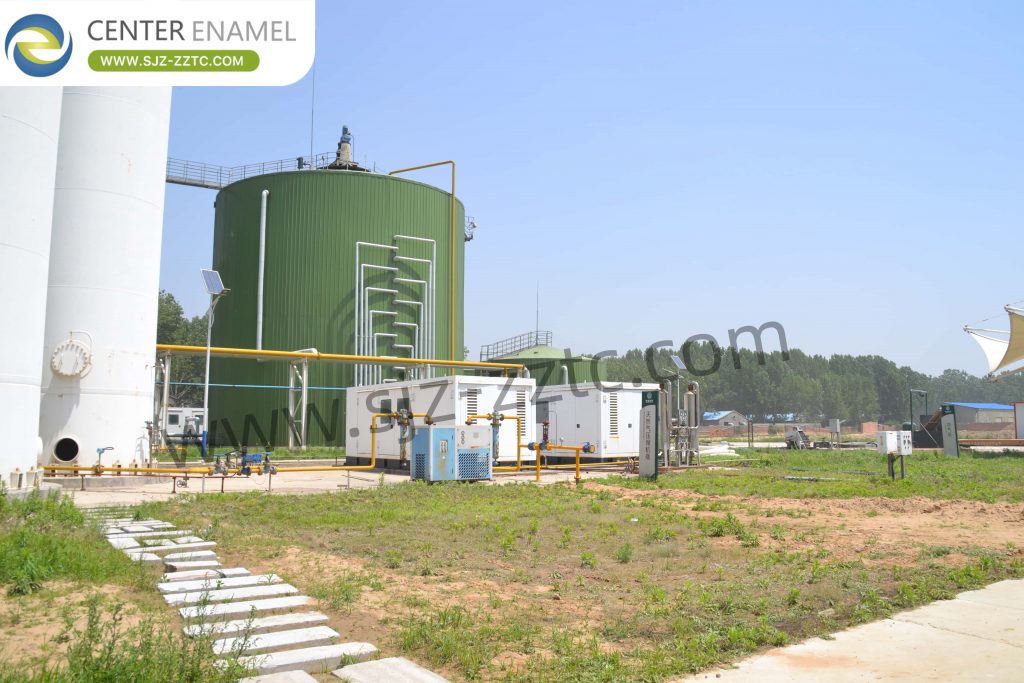
In the anaerobic process segment, UASB, EGSB, and IC anaerobic reactors-valued for high loading rates, small footprints, and stable operation-are widely used for high-concentration organic wastewater pretreatment in food processing, pharmaceutical fermentation, alcohol brewing, chemical, and other industries. These reactors use steel tank shells, and their corrosion resistance and gas-tightness directly determine long-term operational stability. This is precisely where GFS Tanks prove their value, and where choosing the right Wastewater Treatment Solutions Provider shapes a project's entire lifecycle.
Why Bolted GFS Tanks Outperform Concrete Construction
GFS Tanks are assembled on-site from prefabricated panels, with short construction periods and support for expansion, relocation, and reuse-advantages distinctly different from immovable concrete tanks. Concrete tank pouring requires formwork, rebar tying, pouring, and long curing periods, with a single tank construction taking months. Rain, snow, and low temperatures force work stoppages and delays. Once poured, they are permanent fixed structures that cannot be dismantled, expanded, or relocated-project relocation means complete abandonment.
GFS Tanks vs. Concrete Tanks
| Parameter | GFS Tanks (Bolted) | Concrete Tanks |
| Construction Time | About 1/3 of concrete tanks | Months per tank |
| Weather Constraints | Workable in low temperature and light rain | Rain, snow, cold cause stoppages |
| Expansion | Add panels to increase volume | Difficult and costly |
| Relocation & Reuse | Fully dismantlable and reusable | Permanent, cannot be moved |
| Best Fit | Short-term, phased, relocation projects | Long-term fixed sites |
GFS tank panels are all factory-prefabricated, transported to site, and directly assembled with simple procedures. Construction can proceed even in low-temperature, light-rain conditions, with installation time only one-third that of concrete tanks-construction schedules are controllable. For expansion, additional steel panels can be installed to increase volume; for plant relocation, tanks can be fully disassembled with panels transported to new sites for reassembly and reuse, significantly reducing material and construction costs for new construction and reconstruction. This makes GFS Tanks ideally suited for short-term environmental projects, phased expansion projects, and relocated construction projects.
Where GFS Tank Anaerobic Systems Fit Best
These tank-based anaerobic systems are primarily designed for high-concentration, high-flow soluble industrial organic wastewater, covering brewery, beverage, starch, pharmaceutical, chemical, and papermaking high-strength streams. They suit land-constrained projects with high treatment efficiency requirements in large industrial wastewater treatment facilities, and can serve as the primary process for high-strength wastewater with rapid COD/BOD removal. They are equally suitable for centralized industrial park WWTPs and large enterprise proprietary treatment systems, particularly for wastewater with significant quality fluctuations and extremely high pollutant concentrations. They are not suitable for high-solids, high-viscosity wastewater. For modern high-efficiency industrial wastewater treatment, this remains the preferred anaerobic configuration-and a key reason clients select Center Enamel as their Wastewater Treatment Solutions Provider.
Operating Economics: Papermaking Wastewater O&M Costs
O&M costs are moderate to low. White water recirculation greatly reduces external treatment volume, with good overall economics. White water recirculation systems have moderate capital investment but recover large quantities of fiber and water-significant economic benefits. Pretreatment fiber recovery can be sold, reducing treatment costs. Alkali recovery systems recover alkali and generate steam from lignin combustion-substantial resource recovery benefits. Anaerobic plus aerobic processes are mature and stable with low chemical consumption and moderate energy consumption. Equipment primarily consists of conventional pumps and aerators-simple structure, low failure rates, and controllable maintenance costs. Fiber sludge can be recovered or sold with low disposal costs. Large volume but moderate pollutant concentration means economies of scale reduce unit treatment costs. Overall resource recovery revenues (fiber recovery, alkali recovery, and steam) generally cover O&M costs-good economics.
Case in Focus: South Africa Brewery High-Strength Wastewater Treatment
A representative application of this approach is the South Africa brewery project, which focuses on high-concentration organic wastewater treatment in the brewing industry and features both Center Enamel GFS Tanks and stainless steel tanks as core equipment. GFS Tanks serve as the primary anaerobic digestion system, suited to brewery wastewater's high-COD, high-sugar, readily decomposable characteristics for efficient organic pollutant degradation. Stainless steel tanks are used for wastewater transfer and chemical storage supporting processes. The complete equipment package offers excellent corrosion resistance and flexible assembly, providing long-term stable treatment of brewery production and cleaning wastewater-solving local brewing industry pollution challenges. This is a mature brewery wastewater treatment case in Africa and a clear illustration of what a capable Wastewater Treatment Solutions Provider can deliver in a demanding environment.
Table 1: South Africa Brewery Project at a Glance
| Item | Detail |
| Location | South Africa |
| Industry | Brewing |
| Core Equipment | GFS Tanks (anaerobic digestion) + stainless steel tanks |
| Wastewater Characteristics | High COD, high sugar, readily decomposable |
| Key Benefits | Corrosion resistance, flexible assembly, long-term stable treatment |
After-Sales and Technical Support You Can Rely On
The after-sales team adheres to the service principles of rapid response, professional efficiency, and full-cycle support-providing 24/7 full-lifecycle O&M support to global clients. Standard remote services include fault diagnosis, process parameter adjustment, and tank anti-corrosion maintenance guidance. For domestic and long-distance overseas clients, overseas technical service personnel can be dispatched for on-site inspection, annual inspection, and equipment refurbishment as needed. The team also maintains long-term client feedback tracking mechanisms, regularly collecting tank and anaerobic equipment operational data to continuously optimize product structure and support processes. Supporting external technical expert teams provide specialized support for anaerobic process commissioning, biogas upgrading O&M, and wastewater upgrade and retrofit projects-ensuring long-term stable operation of domestic and overseas projects while continuously improving global client satisfaction and repurchase rates.
A Flexible, Efficient Service Delivery System
Center Enamel combines its own cross-border construction teams with a global localized agent network. Modular GFS Tanks assembly with short construction periods and dismantlable, reusable capability suits overseas short-term projects, phased expansions, and relocation needs, while full-lifecycle after-sales O&M support ensures long-term stable client operations.
Frequently Asked Questions
How fast can GFS Tanks be installed?
Factory-prefabricated panels assemble on-site in roughly one-third the time of concrete tanks, and work can continue in light rain or low temperatures.
Can GFS Tanks be relocated or expanded later?
Yes. Additional panels increase capacity, and tanks can be fully disassembled, shipped, and reassembled at a new site for reuse.
What support comes after delivery?
A 24/7 after-sales team provides remote diagnostics, on-site inspection, and anaerobic commissioning support, backed by a global agent network.
Share your project location, capacity, and wastewater profile, and our team will recommend the right GFS Tanks configuration for your site. Talk to Center Enamel today and see why clients worldwide choose us as their long-term Wastewater Treatment Solutions Provider.