
Durable GFS Tanks Turnkey Solution for Complex Industrial Wastewater Treatment Challenges
Industrial wastewater treatment has long been plagued by the notorious "three highs"-high difficulty, high cost, and high energy consumption. This is particularly true for sectors like new energy, chemical, and pharmaceutical production, where wastewater streams are notoriously complex and laden with characteristic pollutants that traditional treatment processes struggle to neutralize effectively. The industry also faces relentless pressure to upgrade technologies in response to ever-stringent emission standards, alongside new demands for digitalization and low-carbon operational management. These challenges, however, are precisely where a comprehensive Turnkey Solution can make a transformative difference.
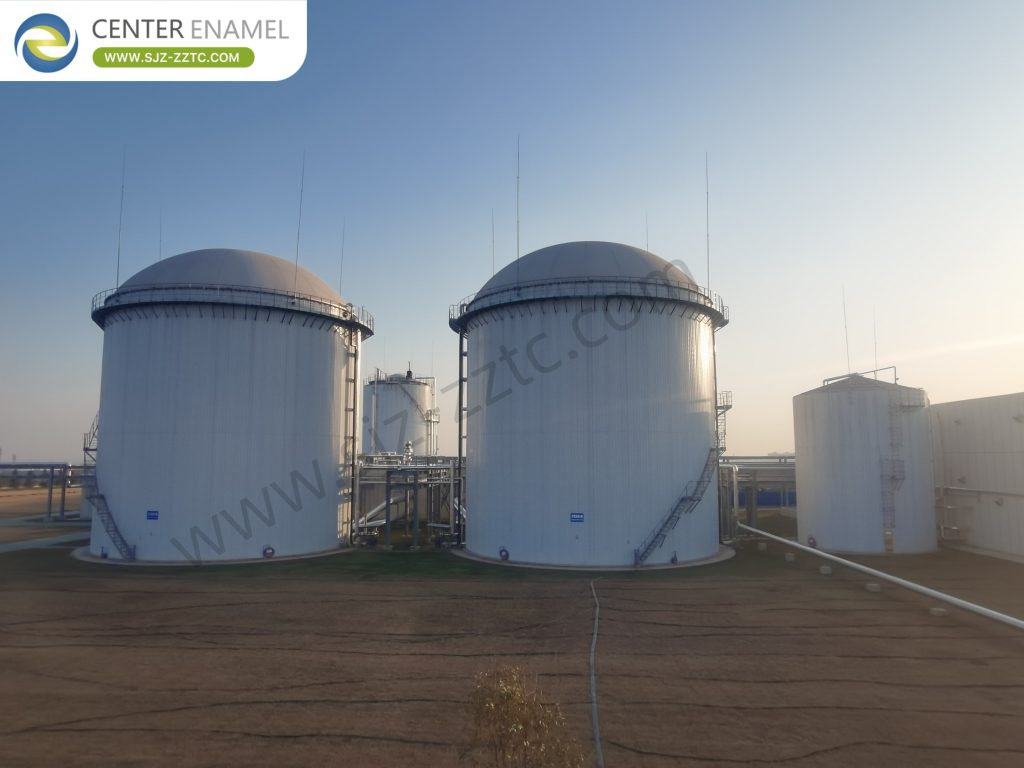
By integrating advanced treatment technologies with robust infrastructure, a Turnkey Solution approach can systematically address these core issues. Central to such integrated solutions are high-performance storage and treatment units. This is where GFS Tanks (Glass-Fused-to-Steel Tanks) from Center Enamel demonstrate their indispensable value. As a core component of our Industrial Wastewater Treatment Turnkey Solution, GFS Tanks provide the necessary durability and adaptability to handle the most aggressive industrial effluents, ensuring long-term, stable operation even under the harshest conditions.
GFS Tanks: The Cornerstone of Adaptable, High-Performance Turnkey Solutions
Within any effective Turnkey Solution for industrial wastewater, the choice of storage and reaction vessels is critical. Center Enamel has established a formidable competitive advantage by independently developing over 200 specialized enamel frit formulations and supporting patents. This capability allows us to customize the anti-corrosion properties of our GFS Tanks precisely to the customer's specific storage media, a level of adaptability that renders concrete tanks comprehensively obsolete for demanding applications.
While concrete tanks, limited to a single material type, are only suitable for neutral clean water storage, our GFS Tanks are engineered for resilience. When storing corrosive materials such as aggressive chemical wastewater, high-salinity brine, or the digestate from food waste, concrete tanks necessitate additional anti-corrosion linings that are prone to failure, preventing long-term stable operation and failing to adapt to alternating high/low concentration storage conditions. Our GFS Tanks, by contrast, are specifically formulated with specialized enamels resistant to strong acids, strong alkalis, high organic content, and high salinity. This means a single GFS Tank can seamlessly switch between multiple wastewater and fermentation feedstock storage requirements, eliminating the need to rebuild tanks for media changes and perfectly meeting the needs of diversified, multi-condition environmental protection projects. This adaptability is a cornerstone of our Industrial Wastewater Treatment Turnkey Solution.
This versatility extends across the entire spectrum of environmental engineering. From biogas anaerobic digestion and municipal wastewater to livestock farming and food processing, our GFS Tanks are universally applicable. This universal applicability ensures that as treatment requirements evolve, the infrastructure remains sound, providing a future-proof element to any Turnkey Solution.
Core Treatment Processes: Enhancing Efficiency and Reducing Costs in Industrial Wastewater
A successful Turnkey Solution is defined not only by its storage tanks but also by the efficiency of its core treatment processes. In this regard, the Upflow Anaerobic Sludge Blanket (UASB) process stands out as a particularly effective technology for high-strength Industrial Wastewater Treatment, especially when integrated with our robust GFS Tanks.
UASB Process Advantages: A Key Component of Our Turnkey Solution
The UASB process offers compelling operational and economic benefits that align perfectly with the objectives of a cost-effective Turnkey Solution. One of its primary advantages is the elimination of mechanical mixing equipment, as sludge suspension is achieved solely through hydraulic action, resulting in very low overall energy consumption. This directly tackles the "high energy consumption" challenge. Furthermore, high-concentration anaerobic granular sludge can be cultivated, which possesses high sludge concentration, strong activity, and excellent settleability. This leads to low sludge washout and low sludge yield, significantly reducing sludge disposal costs-a major contributor to the "high cost" of treatment.
Moreover, the integrated design of the UASB combines reaction, sedimentation, and separation simultaneously within a single reactor, resulting in a small footprint and moderate capital investment. Its simple structure translates to low failure rates and convenient maintenance. Crucially, the process delivers a high volumetric loading rate with excellent organic pollutant degradation efficiency and good shock load resistance. The stable biogas produced during the process holds high resource recovery value, and the process is mature and widely adopted with well-established construction, commissioning, and O&M systems, making it ideal for large-scale industrial wastewater treatment projects.
Assessing Beverage Wastewater: A Case for Specialized Turnkey Solutions
The nature of pollutants varies greatly across industries, a nuance that any comprehensive Industrial Wastewater Treatment Turnkey Solution must address. For example, pollutants in beverage industry wastewater are entirely natural food components like sugars, fruit juice, and tea. This means they are non-toxic chemicals and possess good environmental safety, with extremely low chemical toxicity. The core pollutants are high-concentration soluble sugars, which are non-toxic to aquatic organisms but pose a classic oxygen-demanding pollution problem. Direct discharge leads to rapid aerobic decomposition, severely depleting dissolved oxygen and causing fish suffocation.
Other components, such as organic acids from fruit juice, can lower the pH of receiving water, while tea polyphenols affect water color and taste even at trace levels. The high sugar content also promotes rapid microbial growth, mold, and decomposition, leading to odors. Long-term discharge causes organic pollution, algal blooms, and eutrophication. Overall, the pollution is primarily oxygen-demanding organic pollution, with no heavy metals or persistent organic accumulation risks, and the pollutants are rapidly naturally degradable with short environmental recovery periods. This profile demonstrates the need for a specialized Turnkey Solution that can be tuned to the specific characteristics of the effluent.
Proven Global Performance: Center Enamel's Turnkey Solutions in Action
The true measure of any Turnkey Solution lies in its real-world performance. Center Enamel's GFS Tanks and comprehensive Industrial Wastewater Treatment solutions have been deployed successfully across the globe, demonstrating their reliability and effectiveness in diverse conditions.
Ghana Municipal Domestic Wastewater Treatment Project
A compelling example is the Ghana municipal domestic wastewater treatment project, completed in 2021. This project, capable of treating 1,800 m³/day of municipal wastewater, effectively utilized the UBF anaerobic + A²/O nitrogen/phosphorus removal mature processes. The infrastructure was anchored by multiple Center Enamel GFS Tanks, including one UBF anaerobic reactor, one secondary clarifier, and two internal/external double-layer A²/O biological tanks. Despite influent with high COD, BOD, suspended solids, and nitrogen/phosphorus concentrations, the Turnkey Solution delivered exceptional results. After full treatment, effluent parameters were significantly reduced, with pH stable at 6.5-9.0, fully meeting local environmental discharge standards.
This project highlights how our corrosion-resistant, conveniently assembled GFS Tanks efficiently solve urban domestic wastewater pollution while balancing treatment effectiveness and O&M economics. It stands as a mature municipal wastewater case study in Africa, showcasing the global reach and reliability of Center Enamel's Turnkey Solution.
Innovation, Quality, and Certification: The Foundation of Our Turnkey Solutions
The confidence in our Turnkey Solution is underpinned by robust R&D, stringent quality control, and global authoritative certifications. Technology R&D is Center Enamel's core competitive advantage. We independently master over 200 differentiated anti-corrosion enamel formulations and hold full control over the enamel raw material chain, owning nearly 100 invention and utility patents. Our products have passed rigorous global certifications, including NSF, WRAS, ASME, BSCI, CE, and ISO9001.
Our company is also recognized with prestigious honors like National High-Tech Enterprise, National Specialized and Sophisticated "Little Giant," Hebei Manufacturing Single Champion, Provincial Smart Factory, and Provincial Green Factory. We maintain complete environmental engineering and special equipment manufacturing compliance qualifications. Through long-term collaborative research with multiple universities via joint materials laboratories, we continuously iterate our anti-corrosion coatings and large bolted tank structural design technologies. This proprietary material technology barrier creates an irreplaceable competitive advantage, with product performance comparable to high-end imported European/American storage equipment.
Full-Process Standardized Installation Quality Control
Quality control is an integral part of our Turnkey Solution. Center Enamel has established full-chain quality control standards across four dimensions: factory protection, on-site assembly construction, completion inspection, and long-term warranty. At the factory stage, all enameled panels, seals, and structural components receive rust-proof and moisture-proof independent packaging with dedicated protective supports to prevent damage during transport. On-site construction strictly follows unified assembly process specifications, with panel-by-panel tightening and leak testing in layers. Air-tightness and verticality testing are conducted after each tank section completion, and dual-membrane covers and anaerobic piping undergo simultaneous pressure testing and acceptance.
We also implement differentiated quality acceptance standards for different regions. EU/US projects follow stringent CE/NSF inspection criteria; Southeast Asian hot humid regions receive enhanced corrosion protection and sealing acceptance; and remote African sites have additional foundation settlement re-inspection procedures. Upon project completion, we issue complete construction inspection reports, pressure test records, and anti-corrosion appearance acceptance documents, retaining full photo/video archives. This meticulous attention to quality ensures that over 10,000 tanks delivered globally have operated long-term without large-scale leakage or structural deformation, preventing future O&M issues at source and guaranteeing the long-term success of our Turnkey Solution.
Partner with Center Enamel for Your Next Turnkey Project
The challenges of modern industrial wastewater treatment are complex, but they are not insurmountable. With a comprehensive Turnkey Solution that integrates highly adaptable GFS Tanks and proven treatment processes like UASB, Center Enamel provides a clear path to operational excellence, regulatory compliance, and sustainable development. Our commitment to innovation, quality, and global service ensures that your project benefits from best-in-class technology and unwavering support. For a partner dedicated to solving your most demanding water and wastewater challenges, trust Center Enamel.
FAQ
1. What is a Turnkey Solution in the context of industrial wastewater treatment?
A Turnkey Solution is a comprehensive, end-to-end service where a single provider, like Center Enamel, manages the entire project from initial design and engineering to procurement, construction, and commissioning. It simplifies the process for the client, ensuring seamless integration of all components, including advanced GFS Tanks and treatment technologies like UASB, for optimal performance and reliability.
2. How do GFS Tanks contribute to overcoming the "three highs" of industrial wastewater?
Our GFS Tanks directly address the "three highs" (high cost, high difficulty, and high energy consumption). Their superior corrosion resistance extends service life, reducing long-term costs. They are designed for easy assembly and minimal maintenance, lowering energy and operational demands. Their adaptability allows them to handle complex, difficult-to-treat effluents, making them a core component of an efficient Turnkey Solution.
3. Why are Center Enamel's GFS Tanks more suitable for corrosive wastewater than concrete tanks?
Unlike concrete tanks which are only suitable for neutral water and require failure-prone linings for corrosive media, our GFS Tanks feature specialized enamel coatings. We can customize over 200 anti-corrosion formulations to resist strong acids, alkalis, high salinity, and organic content, ensuring long-term structural integrity and stable operation even in the most challenging corrosive environments.