
Durable GFS Tanks & Efficient Anaerobic Solutions for Industrial Wastewater Treatment
The global wastewater treatment market is experiencing a clear divergence, with leading companies consolidating their influence through integrated service capabilities and strategic capital operations. As industry concentration steadily increases, Chinese manufacturers are solidifying their competitive edge in mid-tier equipment exports, while international giants focus on high-end clients and complex industrial wastewater challenges. Simultaneously, local players effectively occupy the mid-to-low-end segments and industrial park centralized treatment markets by leveraging superior service responsiveness and cost advantages.
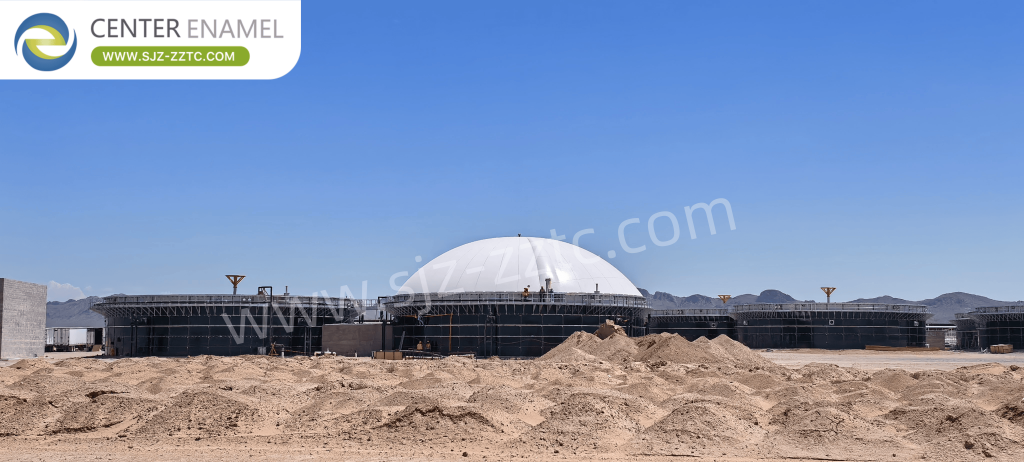
This competitive dynamic directly influences technology selection, particularly in the anaerobic treatment sector. In this context, anaerobic solutions such as UASB, EGSB, and IC reactors have become indispensable for high-concentration organic wastewater pretreatment across food processing, pharmaceutical fermentation, alcohol brewing, and chemical industries. These reactors, which utilize steel tank shells, demand exceptional corrosion resistance and gas-tightness to ensure long-term operational stability. As a result, the application value of glass-fused-to-steel (GFS) tanks in these demanding scenarios is becoming increasingly prominent, bridging the gap between robust engineering and reliable performance.
Why GFS Tanks Offer Superior Adaptability to Extreme Climates
When evaluating infrastructure for industrial wastewater treatment, environmental resilience is a non-negotiable factor for long-term project success. GFS tanks are specifically engineered to undergo customized wind and seismic design based on project site climate and geological conditions, offering environmental adaptability far superior to traditional concrete tanks. In contrast, concrete tanks are cast-in-place monolithic structures, meaning their seismic and wind resistance depends entirely on on-site construction quality-a variable that is difficult to control in remote areas, typhoon-prone zones, and earthquake belts. Under strong seismic events or typhoons, concrete tanks are prone to cracking and base settlement damage, with subsequent reinforcement costs often equivalent to rebuilding.
To mitigate these risks, Center Enamel’s GFS tanks undergo a rigorous pre-construction process that includes collecting local seismic intensity, maximum wind pressure, and foundation bearing capacity data. Based on this analysis, the company customizes thickened steel panels, stiffening ribs, and anchored base components-all factory-prefabricated to standardized specifications. The bolted panel structure boasts excellent stress distribution capability, ensuring it is less prone to overall fracture under seismic and typhoon impacts. Moreover, minor foundation settlement will not cause through-cracking, providing a distinct reliability advantage. These structural parameters can be flexibly adjusted for mountainous, coastal typhoon-zone, and high-seismic-zone projects, delivering long-term protection against extreme natural climate damage and making GFS tanks a cornerstone of durable industrial wastewater treatment infrastructure.
Key Anaerobic Solutions: UASB Applicable Scenarios
To fully leverage anaerobic solutions in industrial settings, it is essential to match the correct reactor type with the specific wastewater characteristics. The UASB (Upflow Anaerobic Sludge Blanket) reactor is suitable for soluble medium-to-high concentration organic wastewater, covering light industrial effluents from brewing, sugar refining, starch, papermaking, food processing, and printing and dyeing. It is particularly effective for wastewater where organics are predominantly soluble with low suspended solids content, but it is not suitable for high-solids or high-viscosity wastewaters.
The UASB can be used alone as the primary treatment process or as a pretreatment for high-strength wastewater to reduce downstream aerobic load. It is also applicable for municipal wastewater anaerobic pretreatment and low-solids livestock wastewater treatment. With its low cost and stable operation advantages, this anaerobic solution is ideal for long-term continuous, large-flow industrial wastewater treatment projects, making it a versatile choice for engineers seeking reliable biological treatment.
Operational Cost Analysis in Beverage Wastewater Treatment
One of the most compelling arguments for adopting anaerobic solutions in industrial wastewater treatment is the exceptional economic performance, particularly in the beverage sector. Operation and maintenance (O&M) costs are very low, with outstanding resource recovery benefits delivering industry-leading economics. The excellent biodegradability of beverage wastewater-where sugars serve as the best anaerobic digestion substrate-means no specialty chemicals are needed; only small amounts of pH adjusters and flocculants are required, resulting in very low chemical costs.
Furthermore, anaerobic digestion produces large, stable biogas volumes suitable for plant heating and power generation, offering significant energy recovery benefits that can greatly offset or fully cover O&M energy costs. The equipment is simple and durable, employing conventional pumps, distributors, and three-phase separators without high-end precision wear parts, which ensures extremely low failure rates and minimal maintenance. Stable, controllable water quality with high automation reduces labor requirements, while low suspended solids lead to low sludge production and disposal costs. Overall, resource recovery revenues (biogas) generally cover O&M costs, making this application economically superior to most food processing wastewaters and positioning it as the most financially favorable category for high-concentration organic wastewater treatment using GFS tanks.
Case Study: Ghana Municipal Domestic Wastewater Treatment Project
The practical application of Center Enamel’s GFS tanks and anaerobic solutions is best illustrated through successful global projects. In Ghana, a municipal domestic wastewater treatment project was completed in 2021, treating 1,800 m³/day of municipal wastewater using a UBF (Upflow Blanket Filter) anaerobic reactor combined with A²/O nitrogen and phosphorus removal mature processes. The facility is equipped with multiple Center Enamel GFS tanks, including one UBF anaerobic reactor, one secondary clarifier, and two internal/external double-layer A²/O biological tanks.
The influent is characterized by high COD, BOD, suspended solids, and nitrogen/phosphorus concentrations. After full treatment, effluent parameters are significantly reduced, with pH stabilized at 6.5-9.0, fully meeting local environmental discharge standards. The corrosion-resistant, conveniently assembled GFS tanks efficiently solve urban domestic wastewater pollution while balancing treatment effectiveness and O&M economics. This project stands as a mature municipal wastewater case in Africa, demonstrating the reliability of Center Enamel's GFS tanks in diverse climates and challenging wastewater conditions.
Center Enamel's Global Market Presence and Reach
The success of the Ghana project is part of a much larger narrative of global leadership. Center Enamel's global business covers over 100 countries and regions, with 30,000+ successful overseas projects. Products are exported to all major regions including Europe, the Americas, the Middle East, Africa, Southeast Asia, and Latin America, supported by a well-established global localized service network.
Domestically, the company is organized into North, South, Central, East, and Southwest marketing regions, covering environmental, water utility, livestock, and petrochemical customers nationwide. Internationally, Center Enamel adopts a "standardized products + localized adaptation" model, adjusting tank corrosion protection, sealing, and pressure standards for different national water quality and environmental regulations. Global landmark projects include large-volume GFS tanks in Italy, 20-meter tower water supply tanks in Colombia, coastal seawater treatment tanks in Costa Rica, and large municipal wastewater aluminum dome projects in Saudi Arabia. These achievements have enabled Center Enamel to establish long-term stable strategic partnerships with many Fortune 500 companies.
Overseas Installation Coverage and Delivery Capability
To ensure seamless project execution worldwide, Center Enamel possesses a comprehensive delivery and installation framework. As the pioneer of Chinese GFS equipment exports, the company offers installation service coverage across over 100 countries and regions, possessing full delivery capability across climates, regulations, and geographies.
Overseas coverage includes Southeast Asia (Vietnam, Thailand, Malaysia, Indonesia, Cambodia, Bangladesh, Nepal, etc.), Africa (Ghana, South Africa, Mali, Guinea, Zambia, Kenya, Pakistan, etc.), Europe/Americas (Sweden, USA, Russia, etc.), the Middle East, and Latin America. The company is adaptable to tropical rainy high-salt spray, high-altitude mountainous, Nordic severe cold, and high-standard European/American facility conditions. Utilizing a dual-service model of "own cross-border construction teams + overseas local agent coordination," Center Enamel provides one-stop services including on-site survey, on-site installation, process commissioning, and operator training-whether clients are in developed countries or remote developing regions. This complete coverage spans biogas engineering, municipal wastewater, industrial wastewater, livestock manure, drinking water storage, and other global mainstream environmental engineering projects, confirming that Center Enamel has the full delivery capability to undertake large-scale tank farm projects in any country worldwide.
Frequently Asked Questions (FAQ)
1. What makes GFS tanks a better choice for anaerobic reactors than concrete tanks?
GFS tanks offer superior corrosion resistance, gas-tightness, and structural integrity, which are critical for anaerobic processes. Unlike concrete, they are factory-engineered for specific seismic and wind loads, ensuring consistent quality and durability in extreme climates without the risk of cracking or settlement damage.
2. In which industries are Center Enamel’s anaerobic solutions most effective?
Our anaerobic solutions excel in food processing, pharmaceutical fermentation, alcohol brewing, chemical, and beverage industries. They are ideal for high-concentration organic wastewater with low suspended solids, providing stable operation, low O&M costs, and valuable biogas recovery for energy offsets.
3. Does Center Enamel provide installation support for overseas projects?
Yes. Center Enamel offers comprehensive overseas installation coverage in over 100 countries through a dual-service model of in-house cross-border teams and local agents. Services include site survey, installation, commissioning, and operator training, ensuring reliable project delivery worldwide.