
Advanced GFS Tanks with USR Process for Industrial Wastewater Treatment Applications
The Asia-Pacific region, particularly China, has become the world‘s largest industrial wastewater treatment market, with the operation and maintenance service segment’s contribution continuing to rise, marking a shift from project construction to long-term operational management. The North American market focuses on upgrading existing facilities, while Europe emphasizes high-value-added resource recovery technologies. Wastewater from the new energy industry chain (lithium batteries, photovoltaics, hydrogen) has become the most notable emerging growth area due to its complex composition and high treatment difficulty, generating significant demand for customized solutions.
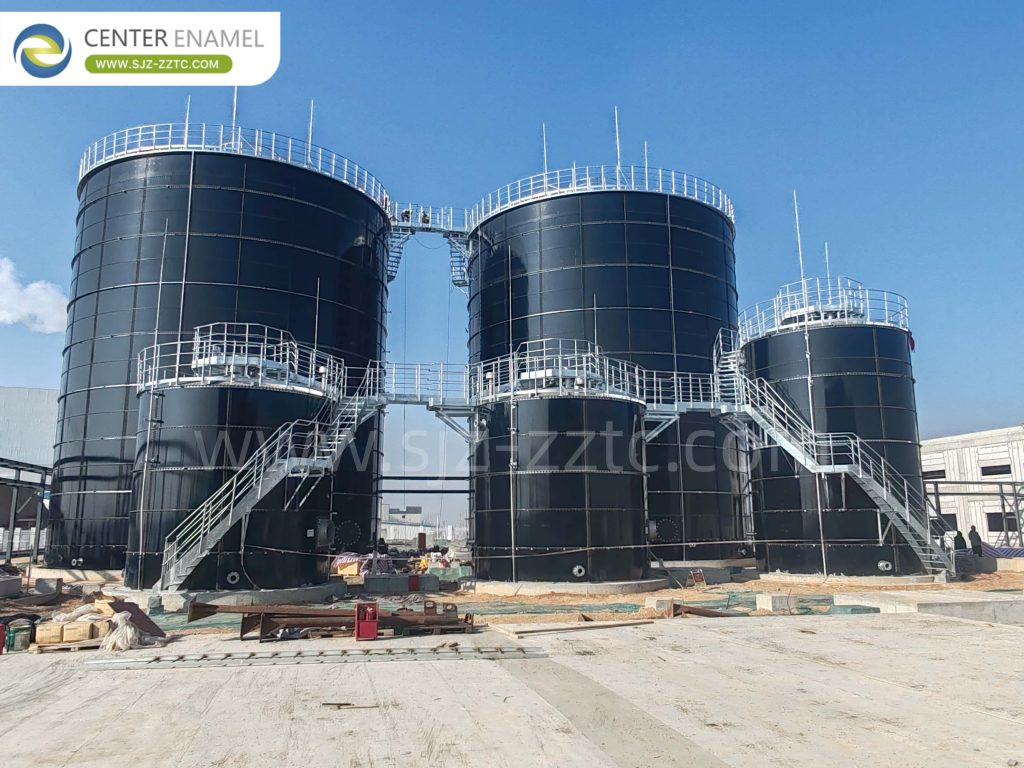
The maturity of third-party treatment models in industrial parks continues to improve, driving consolidation in the professional operation market. The Middle East has strong demand for advanced treatment and reuse of industrial wastewater due to water scarcity; manufacturing transfer in Southeast Asia drives local industrial wastewater treatment facility construction demand. This global momentum underscores the need for adaptable infrastructure solutions capable of meeting diverse regional challenges-precisely where GFS Tanks prove their worth. As the industry moves toward long-term operational management and increasingly complex waste streams, the selection of durable, corrosion-resistant storage and reaction vessels becomes a critical strategic decision for project developers worldwide.
GFS Tanks Engineered for Extreme Climates and Seismic Zones
GFS Tanks can undergo customized wind and seismic design based on project site climate and geological conditions, with environmental adaptability far superior to concrete tanks. Concrete tanks are cast-in-place monolithic structures, with seismic and wind resistance entirely dependent on on-site construction quality. In remote areas, typhoon-prone zones, and earthquake belts, construction quality is difficult to control. Under strong earthquakes or typhoons, concrete tanks are prone to cracking and base settlement damage, with subsequent reinforcement costs equivalent to rebuilding.
GFS Tanks undergo collection of local seismic intensity, maximum wind pressure, and foundation bearing capacity data before construction, with customized thickened steel panels, stiffening ribs, and anchored base components-all factory-prefabricated to standardized specifications. The bolted panel structure has excellent stress distribution capability, making it less prone to overall fracture under seismic and typhoon impacts, and minor foundation settlement will not cause through-cracking. Structural parameters can be flexibly adjusted for mountainous, coastal typhoon-zone, and high-seismic-zone projects, providing long-term protection against extreme natural climate damage.
These structural advantages are essential not only for storage reliability but also for supporting the stable operation of sophisticated treatment processes, particularly anaerobic systems that demand consistent environmental conditions to function effectively. It is this very integration of durable GFS Tanks with advanced biological treatment that defines the modern approach to industrial wastewater management.
USR Process Definition and Technical Advantages for High-Solids Wastewater
USR, or Upflow Solids Reactor, is an upflow anaerobic process modified for high-suspended-solids, high-solids organic wastewater, specifically designed to solve problems of clogging, sludge washout, and uneven reaction common in traditional anaerobic processes for high-solids wastewater. The process eliminates complex three-phase separators, simplifies internal structure, and relies on upflow hydraulics to promote thorough mixing of solid materials and anaerobic sludge. No strict granular sludge formation conditions are required-flocculent sludge can operate stably. The key feature is high solids tolerance and impurity resistance, with very high influent suspended solids tolerance.
It is a dedicated high-efficiency anaerobic process for livestock manure, agricultural organic waste, and high-solids livestock wastewater, specifically developed for agricultural and environmental applications. One of the most challenging applications for this technology is palm oil mill effluent treatment, where the combination of high organic load, oil content, and suspended solids demands a process with exceptional robustness. The USR Process, when deployed within GFS Tanks by an experienced China Palm Oil Wastewater Treatment Project EPC Contractor, provides the ideal solution for this difficult waste stream.
Palm Oil Mill Effluent Wastewater Sources and Characteristics
Palm oil mill effluent (POME) originates from the entire processing chain of fresh fruit bunches (FFB) in palm oil milling-the highest pollution load and largest volume high-concentration organic industrial wastewater in tropical agricultural processing. Palm oil mills typically process 30–120 tons of FFB daily, generating approximately 0.5–1.0 m³ of wastewater per ton of FFB processed-single mills discharging hundreds to thousands of cubic meters daily, representing a core environmental challenge for the palm oil industry.
Wastewater comes from three main sources:
- Sterilization: FFB enter sterilization vessels for high-temperature steaming to deactivate lipase and prevent free fatty acid increase-producing sterilization condensate, the largest volume source at 80–90°C, rich in soluble sugars, amino acids, organic acids, COD 15,000–30,000 mg/L;
- Clarification: Pressed crude oil undergoes centrifugal separation and gravity settling to remove water and impurities-producing large volumes of oily wastewater with extremely high oil content and suspended solids, COD 50,000–80,000 mg/L, the highest organic load source;
- Kernel recovery: Palm kernels are separated by hydrocyclones and washed for recovery-producing sandy wash water with high suspended solids but relatively lower organic concentration. Auxiliary discharges include CIP cleaning, floor wash, boiler blowdown, and cooling tower water. POME is acidic (pH 4.0–5.0), high-temperature (60–80°C), brown colloidal, rich in oils, suspended solids, colloidal proteins, and soluble sugars-a typical high-concentration, high-oil, high-suspended-solids organic industrial wastewater.
Given these extreme characteristics, POME treatment demands not only robust process technology but also storage and reaction infrastructure that can withstand acidic, high-temperature, and high-solids conditions-making GFS Tanks the preferred solution for projects engineered by a qualified China Palm Oil Wastewater Treatment Project EPC Contractor.
Ghana Municipal Domestic Wastewater Treatment Project Case Study
Completed installation in 2021, treating 1,800 m³/day of municipal wastewater using UBF anaerobic + A²/O nitrogen/phosphorus removal mature processes. Equipped with multiple Center Enamel GFS Tanks including 1 UBF anaerobic reactor, 1 secondary clarifier, and 2 internal/external double-layer A²/O biological tanks. Influent has high COD, BOD, suspended solids, and nitrogen/phosphorus concentrations-after full treatment, effluent parameters are significantly reduced with pH stable at 6.5–9.0, fully meeting local environmental discharge standards.
Corrosion-resistant, conveniently assembled GFS Tanks efficiently solve urban domestic wastewater pollution while balancing treatment effectiveness and O&M economics-a mature municipal wastewater case in Africa. This project demonstrates how Center Enamel‘s integrated approach-combining advanced treatment processes with durable GFS Tanks-delivers reliable results across diverse applications, from municipal wastewater to complex industrial effluents like those from palm oil processing.
Center Enamel Development History and Industry Leadership
Center Enamel has been deeply engaged in the environmental bolted storage equipment field for over 30 years. Starting with proprietary enamel anti-corrosion material technology, the company has gradually completed the full-industry-chain upgrade from a single tank manufacturer to a comprehensive environmental EPC service provider. Throughout its 30+ year history, the company has been recognized as a National High-Tech Enterprise, National Specialized and Sophisticated “Little Giant,” Manufacturing Single Champion, and Provincial Green Factory.
It has successfully delivered over 30,000 environmental projects globally, establishing itself as a leading enterprise in the global GFS Tank storage industry. The company has fully integrated the entire chain from enamel frit R&D, intelligent environmental equipment manufacturing, to EPC project contracting-every business breakthrough has been achieved through proprietary core anti-corrosion technology. This accumulated expertise forms the foundation upon which Center Enamel serves as a trusted China Palm Oil Wastewater Treatment Project EPC Contractor, delivering integrated solutions that combine proven USR Process technology with high-performance GFS Tanks for the most demanding industrial applications.
Center Enamel Professional Construction Team Manpower Reserve
Center Enamel has established its own domestic and international certified construction teams, with regular practical training on GFS Tank installation and overseas construction standards for various countries. Domestically, regional construction teams cover multiple zones, capable of simultaneously deploying multiple teams for large tank farm projects. Internationally, cross-border professional installation teams are equipped to various country construction standards-sufficient manpower reserves ensure uninterrupted construction delivery for remote African sites, high-standard European/American facilities, and other projects. This global deployment capability, combined with deep process knowledge in USR Process applications and extensive experience as a China Palm Oil Wastewater Treatment Project EPC Contractor, enables Center Enamel to deliver turnkey solutions that meet the most rigorous international standards.
Ready to discuss your project? Contact Center Enamel today for a customized GFS Tanks and USR Process solution—our team will respond within 24 hours with a tailored proposal for your wastewater treatment needs.
Frequently Asked Questions
1. What makes USR Process suitable for palm oil wastewater treatment?
The USR (Upflow Solids Reactor) Process is specifically designed for high-suspended-solids wastewater like POME. It eliminates complex three-phase separators, tolerates high oil and fiber content, and maintains stable operation without requiring strict granular sludge formation-ideal for the challenging characteristics of palm oil mill effluent.
2. Why are GFS Tanks preferred over concrete tanks for industrial wastewater projects?
GFS Tanks offer superior corrosion resistance through factory-fused enamel coating, customizable seismic and wind design for extreme climates, faster installation, and easier expandability. Unlike concrete tanks, they are prefabricated to standardized specifications, ensuring consistent quality regardless of site conditions.
3. How does Center Enamel support international wastewater treatment projects?
Center Enamel operates as a full-service China Palm Oil Wastewater Treatment Project EPC Contractor, providing integrated engineering, procurement, and construction. With certified international construction teams, 30+ years of experience, and over 30,000 global project deliveries, the company ensures reliable execution across Africa, Southeast Asia, Europe, and beyond.