
How IC Process and Glass-Fused-to-Steel Tanks Solve High-Strength Industrial Wastewater Challenges
Papermaking wastewater presents a distinct set of treatment difficulties: high suspended solids, elevated alkalinity, and large volumes of oxygen-demanding organic matter. While these pollutants are primarily natural plant extracts with moderate chemical toxicity, their physical and biological impacts on receiving waters are substantial. High-concentration fibers and fillers settle onto riverbeds, smothering benthic habitats and blocking fish spawning grounds.
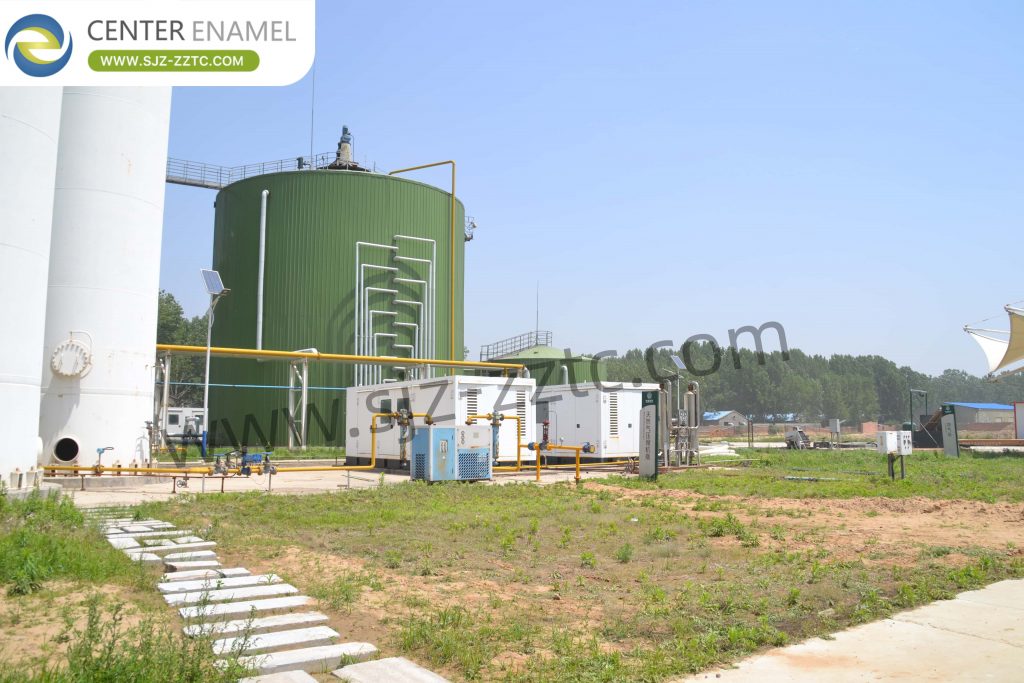
Lignin and cellulose decomposition depletes dissolved oxygen, while alkaline black liquor disrupts aquatic pH balance. Resin acids and tannins add further toxicity concerns, and high color inhibits photosynthesis in aquatic plants. The overall pollution profile is dominated by physical sedimentation and oxygen-demanding organics rather than heavy metals or synthetic toxics, which means effective biological treatment can achieve meaningful environmental recovery. For facilities facing tightening discharge standards, the combination of advanced anaerobic pretreatment and durable tank infrastructure offers a practical path forward.
Why Anaerobic Pretreatment Matters for Papermaking Effluent
Papermaking wastewater typically carries organic loads that overwhelm conventional aerobic systems if introduced without pretreatment. Anaerobic digestion serves as a high-efficiency front-end step, converting a significant fraction of organic carbon into biogas while reducing the load on downstream aerobic polishing. Within the anaerobic category, reactor selection directly influences footprint, stability, and operational cost. UASB, EGSB, and IC reactors have become standard choices for high-concentration organic wastewater in food processing, pharmaceutical fermentation, alcohol brewing, and chemical industries-sectors whose effluent characteristics often overlap with papermaking streams. These reactors rely on steel tank shells, and the corrosion resistance and gas-tightness of those shells determine whether the biological process remains stable over years of continuous operation. Glass-fused-to-steel (GFS) tanks have therefore become a preferred containment solution for anaerobic reactor projects where long service life and minimal maintenance are priorities.
IC Process: Compact Footprint, High Treatment Efficiency
The Internal Circulation (IC) reactor represents an advancement over first-generation anaerobic designs by addressing a fundamental constraint: land availability. For equivalent treatment capacity, an IC reactor requires approximately one-third the footprint of traditional anaerobic processes, a compactness advantage that matters greatly for industrial sites with limited expansion space. The reactor achieves this through a built-in gas-lift internal circulation system that eliminates the need for external recirculation equipment. Sludge and water mix autonomously under forced hydraulic conditions, ensuring thorough contact between microorganisms and pollutants. This strong hydraulic mixing improves degradation efficiency and allows the system to withstand fluctuations in water quality and hydraulic shock loads. The dual-zone configuration combines high-efficiency degradation in the lower zone with deep polishing in the upper zone, yielding stable effluent quality. Sludge granulation is pronounced, microbial activity remains high, and washout is minimal. Operationally, the IC process offers high automation, low failure rates, substantial biogas production, and long-term energy and maintenance costs far below those of traditional anaerobic alternatives. These characteristics make it particularly suitable for large-flow, high-concentration industrial wastewater treatment-precisely the profile of papermaking effluent.
Matching Reactor Technology with Durable Tank Infrastructure
An anaerobic reactor is only as reliable as its containment. The IC process operates under conditions that demand both structural integrity and chemical resistance: fluctuating pH, elevated temperatures, and continuous exposure to organic acids and sulfide compounds. Steel tank shells with glass-fused-to-steel coating address these demands by combining the mechanical strength of steel with the chemical inertness of glass. The fusion process creates a durable barrier that resists corrosion from both the wastewater side and the external environment, while the bolted construction allows for rapid assembly and future expansion. For papermaking facilities considering anaerobic pretreatment, specifying GFS tanks for IC reactor shells reduces the risk of premature failure and extends the interval between maintenance interventions-a consideration that directly affects total cost of ownership over the system's operational life.
Real-World Validation: Brewery Wastewater Treatment in South Africa
The principles that make IC process and GFS tanks effective for papermaking wastewater are demonstrated in comparable high-strength industrial applications. In South Africa's brewing industry, a project focused on high-concentration organic wastewater treatment employed both GFS tanks and stainless steel tanks as core equipment. GFS tanks served as the primary anaerobic digestion system, handling brewery wastewater's high-COD, high-sugar, readily decomposable characteristics. Stainless steel tanks supported wastewater transfer and chemical storage. The complete equipment package delivered excellent corrosion resistance and flexible assembly, providing long-term stable treatment of production and cleaning wastewater while addressing local brewing industry pollution challenges. This project illustrates how the right combination of reactor technology and tank materials can solve high-strength wastewater problems in regions where both durability and installability are critical.
| Project Parameter | Specification |
| Location | South Africa |
| Industry | Brewery |
| Application | High-strength organic wastewater treatment |
| Core Equipment | GFS tanks (anaerobic digestion), stainless steel tanks (transfer/storage) |
| Key Challenge | High-COD, high-sugar, readily decomposable wastewater |
| Outcome | Long-term stable treatment, corrosion-resistant, flexible assembly |
Global Project Experience and Technical Credentials
Center Enamel's project portfolio spans more than 100 countries across Southeast Asia, Africa, Europe, and the Americas, with over 30,000 completed installations. This breadth of experience has produced mature industry solutions across palm oil, livestock, municipal, brewing, food waste biogas, and industrial wastewater applications. The company maintains full self-control over its enamel raw material chain and independently masters over 200 differentiated anti-corrosion enamel formulations. Nearly 100 invention and utility patents support the product line, which has passed NSF, WRAS, ASME, BSCI, CE, ISO9001, and other global certifications. Recognition includes National High-Tech Enterprise status, National Specialized and Sophisticated "Little Giant" designation, Hebei Manufacturing Single Champion, Provincial Smart Factory, and Provincial Green Factory honors. Long-term collaborative research with multiple universities through joint materials laboratories drives continuous iteration in anti-corrosion coatings and large bolted tank structural design. This material technology barrier creates product performance comparable to high-end imported European and American storage equipment, with the added advantage of responsive engineering support.
Cost-Effective Tank Covers for Water Storage Applications
While anaerobic reactors require gas-tight containment for biogas collection, many water storage applications within papermaking facilities-drinking water reserves, production wastewater holding, and firewater reserves-do not require high-pressure sealing or biogas capture. For these scenarios, the Aluminum Alloy Trough Deck Roof offers a practical balance of durability and economy. The cover is integrally formed from anti-corrosion aluminum alloy plates with aluminum support trusses. Its lightweight design imposes minimal load on tank foundations, reducing civil construction investment. A naturally formed dense oxide protective layer resists rain and mild wastewater corrosion, withstands outdoor exposure, and blocks wind, rain, insects, leaves, and odor volatilization. The flat roof structure accommodates maintenance walkways, guardrails, vents, and level monitoring ports, facilitating daily inspection. The simple sealing structure enables straightforward installation with short construction timelines, and the corrosion-resistant aluminum surface virtually eliminates the need for anti-corrosion painting maintenance. This cover type has been widely implemented in waterworks clear water tanks, industrial circulating water tanks, park firewater tanks, and domestic wastewater temporary storage-applications well-suited to the auxiliary water systems within papermaking operations.
| Cover Type | Best Suited For | Key Advantage |
| Aluminum Alloy Trough Deck | Drinking water, production wastewater, firewater reserves | Lightweight, low maintenance, cost-effective |
| GFS Tank (gas-tight) | Anaerobic reactor shells, biogas containment | Corrosion resistance, gas-tightness, 30+ year life |
Frequently Asked Questions
Q: Can IC process handle papermaking wastewater with high suspended solids?
Anaerobic reactors like the IC process perform best when suspended solids are managed through upstream screening or sedimentation. For papermaking effluent rich in fibers and fillers, a pretreatment step is recommended to protect sludge granulation and maintain reactor stability.
Q: How does GFS tank corrosion resistance compare to concrete or epoxy-coated steel?
Glass-fused-to-steel creates a fused barrier that resists organic acids, sulfide, and pH fluctuations more effectively than concrete or field-applied coatings. The factory-controlled fusion process ensures consistent coverage, reducing the risk of localized failure in aggressive wastewater environments.
Q: What capacity range does Center Enamel support for anaerobic reactor projects?
Center Enamel's GFS tank solutions accommodate project scales from smaller industrial installations to large municipal and industrial facilities. Tank volume and reactor configuration are engineered based on wastewater characteristics, organic loading, and site constraints.
Ready to evaluate whether IC process and GFS tank technology fit your papermaking wastewater treatment requirements? Share your effluent parameters and treatment capacity with our engineering team for a tailored assessment. Connect with Center Enamel today to discuss how proven anaerobic solutions can reduce your organic load and operational costs.