
Complete Biogas Solutions from a Trusted Global Biogas Project Contractor for Livestock Manure
The livestock manure treatment market is transitioning from environmental compliance-driven to dual-value-driven by energy and fertilizer valorization. The European digestate concentration fertilizer market is mature, and large-scale biogas projects in North America commonly include digestate processing centers. In terms of business model innovation, the asset-light model of farmers paying per volume treated has been piloted successfully in some countries. China's "biogas operation outsourcing" model is beginning to penetrate county-level projects. Digital technology-driven precision nutrient management platforms are emerging as new industry links connecting farms, treatment centers, and agricultural end-users.
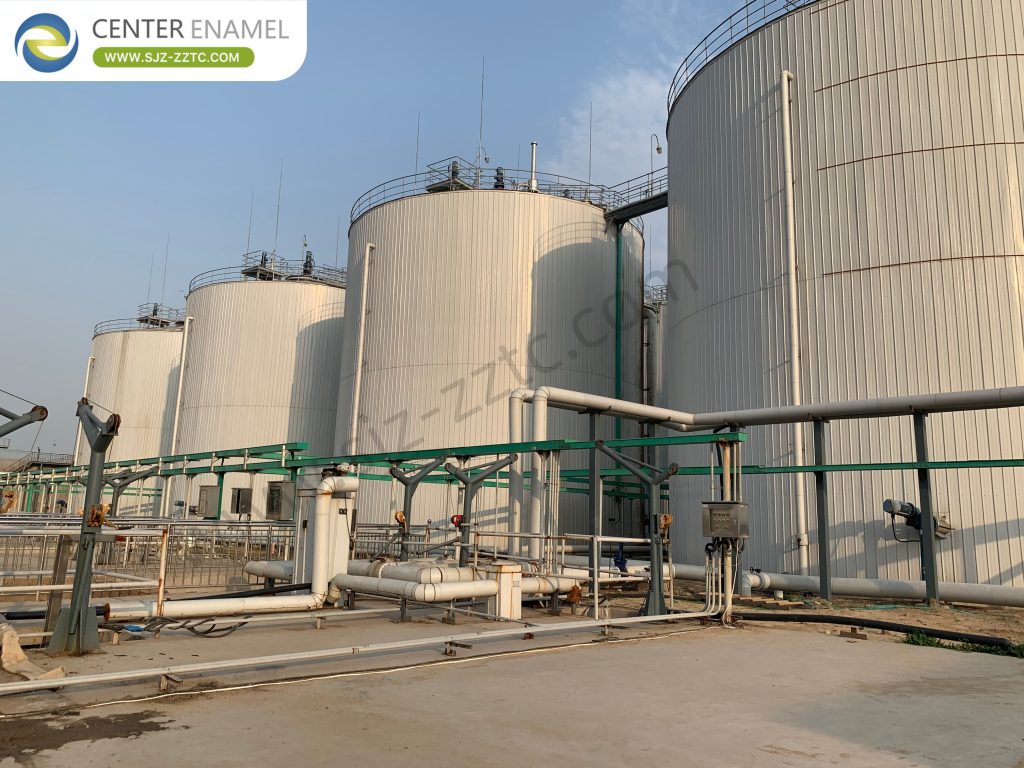
In terms of process equipment, CSTR is the mainstream anaerobic digestion process for treating livestock manure. After anaerobic digestion, manure produces biogas for power generation or grid-injection purification, while digestate is processed into organic fertilizer for farmland application. GFS tanks, with strong corrosion resistance and low maintenance costs, are widely used in manure treatment projects on large-scale farms in North America, Europe, and China, particularly suited to the corrosive environments of high ammonia-nitrogen and high hydrogen sulfide in manure. This market shift is precisely why farms and developers increasingly seek a biogas project contractor capable of delivering both environmental compliance and revenue-generating energy recovery.
Full-Process Factory Standardization for GFS Tanks: Consistent Quality That Concrete Cannot Match
GFS tanks are fully factory-prefabricated to standardized specifications, with finished product quality stability far exceeding cast-in-place concrete tanks. All concrete tank processes are completed in the open air, with rebar tying, concrete pouring, and curing heavily influenced by worker skill, temperature, and rainfall. Wall thickness, density, and strength vary significantly between batches, with hidden defects like honeycombing, voids, and insufficient wall thickness common-quality cannot be uniformly controlled. Center Enamel's GFS tank steel panels, seals, and reinforcement components are all mass-produced in automated factories.
Steel stamping, high-temperature enameling, and dimensional cutting are all controlled by CNC equipment, with each panel's parameters and enamel thickness strictly following unified national standards. All components are uniformly packaged and transported to site, with assembly strictly following standardized construction drawings. Full-process quality inspection from raw materials to finished components ensures highly consistent product performance parameters, completely eliminating the uncontrollable quality risks of on-site concrete construction, with every tank delivering stable, consistent performance. This manufacturing discipline is the physical foundation on which reliable biogas solutions are built.
USR Applicable Scenarios: The Right Process for Agricultural High-Solids Wastewater
The USR Process is a dedicated process for agricultural high-solids wastewater, primarily suitable for large-scale livestock manure, livestock soaking water, agricultural straw leachate, and livestock slaughterhouse high-solids wastewater. For high-suspended-solids, high-organics, high-impurity wastewater conditions, it is the core process for rural livestock pollution treatment and agricultural organic waste resource utilization. It is suitable for township decentralized wastewater treatment and small to medium-sized agricultural enterprise wastewater treatment. It can serve as the primary process for large livestock base manure resource recovery, combining wastewater treatment with biogas recovery. It is also suitable for various high-solids, easily clogged, difficult-to-treat organic wastewater pretreatment, with superior suitability in agricultural environmental applications compared to other anaerobic processes.
Livestock Wastewater Operation and Maintenance Cost Analysis: Strong Economics, Low Ongoing Burden
O&M costs are relatively low with an excellent input-output ratio-the highest cost-effectiveness among the five wastewater types. Core treatment units are primarily physical separation, anaerobic digestion, and ecological polishing-no high-end precision equipment or expensive chemicals. Equipment is simple with low failure rates and low maintenance costs. Anaerobic digestion produces stable biogas for plant heating and power generation, offsetting energy costs. Ecological treatment units have virtually no ongoing O&M costs. Only periodic cleaning of sedimentation tanks and polishing ponds is required, with low labor costs. Manure solids, sludge, and digestate can be sold as resources, further reducing net treatment costs. For any biogas project contractor, this cost profile is essential to demonstrating long-term project viability to clients.
Bangladesh Large-Scale Poultry Farm Manure Resource Recovery Project
This benchmark project demonstrates the performance achievable through well-designed biogas solutions. Targeting local poultry farm manure resource recovery with a daily treatment capacity of 47 tons, influent COD, BOD, and SS concentrations reach as high as 50,000 mg/L, 25,000 mg/L, and 50,000 mg/L respectively. After CSTR + UASB anaerobic treatment, all three parameters are reduced to below 200 mg/L, 100 mg/L, and 100 mg/L-effluent compliant with local environmental discharge standards. The project produces approximately 4,900 m³ of biogas daily; each cubic meter of biogas can generate 2 kWh of electricity, yielding daily power generation of 9,800 kWh-simultaneously achieving pollutant reduction and clean energy recovery. This is a benchmark project for livestock waste recycling in Southeast Asia.
Table 1: Bangladesh Poultry Farm Manure Resource Recovery Project Data
| Parameter | Influent Concentration | Effluent Concentration | Performance |
| COD | 50,000 mg/L | < 200 mg/L | >99.6% removal |
| BOD | 25,000 mg/L | < 100 mg/L | >99.6% removal |
| SS | 50,000 mg/L | < 100 mg/L | >99.8% removal |
| Daily Treatment Capacity | 47 tons | - | - |
| Biogas Production | - | ~4,900 m³/day | - |
| Power Generation | - | 9,800 kWh/day | 2 kWh per m³ biogas |
Center Enamel's Global Market Presence: 100+ Countries, 30,000+ Projects, Localized Adaptation
Center Enamel's global business covers over 100 countries and regions, with 30,000+ successful overseas projects. Products are exported to all major regions including Europe, the Americas, the Middle East, Africa, Southeast Asia, and Latin America, with a well-established global localized service network. Domestically, the company is organized into North, South, Central, East, and Southwest marketing regions, covering environmental, water utility, livestock, and petrochemical customers nationwide. Internationally, the company adopts a "standardized products + localized adaptation" model-adjusting tank corrosion protection, sealing, and pressure standards for different national water quality and environmental regulations-with multiple global landmark projects: large-volume GFS tanks in Italy, 20 m tower water supply tanks in Colombia, coastal seawater treatment tanks in Costa Rica, and large municipal wastewater aluminum dome projects in Saudi Arabia. The company has established long-term stable strategic partnerships with many Fortune 500 companies. This international footprint is what allows Center Enamel to operate credibly as a biogas project contractor in markets with widely differing regulations and climates.
Center Enamel Overseas Installation Coverage and Delivery Capability
Center Enamel is the pioneer of Chinese GFS equipment exports, with installation service coverage across over 100 countries and regions-possessing full delivery capability across climates, regulations, and geographies. Overseas coverage includes Southeast Asia (Vietnam, Thailand, Malaysia, Indonesia, Cambodia, Bangladesh, Nepal, and others), Africa (Ghana, South Africa, Mali, Guinea, Zambia, Kenya, Pakistan, and others), Europe and the Americas (Sweden, USA, Russia, and others), the Middle East, and Latin America-adaptable to tropical rainy high-salt spray, high-altitude mountainous, Nordic severe cold, and high-standard European and American facility conditions. The company uses a dual-service model of "own cross-border construction teams + overseas local agent coordination"-whether clients are in developed countries or remote developing regions-providing one-stop services including on-site survey, on-site installation, process commissioning, and operator training. Complete coverage spans biogas engineering, municipal wastewater, industrial wastewater, livestock manure, drinking water storage, and other global mainstream environmental engineering projects-possessing the full delivery capability to undertake large-scale tank farm projects in any country worldwide.
Table 2: Center Enamel Global Delivery and Project Credentials
| Dimension | Coverage / Detail | Significance |
| Countries Served | 100+ | Global biogas solutions reach |
| Overseas Projects | 30,000+ | Proven delivery at scale |
| Export Regions | Europe, Americas, Middle East, Africa, Southeast Asia, Latin America | Multi-market compliance |
| Domestic Regions | North, South, Central, East, Southwest China | Nationwide service coverage |
| Adaptation Model | Standardized products + localized adaptation | Regulatory and climate fit |
| Landmark Projects | Italy large-volume GFS tanks; Colombia 20 m tower tanks; Costa Rica coastal seawater tanks; Saudi Arabia municipal aluminum dome projects | Demonstrated technical breadth |
| Climate Capability | Tropical high-salt spray, high-altitude mountainous, Nordic severe cold, EU/US standards | Full-spectrum engineering |
| Service Model | Own cross-border teams + overseas local agents | One-stop survey, installation, commissioning, training |
| Partnerships | Long-term strategic partnerships with Fortune 500 companies | Commercial credibility |
Ready to turn your livestock manure into a revenue-generating biogas asset? Contact Center Enamel today and let our team design a biogas solution matched to your farm's scale and energy goals.
As an experienced biogas project contractor with installations in over 100 countries, Center Enamel is ready to support your project from feasibility study to commissioning-get in touch now to start planning.
Frequently Asked Questions
Q1: What makes Center Enamel a dependable biogas project contractor?
Center Enamel combines in-house GFS tank manufacturing, proven USR and CSTR processes, cross-border installation teams, and 30,000+ overseas projects-delivering complete biogas solutions rather than isolated equipment.
Q2: How do factory-standardized GFS tanks improve biogas project reliability?
Automated stamping, CNC cutting, and controlled high-temperature enameling ensure consistent panel thickness and coating quality, eliminating the batch variability and hidden defects common in cast-in-place concrete tanks.
Q3: Are biogas solutions economically viable for mid-sized farms?
Yes-low O&M costs, simple equipment, biogas offsetting energy expenses, and sellable digestate make livestock manure projects among the most cost-effective wastewater treatment types.