
Green Gas from Biogas: The Rise of Biomethane as Low-Carbon Fuel
The global gas grid is undergoing a quiet revolution. Across Europe, North America, and increasingly Asia, green gas—pipeline-grade biomethane derived from organic waste—is being injected into existing natural gas networks, displacing fossil gas molecule-for-molecule without any infrastructure modification. By 2026, biomethane accounts for 5-15% of injected gas in leading markets like Denmark, the Netherlands, and California, with national targets reaching 20-30% by 2030.
Green gas from biogas is distinct from raw biogas in two critical ways. First, it is upgraded to pipeline-quality specifications (96%+ methane, H2S below 10 ppm, water dew point below -20 degrees C, CO2 below 2-4%), making it chemically indistinguishable from fossil natural gas. Second, its lifecycle carbon intensity is dramatically lower: while fossil natural gas carries 60-80 gCO2e/MJ, biomethane from waste feedstocks achieves -20 to +30 gCO2e/MJ—a net-negative or near-zero carbon profile.
This guide examines green gas production from biogas—covering upgrading technology, carbon intensity methodology, grid injection standards, certification and trading mechanisms, and the strategic role of biomethane in national decarbonization pathways.
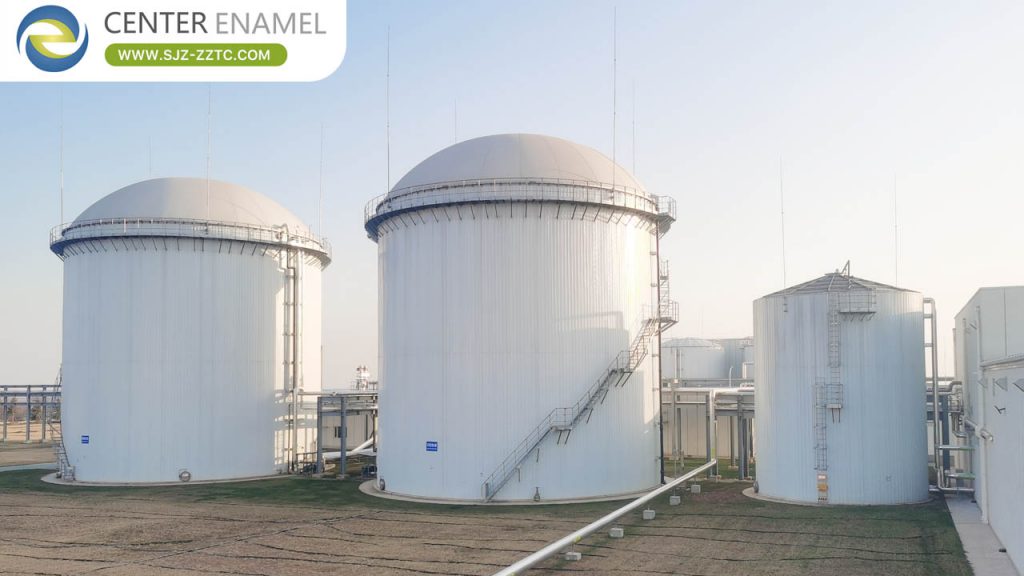
Understanding Green Gas: Biomethane Production and Quality Standards
Green gas (biomethane) is produced by upgrading raw biogas from anaerobic digestion to meet pipeline-quality natural gas specifications. The upgrading process removes CO2 (reducing from 30-50% to below 2-4%), H2S (from 200-4,000 ppm to below 10 ppm), moisture (to dew point below -20 degrees C), and siloxanes (to below 5 mg/m3). The resulting biomethane contains 96-99% methane with a heating value of 34-38 MJ/m3, identical to fossil natural gas. International standards governing green gas quality include EN 16726 (Europe), ASTM D6223 (US), and IS 16087 (India).
Carbon intensity (CI) scoring is the commercial backbone of green gas economics. CI represents the full lifecycle greenhouse gas emissions per unit of energy delivered (measured in gCO2e/MJ). Biomethane from waste feedstocks (manure, food waste, wastewater sludge) achieves CI scores of -20 to +30 gCO2e/MJ because the avoided fugitive methane emissions from open waste decomposition are credited against production energy. This compares to 60-80 gCO2e/MJ for fossil natural gas and 90-110 gCO2e/MJ for diesel.
Comparative Data Table: Green Gas vs Conventional Fuels
| Fuel | Carbon Intensity (gCO2e/MJ) | Source | Renewable? | Grid Compatible | Typical Cost Premium vs Fossil |
| Biomethane (waste feedstock) | -20 to +30 | Organic waste AD | Yes | Yes (drop-in) | +10-40% |
| Biomethane (energy crops) | +25 to +55 | Maize/grass AD | Yes | Yes (drop-in) | +15-35% |
| Fossil Natural Gas | 60-80 | Underground reserves | No | Baseline | Baseline |
| Diesel | 90-110 | Petroleum refining | No | No (liquid) | +200% equivalent |
| Compressed Natural Gas (fossil) | 55-75 | Gas fields | No | Yes | Baseline |
| Hydrogen (grey, from gas) | 80-120 | Steam methane reforming | No | Requires new infrastructure | +100-200% |
Grid Injection, Certification, and Trading Mechanisms
Biomethane grid injection requires connection infrastructure (gas upgrading skid, odorization unit, pressure regulation, metering station) at an injection point on the local gas distribution or transmission network. Injection pressures range from 4-8 bar (distribution) to 40-80 bar (transmission). Many countries have established simplified connection procedures and cost-sharing models to accelerate biomethane grid access.
Green gas certification operates through tradable environmental attribute certificates: Guarantees of Origin (GO) in Europe under RED II, Renewable Identification Numbers (RINs) in the US under the RFS, and Low Carbon Fuel Standard (LCFS) credits in California. These certificates decouple the green attribute from the physical gas, allowing biomethane produced at one location to be sold as green gas to consumers anywhere on the same interconnected network. Certificate prices range from $5-50/MWh, representing 15-40% of total biomethane revenue.
Frequently Asked Questions (FAQ)
Q1: Can green gas from biogas replace fossil natural gas completely?
A: In theory, yes—biomethane is a drop-in fuel with identical chemical properties. In practice, total sustainable biomethane production potential is estimated at 10-20% of current global natural gas demand, depending on waste resource availability and land-use constraints. Full replacement would require supplementing with green hydrogen (from renewable electrolysis) blended into the gas grid. Most national strategies target 10-30% biomethane in gas networks by 2030-2040.
Q2: Is green gas carbon neutral or carbon negative?
A: Biomethane from waste feedstocks can be carbon-negative (CI of -20 to +0 gCO2e/MJ) because the organic waste would otherwise decompose and release fugitive methane to the atmosphere. Capturing and combusting that methane converts it to CO2 (28x less potent as a greenhouse gas). Biomethane from dedicated energy crops is typically near-neutral to slightly positive because energy inputs for cultivation, harvesting, and transport offset the renewable credit.
Q3: How is biomethane injected into the gas grid?
A: Upgraded biomethane passes through an odorization unit (adding tetrahydrothiophene for leak detection), pressure regulation and metering, then enters the distribution or transmission network at the local interconnection point. Distribution-level injection (4-8 bar) is simplest and most common. Transmission-level injection (40-80 bar) requires additional compression but enables larger volumes. Grid operators must approve injection quality compliance before commercial operation begins.
Q4: How much does green gas cost compared to fossil natural gas?
A: Biomethane production cost ranges from $8-25/GJ (including upgrading and grid connection), compared to $3-8/GJ for fossil natural gas. However, environmental attribute certificate sales (GO, RIN, LCFS) add $2-15/GJ in revenue, narrowing the effective gap. In markets with strong carbon pricing or renewable fuel mandates, green gas can achieve price parity with or slight premium over fossil gas.