
How We Handle High-Solids Wastewater with a Complete Turnkey Solution
The core challenges of industrial wastewater treatment center on the "three highs"-high difficulty, high cost, and high energy consumption. Wastewater from new energy, chemical, and pharmaceutical industries is complex in composition with numerous characteristic pollutants, and traditional treatment processes are difficult to remove effectively. Chinese companies have significant price advantages in the mid- to low-end equipment segment.
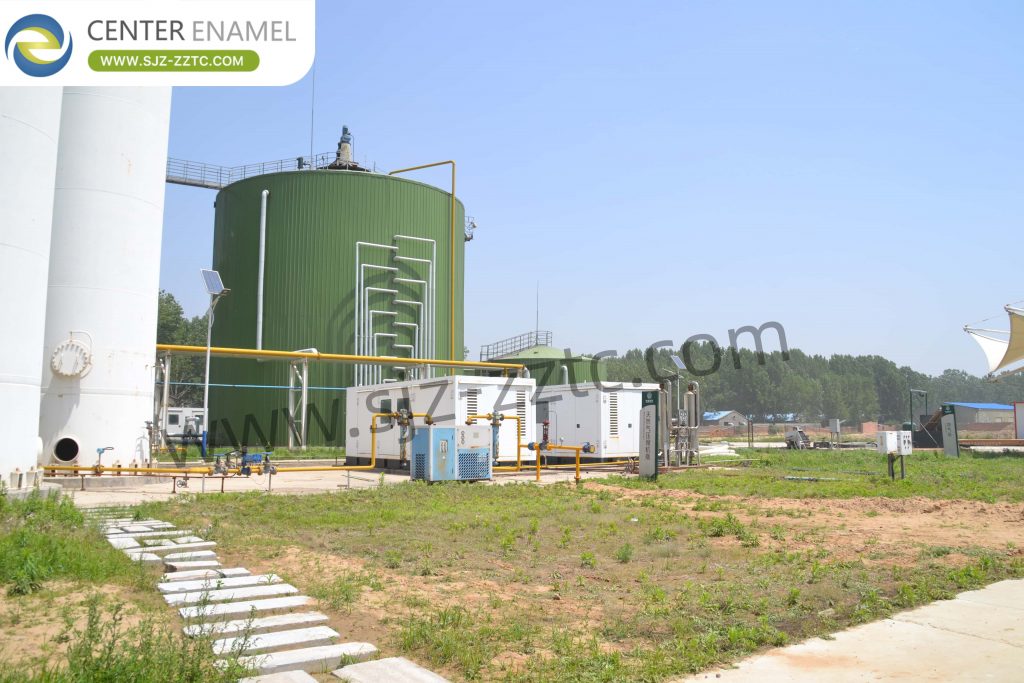
Beyond treatment itself, the industry also faces continuous technological upgrade pressure from increasingly stringent emission standards, as well as new requirements for digitalization and low-carbon transformation on operational refinement management capabilities. For high-solids streams in particular, conventional anaerobic systems frequently fail through clogging, sludge washout, and unstable reaction-problems that demand both a purpose-built process and a delivery partner capable of managing the entire project as a Turnkey Solution.
USR Process Advantages for Difficult Wastewater
At the heart of that solution lies a process designed specifically for these conditions. The USR Process offers high solids tolerance, clog resistance, and strong adaptability, perfectly suited for high-suspended-solids, high-impurity, high-solids organic wastewater. Its equipment structure is extremely simple, with no precision wear parts, low capital investment, long service life, virtually no clogging failures, and extremely low subsequent maintenance costs.
The process has no strict requirements on sludge morphology-there is no need to cultivate mature granular sludge, as flocculent sludge can operate stably, with fast start-up and short sludge acclimation period for rapid commissioning. Gentle hydraulic disturbance results in low sludge washout and high sludge utilization, with stable organic pollutant degradation. Simple operation with low automation requirements and high error tolerance makes it suitable for remote sites, farms, and other settings with limited O&M capabilities-outstanding stability and practicality advantages.
Environmental Risks Posed by Food Waste Pollutants
Understanding what is being treated is equally important. Food waste pollutants are primarily natural organics with no synthetic toxic chemicals-low acute chemical toxicity, but biological pollution and eutrophication risks are significant.
High-concentration oil discharged to natural waters forms a surface film blocking oxygen exchange, causing aquatic organism suffocation; oil adheres to gills and body surfaces, directly harming fish. High salinity causes osmotic imbalance in freshwater organisms, inhibiting growth and reproduction. High-concentration organics decompose consuming dissolved oxygen, causing oxygen depletion and black-odor conditions. Food waste decomposition breeds pathogens, flies, and parasite eggs-posing public health risks. Long-term discharge causes oil scaling and pipe blockages, corrosion of sewer systems. Digestate with high nitrogen and phosphorus causes rapid eutrophication and algal blooms. Overall pollution is primarily organic pollution and ecological damage, with no heavy metal or persistent organic accumulation risks-environmental recovery periods are relatively short, which makes biological treatment highly effective when properly designed.
Bangladesh Poultry Farm Manure Recovery Success
Theory becomes credible when backed by measurable results. In Bangladesh, a large-scale poultry farm manure resource recovery project targets daily treatment of 47 tons. Influent COD, BOD, and SS reach as high as 50,000 mg/L, 25,000 mg/L, and 50,000 mg/L respectively. After CSTR + UASB anaerobic treatment, all three parameters are reduced to below 200 mg/L, 100 mg/L, and 100 mg/L-effluent fully compliant with local environmental discharge standards.
The project produces approximately 4,900 m³ of biogas daily. Each cubic meter of biogas can generate 2 kWh of electricity, yielding daily power generation of 9,800 kWh-simultaneously achieving pollutant reduction and clean energy recovery. This stands as a benchmark project for livestock waste recycling in Southeast Asia.
Bangladesh Poultry Farm Project Performance
| Parameter | Influent | Effluent | Reduction |
| COD | 50,000 mg/L | <200 mg/L | >99.6% |
| BOD | 25,000 mg/L | <100 mg/L | >99.6% |
| SS | 50,000 mg/L | <100 mg/L | >99.8% |
| Biogas Production | - | 4,900 m³/day | - |
| Power Generation | - | 9,800 kWh/day | - |
Core R&D Capabilities and Global Certifications
Delivering results like these consistently requires deep technical foundations. Technology R&D is Center Enamel's core competitive advantage. The company independently masters over 200 differentiated anti-corrosion enamel formulations, with full self-control over the enamel raw material chain, holding nearly 100 invention and utility patents. Products have passed NSF, WRAS, ASME, BSCI, CE, ISO9001, and other global certifications.
Company certifications and honors include National High-Tech Enterprise, National Specialized and Sophisticated "Little Giant," Hebei Manufacturing Single Champion, Provincial Smart Factory, and Provincial Green Factory, along with complete environmental engineering and special equipment manufacturing compliance qualifications. The company maintains long-term collaborative research with multiple universities through joint materials laboratories-continuously iterating anti-corrosion coatings and large bolted tank structural design technologies. The proprietary material technology barrier creates an irreplaceable competitive advantage, with product performance comparable to high-end imported European and American storage equipment.
Certifications and Honors
| Category | Credentials |
| Product Certifications | NSF, WRAS, ASME, BSCI, CE, ISO9001 |
| Enterprise Honors | National High-Tech Enterprise, National "Little Giant" |
| Manufacturing Recognition | Hebei Manufacturing Single Champion |
| Factory Standards | Provincial Smart Factory, Provincial Green Factory |
| Patents | Nearly 100 invention and utility patents |
Extensive Global Benchmark Project Cases
These capabilities have been proven across the world. Center Enamel's project portfolio covers over 100 countries across Southeast Asia, Africa, Europe, and the Americas-30,000+ mature projects-accumulating complete industry solutions across palm oil, livestock, municipal, brewing, and food waste biogas-rapidly matching customized solutions for different regional climates, water quality, and regulations. This breadth of experience is what allows us to deliver a genuine Turnkey Solution rather than a one-size-fits-all system.
FRP Roof Cover Solution for Water Storage
Rounding out the product range, the FRP Roof is a general-purpose economical roof for atmospheric pressure storage tanks without air-tightness requirements, suitable for drinking water storage, agricultural irrigation water, firewater reserve, and general production wastewater temporary storage. It is available in two styles: flat and dome, allowing flexible selection based on tank specifications and site aesthetic requirements.
The roof is integrally molded from resin and fiberglass, lightweight, with natural water resistance and mild acid and alkali corrosion resistance. It will not rust or rot in long-term humid environments, eliminating the frequent anti-corrosion maintenance required for metal roofs. The dome style features excellent drainage performance due to its curved structure, resisting water accumulation, dust buildup, snow load, and strong winds. The flat style facilitates the installation of maintenance walkways, level gauges, and vents on top, making inspection and operation convenient.
The product is fully insulated with no risk of galvanic corrosion, will not contaminate drinking water quality, and meets environmental standards for domestic water storage. The modular design with low individual component weight allows for simple on-site hoisting and assembly, offering high construction efficiency and affordable procurement and installation costs. It is only suitable for atmospheric pressure water storage tanks without biogas collection or pressurization requirements, and is not recommended for anaerobic fermentation gas-producing conditions. It is widely used in rural agricultural water storage tanks, industrial park firewater tanks, waterworks buffer tanks, and small to medium-sized domestic wastewater temporary storage facilities, making it a cost-effective general-purpose roof choice for conventional water storage applications.
Tired of clogging, sludge washout, and unstable performance in your high-solids treatment system? Send us your wastewater data today and our engineers will design a USR-based solution around your exact conditions.
From process selection to final commissioning, reach out to Center Enamel for a true Turnkey Solution backed by 30,000+ projects and full global certification.
FAQ
What is the USR Process best suited for?
The USR Process handles high-solids organic wastewater like livestock manure, slaughterhouse waste, and agricultural residues. Its clog-resistant design tolerates high suspended solids without precision separators or granular sludge.
What does a Turnkey Solution include?
A Turnkey Solution covers design, equipment manufacturing, logistics, on-site installation, commissioning, and after-sales service-delivered under single-source accountability with no coordination burden on the client.
Why choose Center Enamel for high-solids wastewater projects?
Center Enamel combines 200+ proprietary enamel formulations, nearly 100 patents, and 30,000+ projects across 100+ countries-backed by NSF, CE, and ASME certifications for global acceptance.