
High-Efficiency Anaerobic Solutions for Food Waste Treatment via CSTR Process and GFS Tanks
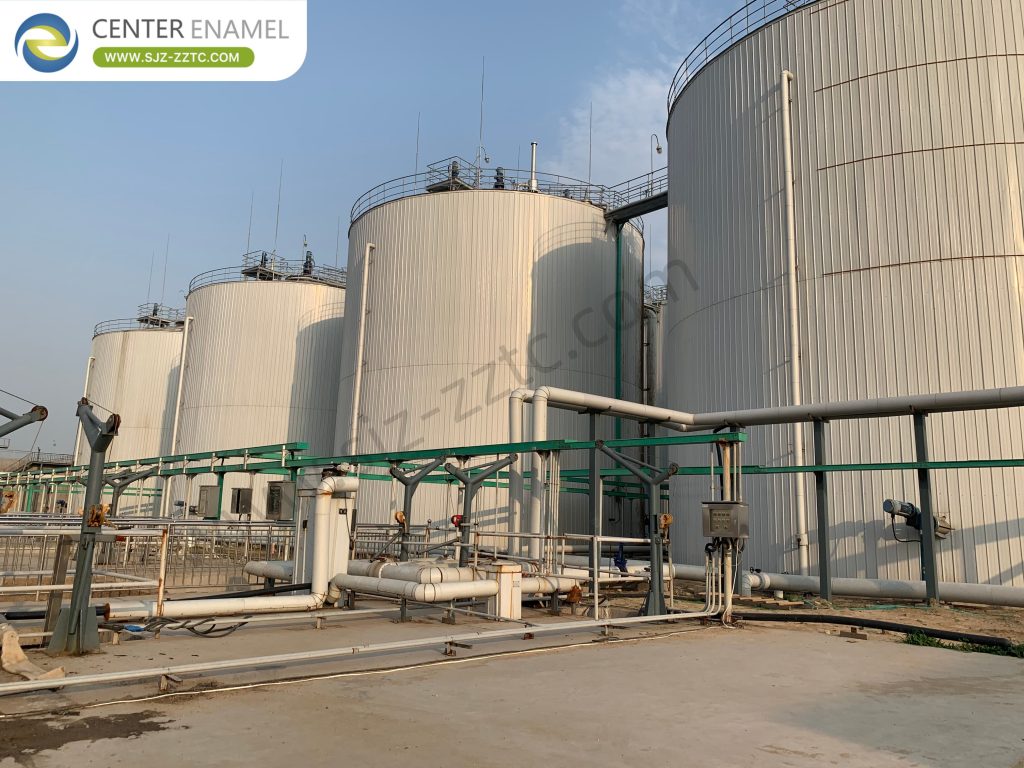
The Asia-Pacific region, particularly China, has become the world's largest industrial wastewater treatment market, with the operation and maintenance service segment's contribution continuing to rise, marking a shift from project construction to long-term operational management. The North American market focuses on upgrading existing facilities, while Europe emphasizes high-value-added resource recovery technologies. Wastewater from the new energy industry chain (lithium batteries, photovoltaics, hydrogen) has become the most notable emerging growth area due to its complex composition and high treatment difficulty, generating significant demand for customized solutions. The maturity of third-party treatment models in industrial parks continues to improve, driving consolidation in the professional operation market. The Middle East has strong demand for advanced treatment and reuse of industrial wastewater due to water scarcity; manufacturing transfer in Southeast Asia drives local industrial wastewater treatment facility construction demand.
As regional markets evolve toward long-term operational management, adopting advanced environmental strategies is vital for sustainable industry growth. Implementing comprehensive Anaerobic Solutions allows facility operators to address complex wastewater profiles efficiently. Consequently, this strategic operational shift enables organizations to achieve long-term compliance and high-value resource recovery.
CSTR Reaction Process
CSTR operates in continuous feed, continuous reaction, and intermittent/continuous sludge discharge mode, with a concise and coherent process flow. High-solids organic wastewater, after pretreatment to remove large-particle impurities, is fed at a constant rate into the sealed anaerobic reactor via feed pumps. Continuous mechanical stirring maintains uniform mixing throughout the reactor, creating a stable anaerobic environment. Within the reactor, acidogenic bacteria and methanogens decompose macromolecular organic matter in stages, first hydrolyzing and acidifying polysaccharides, proteins, and lipids into volatile fatty acids, then further degrading them into methane and carbon dioxide biogas. Throughout the reaction, no material stratification occurs, pollutants are continuously degraded, treated supernatant overflows from the upper portion of the reactor, aged sludge is periodically discharged from the bottom, and biogas is uniformly collected for resource utilization, maintaining stable sludge concentration and reaction equilibrium for consistent treatment performance.
Maximizing biochemical reaction efficiency requires precise control over microbial communities and organic loading rates. Integrating a well-engineered CSTR Process ensures optimal organic matter breakdown and stable methane production. Furthermore, this high-performance reactor design significantly enhances overall biogas recovery yields across complex waste streams.
Key Water Quality Characteristics of Food Waste
Prominent "four highs"-high COD, high oil and grease, high salinity, high suspended solids-with extremely high pollution load and complex composition. COD typically 15,000-80,000 mg/L, with oil separation wastewater exceeding 100,000 mg/L. Animal/vegetable oil content is extremely high at 5,000-20,000 mg/L-oil easily adheres and accumulates on pipe and equipment walls, causing blockages and membrane fouling. High salinity with sodium chloride content of 5,000-15,000 mg/L from seasonings and salt residues. High suspended solids rich in food residue particles, bone fragments, and fibrous impurities. Rich in proteins and amino acids, readily decomposing, emitting odors, and breeding flies. pH is slightly acidic to neutral, BOD/COD approximately 0.4-0.5-good biodegradability but oils and salts pose microbial inhibition risks. Water quality varies with collection volume, season, and dietary habits-higher summer volumes with higher oil content.
Treating high-strength, complex organic waste streams demands specialized technical expertise and robust equipment specifications. Modern food waste treatment facilities rely heavily on synchronized pretreatment and biological digestion to maintain system stability. Deploying resilient GFS Tanks alongside proven anaerobic technologies ensures that corrosive components are safely contained and effectively treated.
Center Enamel's Smart Manufacturing Base Scale
Center Enamel's core intelligent manufacturing base is located in Hebei Province, China, covering a total area of over 150,000 m², with Phase I mature manufacturing facility and Phase II high-end environmental equipment industrial park-dual-base synergy ensures stable production capacity. The base includes dedicated R&D office buildings, proprietary material laboratories, and finished product testing centers, with full-process quality control systems meeting ISO, NSF, CE, and other international standards. The facility operates to green manufacturing standards, certified as a Provincial Green Factory-balancing efficient production with energy conservation and emission reduction. The company has 6 marketing service centers across China, establishing a nationwide production-sales network ensuring stable global order delivery. The base is adjacent to expressway networks and major logistics hubs, with complete container shipping capabilities-supporting simultaneous large-scale tank projects globally. The base employs over 500 staff, with multiple parallel automated production lines-facility scale and production capacity firmly placing it among the global top tier of GFS tank equipment manufacturers.
State-of-the-art manufacturing infrastructure is the bedrock of reliable and high-performance industrial equipment fabrication. Backed by advanced smart production bases, top-tier manufacturers deliver exceptional components that meet rigorous international standards. This manufacturing excellence guarantees that every structural element within your Anaerobic Solutions operates with ultimate reliability.
Over a Decade of Global Installation Experience
Unmatched global practical experience among domestic peers-over a decade covering multiple regions and all industry sectors. In 2009, Center Enamel completed the first overseas GFS tank installation-sending a team to Niger, Africa for drinking water storage tank installation. In 2015, it broke industry ground with China's first GFS tank export and installation to the US-passing strict US acceptance standards. All installed projects have operated stably for many years, covering livestock biogas, POME, municipal wastewater, and drinking water storage applications. Construction has covered Southeast Asia, Africa, the Americas, and other regions-accumulating specialized solutions for complex sites including mountainous terrain, coastal salt spray, tropical high temperatures, and high-standard European/American facility conditions-maturely addressing global special construction requirements.
Proven international experience and flawless on-site execution are critical to turning engineering designs into successful realities. Implementing robust GFS Tanks across diverse global climates requires deep cross-border construction expertise. Consequently, decades of overseas deployment ensure long-term structural integrity and operational success worldwide.
Center Enamel Design Team
The design team includes senior engineers registered in the Hebei Provincial Science and Technology Expert Database, with design standards aligned with strict European/American high-end equipment safety standards. The team can provide complete integrated design for differentiated overseas projects in livestock biogas, POME, municipal wastewater, hazardous waste storage, seawater desalination, etc.-covering tank structure, anti-corrosion/sealing systems, biogas piping, and anaerobic process integration.
Pre-design thoroughly investigates local seismic zone, wind pressure, soil bearing capacity, water quality corrosivity, and local environmental discharge standards-applying thickened panels, reinforced anchored bases, and optimized sealing/corrosion structures as needed. Complete customized equipment solutions can be tailored to customer plant area, wastewater load, treatment targets, and budget-balancing safety, economics, and local adaptation-providing compliant, stable, and highly adaptable equipment structural design support for global environmental projects.
Engineering excellence begins with a multidisciplinary team capable of translating complex site data into customized blueprints. A premier provider of Anaerobic Solutions leverages advanced engineering insights to guarantee structural and biochemical safety. By optimizing every parameter from local wind loads to the CSTR Process, projects are built for long-term operational success.
Full-Industry-Chain Integrated Delivery Capability
Center Enamel is the only company globally integrating proprietary enamel frit R&D, self-manufactured tanks, and EPC general contracting-full-process self-control from solution design, equipment production, cross-border logistics, overseas construction, to post-construction O&M-significantly reducing client coordination and time costs.
Streamlining project execution through full-industry-chain integration eliminates unnecessary communication bottlenecks and project delays. Partnering with a vertically integrated provider guarantees total quality control from initial design to final commissioning. Backed by proprietary manufacturing of durable GFS Tanks, Center Enamel delivers unmatched value to global environmental projects.