
Reliable GFS Tanks and High-Efficiency UASB Reactors for Industrial Wastewater Treatment
Understanding the regional dynamics of the industrial wastewater treatment market is crucial for selecting appropriate technologies and partners. The Asia-Pacific region, particularly China, has become the world's largest industrial wastewater treatment market, with the operation and maintenance service segment's contribution continuing to rise, marking a shift from project construction to long-term operational management. This growth is fueled by rapid industrialization and increasing environmental awareness, creating significant demand for reliable GFS tanks and UASB reactors.
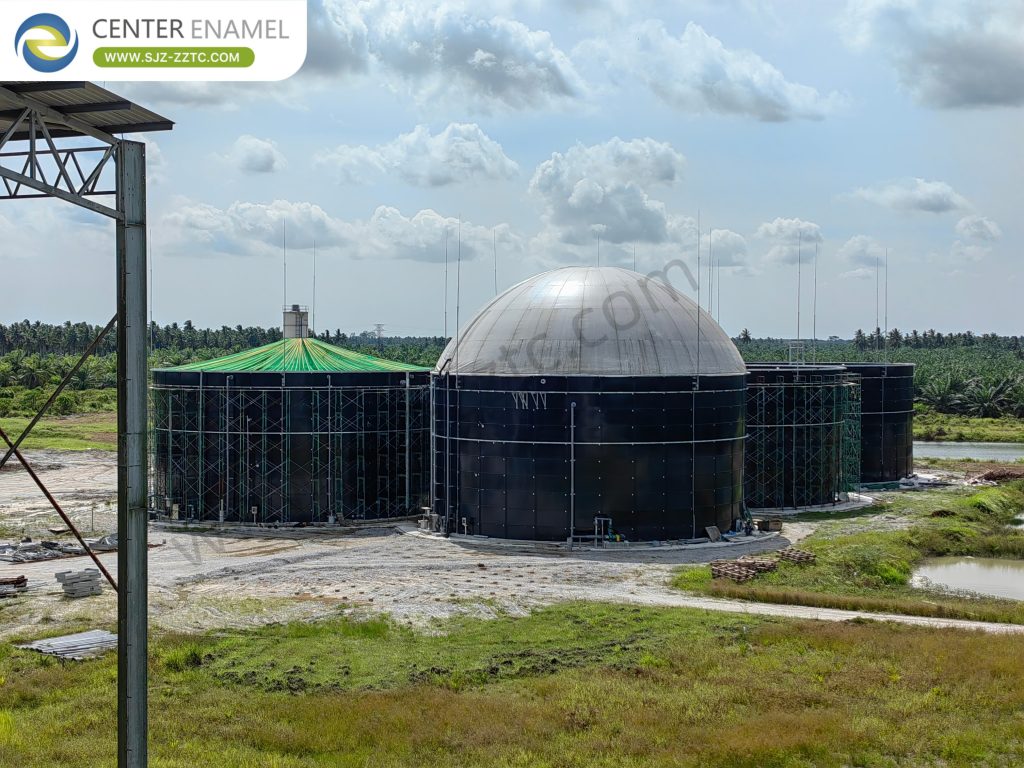
In contrast, the North American market focuses on upgrading existing facilities, while Europe emphasizes high-value-added resource recovery technologies. Wastewater from the new energy industry chain (lithium batteries, photovoltaics, hydrogen) has become the most notable emerging growth area due to its complex composition and high treatment difficulty, generating significant demand for customized solutions. The maturity of third-party treatment models in industrial parks continues to improve, driving consolidation in the professional operation market. Meanwhile, the Middle East has strong demand for advanced treatment and reuse of industrial wastewater due to water scarcity, and manufacturing transfer in Southeast Asia drives local industrial wastewater treatment facility construction demand, further highlighting the global need for versatile and durable equipment like Center Enamel's offerings.
Why GFS Tanks Offer Superior Adaptability to Extreme Climates
Implementing effective industrial wastewater treatment solutions, particularly in challenging environments, requires infrastructure that can withstand local climate and geological stresses. GFS tanks can undergo customized wind and seismic design based on project site climate and geological conditions, with environmental adaptability far superior to concrete tanks. Concrete tanks are cast-in-place monolithic structures, with seismic and wind resistance entirely dependent on on-site construction quality. In remote areas, typhoon-prone zones, and earthquake belts, construction quality is difficult to control. Under strong earthquakes or typhoons, concrete tanks are prone to cracking and base settlement damage, with subsequent reinforcement costs equivalent to rebuilding.
To mitigate these risks, Center Enamel’s GFS tanks undergo a rigorous pre-construction process that includes collecting local seismic intensity, maximum wind pressure, and foundation bearing capacity data. Based on this analysis, the company customizes thickened steel panels, stiffening ribs, and anchored base components-all factory-prefabricated to standardized specifications. The bolted panel structure boasts excellent stress distribution capability, making it less prone to overall fracture under seismic and typhoon impacts, and minor foundation settlement will not cause through-cracking. These structural parameters can be flexibly adjusted for mountainous, coastal typhoon-zone, and high-seismic-zone projects, providing long-term protection against extreme natural climate damage and ensuring the durability of your industrial wastewater treatment investment.
Understanding the UASB Reaction Process for Efficient Treatment
At the heart of many modern industrial wastewater treatment plants is the UASB reactor, a benchmark technology for its efficiency and simplicity. After pretreatment through screens and equalization tanks to remove impurities and balance water quality and flow, wastewater is uniformly fed into the reactor through the bottom distribution system. The wastewater rises at a constant rate through the high-concentration granular sludge bed at the bottom, where anaerobic microorganisms rapidly degrade most organic matter, converting it into biogas, clean water, and a small amount of sludge.
This gentle hydraulic mixing maintains sludge suspension, expanding microbial contact area for optimal degradation. Remaining pollutants continue to degrade in the mid-section suspended sludge layer, with the mixed liquor finally entering the top three-phase separator for gas, solid, and liquid separation. Biogas is collected upward for utilization, sludge settles back to the reaction zone, treated effluent overflows from the top, and aged sludge is periodically discharged-fully automated continuous operation. This robust process, housed within durable GFS tanks, makes the UASB reactor an ideal solution for high-strength industrial wastewater.
Key Water Quality Characteristics of Beverage Wastewater
The application of UASB reactors and GFS tanks is particularly effective in industries with high organic loads, such as beverage production, which presents a unique set of water quality challenges. Beverage wastewater is characterized by high COD, high sugar content, low suspended solids, slightly acidic pH, excellent biodegradability-with significant fluctuations. COD typically ranges from 3,000-20,000 mg/L, with high-concentration CIP cleaning wastewater peaking above 50,000 mg/L. Core pollutants are soluble sugars-sucrose, fructose, glucose-which are highly degradable organics, with BOD/COD typically 0.5-0.65, representing industry-leading biodegradability.
Low suspended solids-primarily fruit pulp, tea residues, and fiber impurities-and a slightly acidic pH (juice wastewater pH 3-4, carbonated beverage wastewater containing phosphoric acid) are common. The wastewater can be clear to slightly turbid, with color varying by beverage type (juice has high color, tea has tea color), and is at a moderate temperature of 20-40°C. Water quality fluctuates intermittently with CIP cleaning cycles and product changeovers, alternating between high-concentration CIP and low-concentration filling wastewater. This variability makes the robust design of Center Enamel's GFS tanks and the flexible operation of UASB reactors essential for consistent treatment performance in the food and beverage sector.
Center Enamel's Smart Manufacturing Base: A Foundation of Quality
The reliability of any industrial wastewater treatment solution begins with the quality of its manufacturing. Center Enamel's core intelligent manufacturing base is located in Hebei Province, China, covering a total area of over 150,000 m², with Phase I mature manufacturing facility and Phase II high-end environmental equipment industrial park-dual-base synergy ensures stable production capacity for GFS tanks and associated equipment. The base includes dedicated R&D office buildings, proprietary material laboratories, and finished product testing centers, with full-process quality control systems meeting ISO, NSF, CE, and other international standards.
The facility operates to green manufacturing standards, certified as a Provincial Green Factory-balancing efficient production with energy conservation and emission reduction. The company has 6 marketing service centers across China, establishing a nationwide production-sales network ensuring stable global order delivery. The base is adjacent to expressway networks and major logistics hubs, with complete container shipping capabilities-supporting simultaneous large-scale tank projects globally. The base employs over 500 staff, with multiple parallel automated production lines-facility scale and production capacity firmly placing it among the global top tier of GFS tank equipment manufacturers, ensuring every UASB reactor and storage tank meets the highest standards of durability and performance.
Center Enamel's Design Team: Tailoring Solutions for Global Projects
Behind every successful industrial wastewater treatment project is a team of experts who can translate complex requirements into practical, compliant designs. The design team includes senior engineers registered in the Hebei Provincial Science and Technology Expert Database, with design standards aligned with strict European/American high-end equipment safety standards. The team can provide complete integrated design for differentiated overseas projects in livestock biogas, POME, municipal wastewater, hazardous waste storage, seawater desalination, etc.-covering tank structure, anti-corrosion/sealing systems, biogas piping, and anaerobic process integration for UASB reactors.
Pre-design thoroughly investigates local seismic zone, wind pressure, soil bearing capacity, water quality corrosivity, and local environmental discharge standards-applying thickened panels, reinforced anchored bases, and optimized sealing/corrosion structures as needed. Complete customized equipment solutions can be tailored to customer plant area, wastewater load, treatment targets, and budget-balancing safety, economics, and local adaptation-providing compliant, stable, and highly adaptable equipment structural design support for global environmental projects, ensuring that each GFS tank and UASB reactor system is optimized for its specific application.
Aluminum Alloy Trough Deck Roof: A Cost-Effective Cover Solution
Complementing the core treatment systems, ancillary components like tank covers play a vital role in overall plant efficiency and safety. The Aluminum Alloy Trough Deck Roof is a cost-effective economical tank cover solution for clean water and wastewater storage scenarios, primarily designed for drinking water, production wastewater, and firewater reserve tanks, balancing practicality and cost advantages. The main body is integrally formed from anti-corrosion aluminum alloy plates, paired with aluminum support trusses. Its lightweight design imposes less load on the tank foundation, reducing civil construction investment.
A naturally formed dense oxide protective layer on the surface resists rain and mild wastewater corrosion, withstands outdoor sun and rain exposure, and effectively blocks wind, rain, insects, fallen leaves, and odor volatilization, protecting water quality by preventing dust and debris from falling in and causing secondary contamination. The flat roof structure is neat and orderly, allowing installation of maintenance walkways, guardrails, vents, and level monitoring ports on top, facilitating daily inspection and equipment maintenance. The simple sealing structure enables straightforward installation with short construction timelines, and virtually eliminates the need for anti-corrosion painting maintenance, resulting in extremely low operational costs. It is suitable for various small, medium, and large atmospheric pressure water storage tanks, and has been widely implemented in waterworks clear water tanks, industrial circulating water tanks, park firewater tanks, and domestic wastewater temporary storage facilities. It is highly compatible with water storage applications that do not require biogas collection or high-pressure sealing, making it a versatile addition to any industrial wastewater treatment facility using GFS tanks.
Frequently Asked Questions (FAQ)
1. Why are GFS tanks preferred over concrete tanks for industrial wastewater treatment?
GFS tanks offer superior corrosion resistance, structural integrity, and adaptability. They are factory-engineered for specific seismic and wind loads, ensuring consistent quality and durability in extreme climates, unlike concrete which is prone to cracking and settlement issues, especially in remote or harsh environments.
2. What types of industrial wastewater are best suited for UASB reactor treatment?
UASB reactors excel at treating medium-to-high concentration soluble organic wastewater, such as those from food processing, beverage production, brewing, and chemical industries. They are ideal for effluents with high COD, low suspended solids, and excellent biodegradability, providing efficient energy recovery through biogas production.
3. Does Center Enamel provide customized design and installation for global projects?
Yes. Center Enamel's design team offers complete integrated solutions tailored to local seismic, climate, and regulatory conditions. With a global delivery network and smart manufacturing base, they provide one-stop services from design to installation for GFS tanks, UASB reactors, and associated systems worldwide.