
How Does IC Process Redefine High-Strength Wastewater Treatment Technology?
The industrial wastewater landscape is shifting rapidly. Leading companies are building integrated service capabilities through technical integration and capital operations, and industry concentration is gradually increasing. Chinese enterprises continue to consolidate their advantages in mid-tier equipment exports. International giants target high-end customers and complex industrial wastewater markets, while local players occupy the mid-to-low-end and industrial park centralized treatment markets with service responsiveness and cost advantages. Within this competitive divergence, Wastewater Treatment Technology has become the decisive factor separating efficient operations from costly compliance failures.
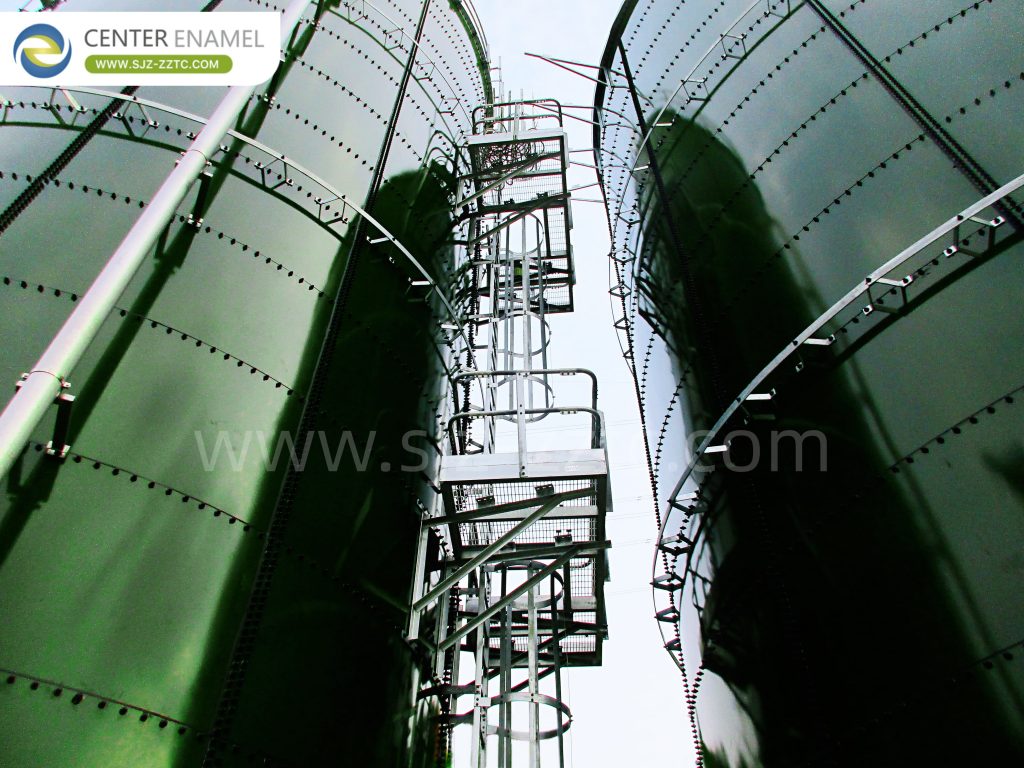
In the anaerobic segment specifically, UASB, EGSB, and IC anaerobic reactors are widely used for high-concentration organic wastewater pretreatment in food processing, pharmaceutical fermentation, alcohol brewing, and chemical industries. These reactors rely on steel tank shells, and their corrosion resistance and gas-tightness directly determine long-term operational stability. The application value of glass-fused-to-steel tanks in such scenarios is increasingly prominent. Among these options, the IC Process stands out as the preferred anaerobic technology for modern, high-efficiency industrial wastewater treatment.
Why Is IC Process the Preferred Choice for High-Strength Industrial Effluent?
The IC Process (Internal Circulation Anaerobic Bioreactor) is primarily designed for high-concentration, high-flow soluble industrial organic wastewater. It covers brewery, beverage, starch, pharmaceutical, chemical, and papermaking high-strength wastewater. This Wastewater Treatment Technology is particularly suitable for land-constrained projects with high treatment efficiency requirements in large industrial wastewater treatment facilities. It can serve as the primary process for high-strength wastewater with rapid COD/BOD removal, and it excels in centralized industrial park WWTPs and large enterprise proprietary treatment systems-especially for wastewater with significant quality fluctuations and extremely high pollutant concentrations. Notably, the IC Process is not suitable for high-solids, high-viscosity wastewater, but for soluble high-strength streams, it remains the preferred anaerobic solution.
What Makes Center Enamel’s Global Project Experience Relevant to Your Needs?
Center Enamel’s global business covers over 100 countries and regions, with 30,000+ successful overseas projects. Products are exported to all major regions including Europe, the Americas, the Middle East, Africa, Southeast Asia, and Latin America, supported by a well-established global localized service network. Domestically, the company is organized into North, South, Central, East, and Southwest marketing regions, covering environmental, water utility, livestock, and petrochemical customers nationwide. Internationally, the company adopts a “standardized products + localized adaptation” model-adjusting tank corrosion protection, sealing, and pressure standards for different national water quality and environmental regulations.
Table 1: Representative Global Project Data
| Project / Metric | Location | Key Data |
| Global Reach | 100+ countries | 30,000+ overseas projects |
| Italy | Europe | Large-volume GFS tanks |
| Colombia | South America | 20 m tower water supply tanks |
| Costa Rica | Central America | Coastal seawater treatment tanks |
| South Africa Brewery | Africa | GFS + stainless steel anaerobic system |
The South Africa Brewery High-Strength Wastewater Treatment Project exemplifies this capability. Focusing on high-concentration organic wastewater treatment in South Africa’s brewing industry, the project features both Center Enamel GFS tanks and stainless steel tanks as core equipment. GFS tanks serve as the primary anaerobic digestion system, suited to brewery wastewater’s high-COD, high-sugar, readily decomposable characteristics for efficient organic pollutant degradation. Stainless steel tanks handle wastewater transfer and chemical storage supporting processes. The complete equipment package provides excellent corrosion resistance and flexible assembly, delivering long-term stable treatment of brewery production and cleaning wastewater.
How Do Operational Realities Shape Wastewater Treatment Technology Choices?
Chemical wastewater O&M costs rank among the highest of all wastewater types with poor overall economic viability, second only to pharmaceutical wastewater. Strong toxicity and high salinity require extensive segregated pretreatment equipment-high capital investment and complex operation. Advanced oxidation requires continuous addition of expensive chemicals such as hydrogen peroxide, ozone, and catalysts, driving very high chemical costs. High-salinity wastewater evaporation crystallization and reverse osmosis membrane treatment consume enormous energy, making electricity and steam costs significant. Salt-bearing and toxic sludge is hazardous waste with high compliance disposal costs; disposal can account for over 30% of total costs. Equipment in high-salt, highly corrosive, strong oxidizing environments suffers frequent corrosion damage with high repair and replacement costs, requiring premium corrosion protection.
Table 2: Chemical Wastewater O&M Cost Drivers
| Cost Factor | Impact on Operations |
| Hazardous sludge disposal | Over 30% of total costs |
| Advanced oxidation chemicals | Very high (H₂O₂, ozone, catalysts) |
| Evaporation & RO energy | Significant electricity and steam consumption |
| Corrosion repair/replacement | Frequent in high-salt, oxidizing environments |
| 24/7 monitoring labor | High due to water quality fluctuations |
These realities make robust Wastewater Treatment Technology selection critical. Frequent water quality fluctuations require dedicated 24/7 monitoring and adjustment, driving high labor costs. Resource recovery benefits are minimal, with overall investment far exceeding returns-one of the highest economic burdens in industrial wastewater treatment. This is precisely where the IC Process proves its value: by converting organic components into valuable biogas rather than merely consuming energy for treatment, it shifts the economic equation in favor of recovery.
What Support Systems Ensure Long-Term Performance?
Center Enamel’s own cross-border construction teams, combined with a global localized agent network, enable modular GFS tank assembly with short construction periods and dismantlable/reusable capability. This approach suits overseas short-term projects, phased expansions, and relocation needs, with full-lifecycle after-sales O&M support ensuring long-term stable client operations.
For atmospheric pressure storage applications, the FRP Roof Cover offers a general-purpose economical solution. It is suitable for drinking water storage, agricultural irrigation water, firewater reserve, and general production wastewater temporary storage. Available in flat and dome styles, the roof is integrally molded from resin and fiberglass-lightweight, naturally water-resistant, and mildly acid/alkali corrosion-resistant. It will not rust or rot in long-term humid environments, eliminating frequent anti-corrosion maintenance required for metal roofs. The dome style features excellent drainage performance due to its curved structure, resisting water accumulation, dust buildup, snow load, and strong winds. The flat style facilitates installation of maintenance walkways, level gauges, and vents on top. The product is fully insulated with no risk of galvanic corrosion, will not contaminate drinking water quality, and meets environmental standards for domestic water storage. However, it is only suitable for atmospheric pressure water storage tanks without biogas collection or pressurization requirements, and is not recommended for anaerobic fermentation gas-producing conditions.
FAQ
Q1: What types of wastewater is the IC Process best suited for?
The IC Process is ideal for high-concentration, high-flow soluble organic wastewater from breweries, pharmaceuticals, chemicals, and food processing. It is not recommended for high-solids or high-viscosity streams.
Q2: Why are GFS tanks preferred for anaerobic reactors?
GFS tanks offer superior corrosion resistance and gas-tightness, directly determining long-term operational stability in high-H₂S and acidic anaerobic environments.
Q3: Does Center Enamel support overseas project installation?
Yes. Center Enamel deploys cross-border construction teams and localized agent networks, providing modular assembly, phased expansion support, and full-lifecycle after-sales O&M.
Ready to evaluate whether IC Process fits your wastewater profile? Share your flow and COD data with our engineering team for a preliminary process recommendation.
Contact Center Enamel today to discuss tank specifications, corrosion protection requirements, and project timelines with a technical specialist.