
History of Biogas Technologies: From Ancient Roots to Modern Green Energy
The journey of converting organic waste into combustible gas is a testament to human ingenuity. While modern anaerobic digestion is celebrated as an advanced pillar of circular economy and green energy, the history of biogas technologies spans centuries of scientific discovery, agricultural adaptation, and industrial engineering.
Understanding how biogas production evolved from ancient observations into high-rate industrial bioreactors provides valuable context for modern renewable energy development.
1. Ancient Observations and Early Scientific Discoveries (17th to 18th Century)
Long before modern microbiology explained the process, ancient civilizations recognized the phenomenon of combustible gases bubbling up from marshes and decomposing organic matter.
- Ancient Uses: Historical records suggest that ancient Assyrians (around the 10th century BCE) used biogas to heat bathwater, while the ancient Chinese utilized decomposing organic materials for domestic energy applications.
- Scientific Identification: In the 17th century, Flemish scientist Jan Baptista van Helmont noted that flammable gases were released from decaying organic matter. By 1776, Italian physicist Alessandro Volta scientifically identified marsh gas (methane) and established a direct chemical link between decomposing vegetation and the production of a flammable gas.
2. The 19th Century: Microbiological Foundations
The 19th century marked the transition from casual observation to rigorous scientific study, laying the groundwork for engineered biodigesters.
- First Sewage Works: The first modern anaerobic digestion plant was constructed in Bombay (Mumbai), India, in 1859 at a leper colony, where gas was harvested from municipal sewage to power local lighting.
- Unlocking Microbiology: In the late 1800s, Louis Pasteur and his contemporaries identified the microbial nature of fermentation. Subsequent researchers isolated the specific anaerobic bacteria responsible for breaking down complex organic molecules into methane and carbon dioxide.
3. The 20th Century: Rural Expansion and Crisis Innovation
The 20th century transformed biogas from a scientific novelty into a widespread practical technology, heavily driven by energy shortages and agricultural needs.
- Wartime Fuel Shortages: During World War I and World War II, fossil fuel shortages forced European countries to build small-scale anaerobic digesters on farms to generate fuel for tractors and domestic heating.
- The Asian Biomass Movements: Mid-century saw massive government-backed initiatives in Asia. India pioneered the development of the "Gobar" (floating drum) gas plant in the 1930s through the Indian Agricultural Research Institute. Simultaneously, China launched a massive rural campaign in the 1970s, constructing tens of millions of underground fixed-dome biogas plants to provide clean cooking fuel to rural households.
4. The Modern Era: Industrial Scale and High-Tech Bioreactors
In recent decades, environmental regulations, carbon reduction targets, and technological innovations have propelled biogas into the industrial mainstream.
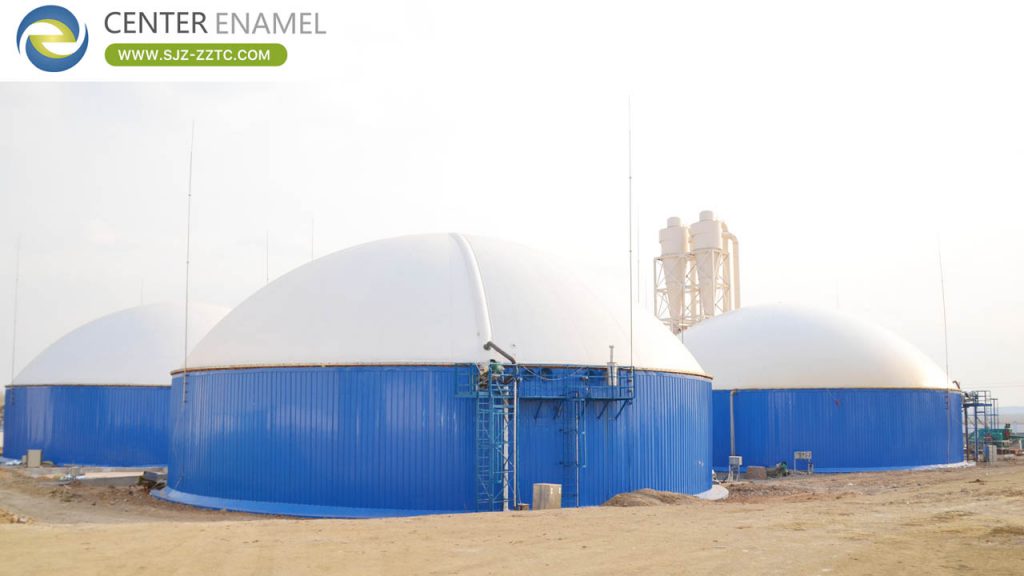
- Advanced Engineering: Modern facilities transitioned from simple masonry pits to highly engineered continuous stirred-tank reactors (CSTRs) and Glass-Fused-to-Steel (GFS) bolted tanks equipped with automated heating, mixing, and gas purification systems.
Comparative Data Table: Epochs of Biogas Technology Evolution
| Historical Era | Primary Driver | Dominant Reactor Design | Main Application |
| Ancient & 18th Century | Natural observation & curiosity | Marsh beds / primitive pits | Localized heating / scientific study |
| 19th Century | Sanitation & municipal hygiene | Early sewage sedimentation tanks | Waste treatment & municipal lighting |
| Mid 20th Century | Rural energy independence & war shortages | Floating drum & early fixed-dome systems | Rural cooking, lighting, and farm power |
| Late 20th Century | Environmental protection & large-scale farming | Concrete CSTRs & covered lagoons | Commercial agricultural waste management |
| 21st Century (Modern) | Circular economy, green energy, & AI | GFS bolted tanks & UASB reactors | Grid injection, biomethane (RNG), & industrial power |
Frequently Asked Questions (FAQ)
Q1: Who first discovered biogas?
A: While ancient civilizations observed flammable marsh gases for millennia, Italian physicist Alessandro Volta is credited with scientifically identifying methane gas in 1776, establishing the link between decaying organic matter and combustible gas.
Q2: When was the first modern biogas plant built?
A: The first recorded modern anaerobic digestion facility was built in 1859 at a leper colony in Bombay (Mumbai), India, where gas produced from sewage treatment was captured and utilized for street lighting.
Q3: How has biogas technology changed from the 20th century to today?
A: 20th-century biogas tech focused primarily on small-scale rural masonry and metal drum systems for basic cooking and lighting. Modern biogas technology utilizes advanced industrial engineering, such as corrosion-resistant Glass-Fused-to-Steel (GFS) tanks, automated temperature control, and biomethane upgrading for natural gas grid injection.