
How Anaerobic Technologies Transform Chemical Wastewater Treatment
Industrial wastewater treatment today faces a convergence of pressures: tightening discharge standards, rising energy costs, and the imperative to recover resources rather than simply dispose of them. No sector feels this pressure more acutely than chemicals, where effluent streams carry some of the heaviest and most complex pollutant loads in industry. Meeting these demands requires more than conventional equipment-it requires a partner who understands both the biology of degradation and the metallurgy of containment. Center Enamel brings three decades of expertise in Anaerobic Technologies and Chemical Wastewater Treatment, pairing high-rate reactor design with Glass-Fused-to-Steel (GFS) tanks engineered to survive the harshest service conditions.
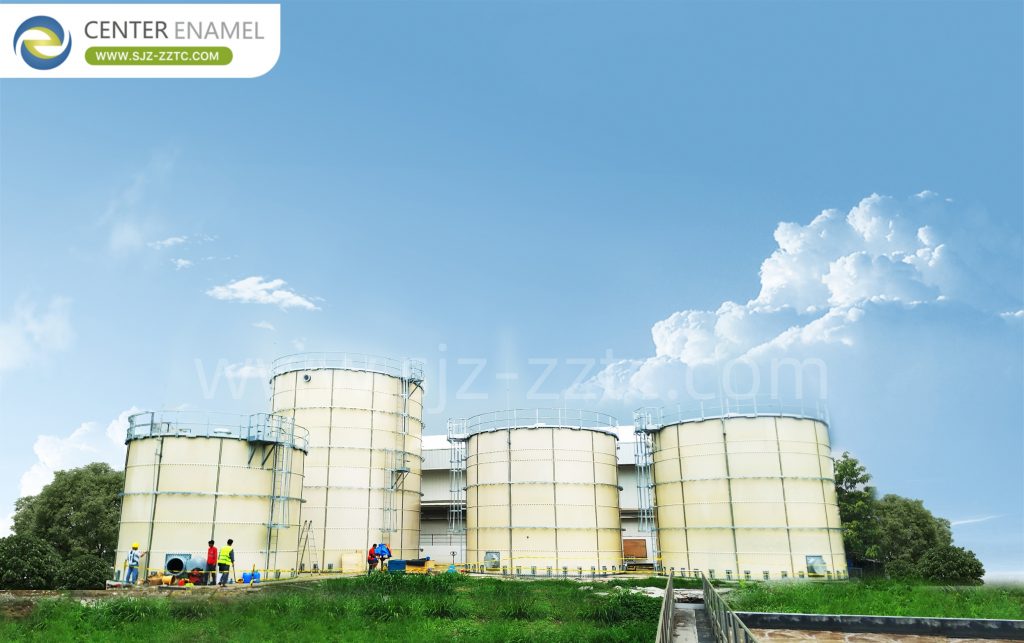
The Three Highs: Why Chemical Effluent Demands Specialized Solutions
Chemical wastewater is defined by what the industry calls the “three highs”-high difficulty, high cost, and high energy consumption. Effluent from petrochemical, coal chemical, fine chemical, and pharmaceutical production contains characteristic pollutants that resist conventional treatment: phenols, cyanides, heterocyclics, ammonia nitrogen, and high-salinity brines. Large petrochemical plants discharge continuously at high volume, while smaller specialty chemical operations release intermittent flows with water quality that swings wildly as product lines change. Traditional aerobic processes struggle with both the organic load and the toxicity, consuming enormous amounts of electricity for aeration while generating substantial excess sludge.
This is where Anaerobic Technologies change the economic equation. By converting organic pollutants into methane-rich biogas rather than oxidizing them with forced air, anaerobic treatment transforms a waste disposal problem into an energy recovery opportunity. For chemical streams with COD above 2,000–4,000 mg/L, anaerobic digestion delivers a net energy gain while producing a fraction of the sludge generated by aerobic alternatives . The challenge lies in selecting the right reactor configuration for each effluent profile.
Matching Anaerobic Technologies to Chemical Waste Profiles
Not all anaerobic reactors are interchangeable. The choice depends on suspended solids, organic strength, temperature stability, and the presence of inhibitory compounds. Center Enamel’s portfolio spans the full spectrum of high-rate configurations, with the EGSB and IC reactors serving as the workhorses for Chemical Wastewater Treatment applications.
The Expanded Granular Sludge Bed (EGSB) reactor excels where effluent contains low suspended solids but high organic strength, particularly when temperatures run cooler or loads fluctuate. Its high internal recirculation creates an expanded sludge bed that maximizes contact between microbes and pollutants, achieving organic loading rates of 20–40 kg COD/m³·day . This makes the EGSB an ideal front-line defense against the recalcitrant compounds found in fine chemical and pharmaceutical discharges. For higher-strength streams with greater flow volumes, the Internal Circulation (IC) reactor offers similar advantages with a smaller footprint, using biogas-driven circulation to dilute shock loads and maintain stable performance.
The table below compares key anaerobic configurations deployed in chemical service:
| Reactor Type | Typical OLR (kg COD/m³·d) | Best-Fit Chemical Streams | Key Advantage |
| EGSB | 20–40 | Low-SS, variable temperature, recalcitrant organics | Expanded bed enhances mass transfer |
| IC | 15–30 | High-strength, high-flow petrochemical/coal chemical | Compact footprint, self-circulating |
| UASB | 5–15 | Moderate-strength, stable influent | Proven reliability, simpler operation |
| CSTR | 2–6 | High-solids, mixed feeds | Tolerates suspended solids |
The Treatment Train: Beyond Anaerobic Digestion Alone
Anaerobic Technologies form the core of chemical wastewater treatment, but they rarely operate in isolation. A complete Chemical Wastewater Treatment train typically begins with segregated pretreatment-oil separation for petrochemical streams, solvent extraction for phenolic waste, cyanide destruction for plating effluents, and chemical precipitation for heavy metals. Advanced oxidation processes (Fenton, ozone catalysis, electrochemical oxidation) then break down macromolecular toxic organics and improve biodegradability before the wastewater enters the anaerobic reactor.
Following anaerobic digestion, aerobic polishing (A/O or SBR) ensures residual organics and ammonia nitrogen meet discharge limits. For high-salinity streams, halophilic bacteria acclimation and evaporation crystallization complete the train. Every stage places unique demands on containment, which is why Center Enamel’s GFS tanks serve as the corrosion-resistant backbone throughout the process-not only for the anaerobic reactor itself but for equalization, pH adjustment, and sludge holding.
Engineering Containment for Corrosive Service
The biological performance of any anaerobic system is only as reliable as the vessel that houses it. Chemical wastewater generates organic acids, hydrogen sulfide, and aggressive intermediates that attack concrete and coated steel alike. Center Enamel’s GFS tanks address this through a vitreous enamel coating fired at over 800°C, creating a non-porous barrier that resists pH 1–14 and microbial-induced corrosion. With a service life exceeding 30 years and modular bolted assembly that installs up to 50% faster than concrete, GFS tanks eliminate the recurring lining repairs that plague conventional construction in chemical service.
| Containment Comparison | GFS Tank | Concrete Tank |
| Corrosion resistance | pH 1–14, vitreous barrier | Porous; requires liners |
| Service life | 30+ years | 5–8 years before major repair |
| Installation speed | 1/3 of concrete schedule | Months per tank |
| Expansion capability | Add panels to increase volume | Difficult and costly |
| Biogas tightness | Excellent, bolted seal | Requires specialized cover |
A Complete Product Matrix for Integrated Projects
Center Enamel is unique in combining enamel frit research, in-house manufacturing, and full environmental EPC contracting under one roof. Beyond GFS tanks, the company produces Fusion Bonded Epoxy tanks for drinking water and neutral media, aluminum dome covers for gas-tight sealing and biogas collection, and a range of carbon steel, stainless steel, and non-standard pressure vessels. Engineering services span anaerobic process section subcontracting, complete EPC general contracting, and one-stop coverage across food waste, leachate, municipal wastewater, livestock biogas, petrochemical, and seawater desalination applications.
Global Service, Local Support
With regional sales centers in China and an overseas agent network, Center Enamel maintains a four-pillar service system: 24/7 rapid response, on-site installation domestically and abroad, full-project-cycle after-sales support, and long-term warranty protection. The marketing and engineering teams are proficient in wastewater discharge regulations, biogas subsidy policies, and carbon trading rules across Southeast Asia, Africa, Europe, and the Americas, providing multilingual consultation in English, French, Spanish, and Arabic. This global perspective helps clients navigate overseas approvals, equipment import, and construction implementation-avoiding risks before they become delays.
Certifications That Clear Tender Barriers
For large overseas projects, credentials matter as much as capability. Center Enamel holds CE, NSF, WRAS, ISO9001, BSCI, and ASME certifications, clearing tender barriers across EU, North American, Southeast Asian, and African markets. These certifications reflect a manufacturing discipline that extends from raw material control through factory testing and on-site acceptance.
Frequently Asked Questions
Q: Why choose anaerobic over aerobic for chemical wastewater?
A: For COD above 2,000–4,000 mg/L, anaerobic treatment recovers biogas energy and produces far less sludge. Aerobic polishing is still used downstream for nitrogen and residual organics .
Q: How does the EGSB handle toxic chemical streams?
A: High internal recirculation dilutes shock loads, while the expanded granular bed maintains vigorous microbe-pollutant contact, degrading recalcitrant compounds efficiently.
Q: Are GFS tanks suitable for high-salinity chemical effluent?
A: Yes. Center Enamel formulates specialized enamels resistant to high salinity, strong acids, and oxidants, with a service life exceeding 30 years.
Ready to evaluate anaerobic treatment for your chemical wastewater stream? Share your effluent profile with our engineering team, and we will recommend the optimal reactor configuration and tank specification for your site.
Contact Center Enamel today to schedule a technical consultation and receive a tailored feasibility assessment for your next project.