
How Can Aquaculture Contributes to Wastewater Contamination?
Aquaculture plays a critical role in meeting the global demand for seafood, yet intensive farming practices frequently pose substantial environmental challenges. Without proper management, the discharge from fish farms can severely impact natural water bodies. Understanding the mechanisms of contamination is the first step toward implementing effective engineering solutions that safeguard our water resources while sustaining the aquaculture industry.
Understanding the Impact of Aquaculture on Water Quality
Aquaculture is vital for global food security, but intensive farming practices often release significant waste into natural water bodies. Uneaten fish feed, feces, and metabolic excretions accumulate rapidly in aquatic environments, creating a heavy burden on local ecosystems. This organic loading depletes dissolved oxygen levels as microorganisms break down the waste, creating hypoxic or "dead zones" that threaten native aquatic life. Furthermore, high stocking densities exacerbate these issues, turning what should be a sustainable food source into a notable point source of water pollution if proper management practices are not strictly implemented and monitored across commercial operations.
The Role of Antibiotics and Chemical Additives in Contamination
Beyond organic waste, modern aquaculture heavily relies on various pharmaceuticals and chemicals to prevent and treat fish diseases in high-density environments. Antibiotics, anti-fouling agents, disinfectants, and parasiticides are frequently administered during production cycles to maintain stock health. A significant portion of these chemical inputs eventually leaches into the surrounding aquatic ecosystems through effluent discharge. This chemical residue poses severe ecological risks, including the development of antibiotic-resistant bacteria strains, the disruption of local microbial communities, and bioaccumulation in non-target organisms, thereby threatening both biodiversity and long-term ecological balance.
Nutrient Overload and Eutrophication Risks
Fish feed is inherently rich in nitrogen and phosphorus, which are essential nutrients that promote rapid fish growth but also act as potent pollutants when discharged untreated. Excess nutrients entering natural waterways trigger eutrophication, a process characterized by explosive algal blooms. As these massive algal populations die and decompose, they consume vast amounts of dissolved oxygen, suffocating fish and other aquatic species. This nutrient imbalance not only degrades water quality and aesthetic value but also disrupts entire aquatic food webs, making nutrient mitigation a critical priority for sustainable aquaculture operations worldwide.
Transitioning to Advanced Aquaculture Wastewater Treatment Technologies
Recognizing the environmental footprint of traditional farming methods, the industry is rapidly shifting toward advanced aquaculture wastewater treatment technologies. Regulatory pressures and growing sustainability goals compel facility operators to move away from open, direct-discharge systems. Instead, modern farms are investing in closed-loop Recirculating Aquaculture Systems (RAS) and comprehensive end-of-pipe treatment plants. These innovative systems capture solid wastes, neutralize chemical contaminants, and recycle a vast majority of the water, significantly minimizing environmental pollution while optimizing resource utilization and operational efficiency.
Key Processes in Aquaculture Wastewater Treatment
Effective aquaculture wastewater treatment relies on a multi-stage process combining physical, chemical, and biological treatments. Initially, mechanical filters, sedimentation tanks, and drum screens remove suspended solids and uneaten feed particles. Next, biological treatment units utilize activated sludge or moving bed biofilm reactors (MBBR) to degrade dissolved organic compounds and convert toxic ammonia into harmless nitrogen gas via nitrification and denitrification processes. Finally, advanced disinfection methods, such as UV irradiation or ozonation, neutralize pathogens, ensuring the treated effluent meets strict environmental discharge standards before release.
Advantages of GFS Tanks in Wastewater Treatment Infrastructure
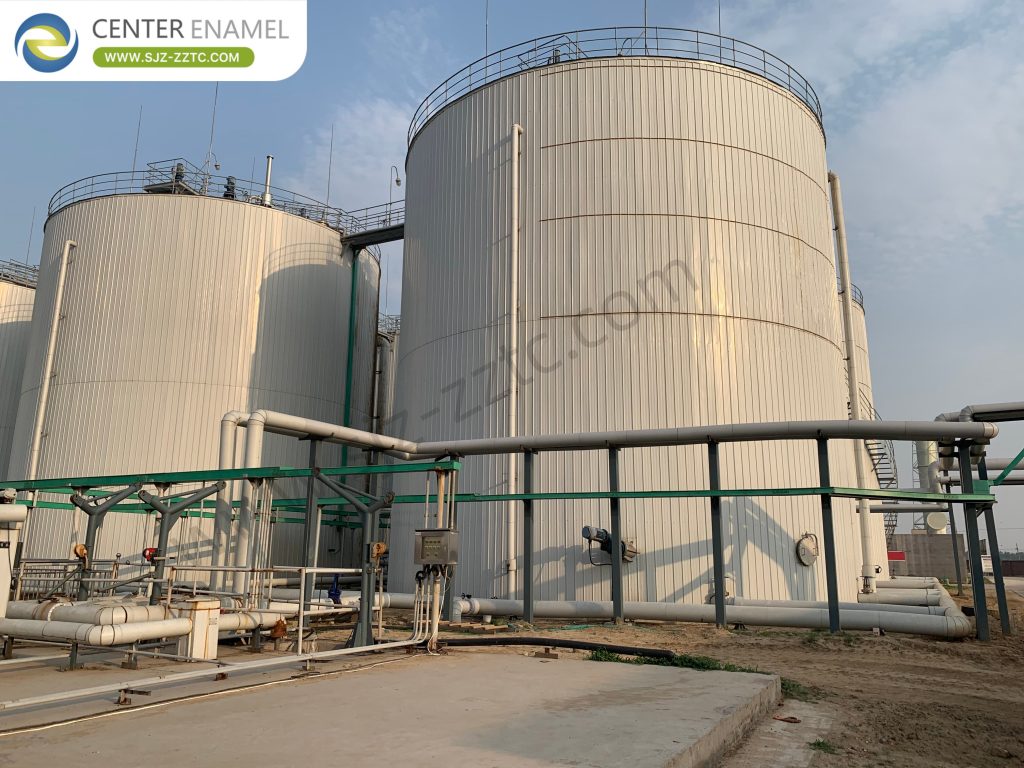
When constructing robust wastewater treatment infrastructure for aquaculture facilities, selecting the right containment technology is paramount for long-term success. Glass-Fused-to-Steel (GFS) tanks have emerged as the industry gold standard due to their exceptional durability and corrosion resistance. By fusing glass at high temperatures to high-strength steel, GFS tanks combine the structural strength of steel with the chemical inertness of glass. They offer rapid site installation, minimal maintenance requirements, excellent resistance to harsh wastewater chemicals, and long service lives, making them ideal for equalization basins, biological reactors, and sludge storage.
Center Enamel: Decades of Expertise in Wastewater Treatment Projects
Navigating complex wastewater challenges requires partnering with seasoned industry leaders who understand sector-specific demands. Center Enamel brings decades of extensive experience in the engineering, manufacturing, and global implementation of advanced wastewater treatment projects. Specializing in high-quality GFS tanks and comprehensive containment solutions, Center Enamel has successfully delivered numerous projects across municipal, industrial, and agricultural sectors worldwide. Their proven technical expertise, rigorous quality control standards, and customized engineering approaches ensure that every aquaculture facility receives a reliable, efficient, and cost-effective wastewater management system tailored to their precise operational needs.
Frequently Asked Questions (FAQ)
Q1: How does aquaculture wastewater impact local ecosystems?
A: Aquaculture wastewater introduces high levels of organic matter, nitrogen, phosphorus, and residual chemicals. This leads to oxygen depletion, eutrophication (algal blooms), habitat degradation, and potential toxicity for native aquatic organisms.
Q2: What are the main technologies used in aquaculture wastewater treatment?
A: Common technologies include mechanical drum filters for solid removal, biological systems like MBBR for nutrient and ammonia removal, and advanced disinfection methods such as UV or ozone treatment to eliminate pathogens.
Q3: Why choose GFS tanks for wastewater treatment projects?
A: Glass-Fused-to-Steel (GFS) tanks offer superior corrosion resistance, structural durability, quick installation times, and low maintenance costs, making them the ideal choice for storing and treating corrosive wastewater streams.