
How Can Biogas Be Produced from Fruit Waste? A Complete Guide to Anaerobic Digestion
Fruit waste is one of the most abundant and underutilized organic resources in the world. Every year, fruit processing industries generate millions of tons of peels, pomace, rinds, and seeds-materials that are often landfilled or incinerated despite their rich energy potential. Converting this waste into biogas through anaerobic digestion offers a sustainable solution that transforms a disposal problem into a source of clean, renewable energy. This guide explains how biogas is produced from fruit waste, covering feedstock characteristics, process stages, co-digestion strategies, and practical implementation considerations.
Understanding Fruit Waste as a Biogas Feedstock
Fruit processing waste (FPW) constitutes between 20% and 50% of total fruit weight after industrial processing, depending on the fruit type and processing method. Globally, fruit production exceeded 887 million metric tons in 2020, generating an estimated 57 million tons of waste annually from peels, pomace, rinds, and seeds. These by-products are rich in fermentable compounds-cellulose, hemicellulose, pectin, simple sugars, proteins, and lipids-making them ideal substrates for biochemical conversion into biogas.
However, fruit waste also presents certain challenges. Citrus peels, for example, contain d-limonene, an essential oil that can inhibit microbial activity in anaerobic digesters if present in high concentrations. The acidic nature of many fruit wastes also requires careful pH management. Understanding these characteristics is the first step toward designing an effective biogas production system.
The Science of Anaerobic Digestion: How Fruit Waste Becomes Biogas
Anaerobic digestion is a biological process in which microorganisms break down organic matter in the absence of oxygen, producing biogas-primarily methane and carbon dioxide-along with nutrient-rich digestate. When fruit waste is used as feedstock, the process occurs in four sequential stages inside sealed anaerobic reactors.
Hydrolysis is the first stage, where microorganisms secrete enzymes that decompose complex macromolecules like cellulose, starch, and proteins into smaller soluble organic compounds. Acidification follows, as acid-forming bacteria convert these soluble substances into volatile fatty acids and intermediate alcohols. In the acetogenesis stage, these intermediates are further transformed into acetic acid, hydrogen, and carbon dioxide. Finally, methanation occurs, where strictly anaerobic methanogens convert these substrates into methane-rich biogas containing 55% to 70% methane. After desulfurization, dehydration, and purification, the biogas can be used for power generation, heating, or upgraded to biomethane.
Key Factors Affecting Biogas Yield from Fruit Waste
Several operational parameters determine how efficiently fruit waste is converted into biogas. The carbon-to-nitrogen (C/N) ratio is particularly important. Fruit waste typically has a high C/N ratio due to its carbohydrate-rich composition, which can be balanced by co-digesting with nitrogen-rich materials like cow manure or sewage sludge.
Temperature also plays a critical role. Research comparing thermophilic and mesophilic conditions found that thermophilic methane reactors achieved 492 mL biogas per gram of volatile solids, compared to 10% lower yields under mesophilic conditions. The thermophilic process also reduced required reactor volume by 40%, leading to significant investment cost savings.
The use of appropriate inoculum-the microbial seed material-is another key factor. A study investigating different inoculum mixtures for fruit and vegetable waste found that combining 25% liquid biofertilizer with 75% rumen liquid produced the highest biomethane yield at 453.1 Nml/gVS, approximately four times higher than the control.
Pretreatment and Co-Digestion Strategies to Enhance Biogas Production
Raw fruit waste can be difficult to digest efficiently due to its fibrous structure and, in some cases, inhibitory compounds. Pretreatment methods help overcome these barriers by breaking down cell walls and increasing the accessibility of organic matter to microbial action. Mechanical size reduction, thermal treatment, and biological pretreatment are commonly employed approaches.
Co-digestion represents another powerful strategy. Mixing fruit waste with other organic substrates balances nutrient profiles, dilutes inhibitory compounds, and improves process stability. For example, co-digesting fruit waste with cow manure combines the high C/N ratio of fruit waste with the favorable microbial load and buffering capacity of manure, creating a synergistic effect that enhances methane yields. Research has also demonstrated that adding fruit waste alongside specific microbial cultures can boost biogas production through synergistic interactions, with one study reporting a 33% increase in methane production after just three days.
Table: Common Fruit Wastes and Their Biogas Potential
| Fruit Waste Type | Key Characteristics | Biogas Potential |
| Citrus peels (orange, lemon, pomelo) | High essential oil content (d-limonene), acidic pH | Requires pretreatment or co-digestion to mitigate inhibition |
| Banana peels | Rich in carbohydrates and potassium | High biodegradability, good methane yield |
| Pineapple skins | High sugar content, fibrous structure | Excellent biogas potential with proper pretreatment |
| Mango peels and seeds | High moisture, rich in fermentable sugars | Suitable for co-digestion with manure |
| Apple pomace | High pectin and sugar content | Rapid acidification potential, requires pH buffering |
| Grape pomace | Rich in cellulose and fermentable sugars | Good biogas yield, seasonal availability |
This table illustrates the variability in fruit waste composition and the importance of tailoring biogas system design to specific feedstock characteristics.
Environmental and Economic Benefits of Fruit Waste Biogas
Converting fruit waste to biogas delivers substantial environmental benefits. Each ton of fruit waste diverted from landfill prevents uncontrolled methane emissions-a greenhouse gas with over 25 times the global warming potential of carbon dioxide. The biogas produced displaces fossil fuels, reducing carbon emissions from energy generation. Digestate, the nutrient-rich by-product of anaerobic digestion, can be processed into organic fertilizer for agricultural use, closing nutrient loops and reducing dependence on synthetic inputs.
The economic case is equally compelling. A study based on the estimated fruit and vegetable waste from a Brazilian supply center calculated a potential for generating 124 MWh of electricity per month from biomethane, demonstrating the energy and economic feasibility of this technology for urban organic waste utilization. For food processing facilities, on-site biogas production can offset substantial power and cooling demands, turning waste disposal costs into energy savings. In Vietnam, where fruit and vegetable waste is abundant, biogas projects build a closed circular industrial chain of "planting → waste recycling → biogas supply → organic fertilizer returning field," lowering disposal costs and improving green competitiveness for local enterprises.
Implementing a Fruit Waste Biogas Project: Key Considerations
Successful fruit waste biogas projects require careful planning across multiple dimensions. Feedstock availability and seasonality must be assessed-fruit waste generation peaks during harvest seasons, necessitating storage or complementary feedstock strategies for year-round operation.
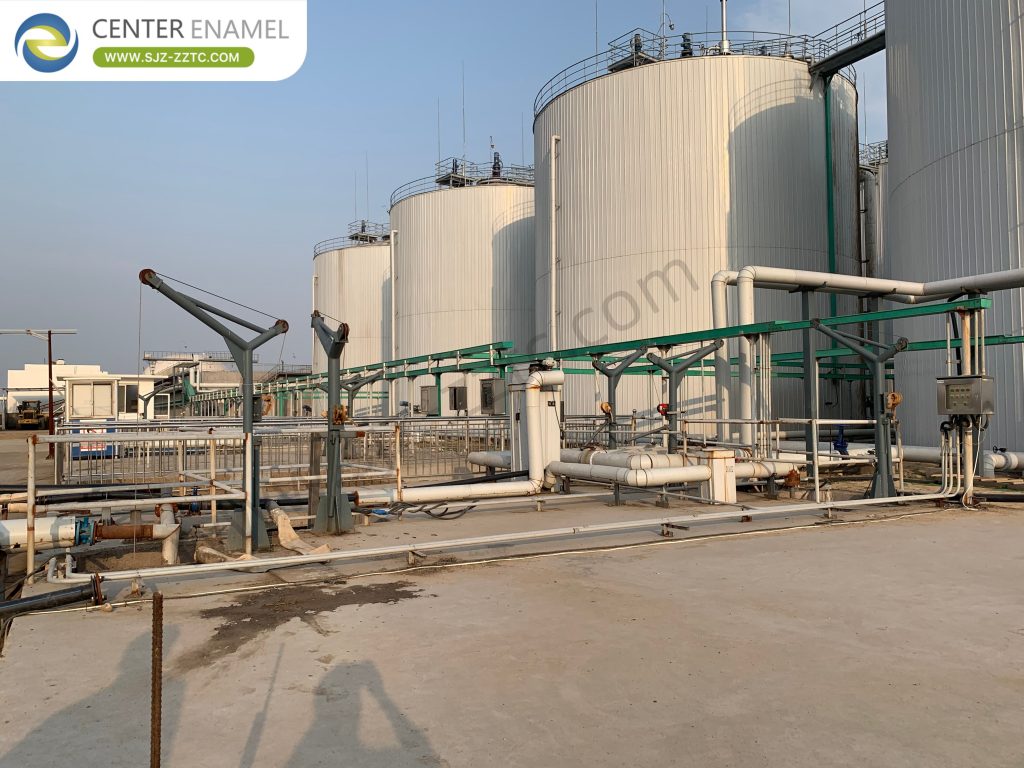
The choice of anaerobic technology depends on waste characteristics and project scale. CSTR reactors with mechanical mixing handle high-moisture fruit pomace effectively, preventing crusting and stratification. UASB reactors excel at treating high-sugar wastewater with excellent COD removal rates. For high-density organic solids common in fruit processing sludge, the USR process provides superior solids retention. Corrosion-resistant containment is essential, as fruit waste is inherently acidic and can degrade standard steel tanks. Glass-fused-to-steel (GFS) tanks offer a proven solution with 30+ year service life in demanding environments.
Gas collection and storage systems must be designed to handle variable production rates. Double membrane biogas holders provide the necessary buffer capacity, stabilizing gas flow to downstream utilization equipment while ensuring complete capture of valuable methane.
Ready to turn your fruit waste into valuable biogas? Contact Center Enamel today for a free consultation and a customized biogas solution tailored to your feedstock and energy goals. Our team is here to help-reach out now.
FAQ
How much biogas can one ton of fruit waste produce?
Biogas yield varies by fruit type and digestion conditions. Thermophilic digestion of fruit and vegetable waste has achieved 492 mL biogas per gram of volatile solids. Co-digestion with manure or sludge typically improves yields further.
What is the biggest challenge in producing biogas from fruit waste?
The main challenges are acidic pH, seasonal availability, and inhibitory compounds like d-limonene in citrus peels. Co-digestion with nitrogen-rich substrates and proper pretreatment effectively address these issues.
Can citrus waste be used for biogas production?
Yes, but citrus waste requires careful management. The d-limonene in citrus peels inhibits methanogens at high concentrations. Pretreatment, dilution, or co-digestion with other feedstocks mitigates this inhibition.