
How Do Biomass Power Plants Work? From Feedstock to Electricity
A biomass power plant converts stored solar energy in organic matter into electricity through one of three routes: direct combustion (burning), gasification (partial oxidation into syngas), or anaerobic digestion (microbial breakdown into biogas). All three share the same final step—driving a turbine or engine to spin a generator—but their fuel preparation, chemistry, and efficiency differ fundamentally.
Route 1: Direct Combustion — The Classic Steam Cycle
In a combustion plant (the most common, typically 5–50 MW₎), biomass is dried, shredded, and fed into a grate or fluidized-bed boiler, where it burns at 800–1,000°C. The heat converts water into superheated steam at 60–120 bar, which drives a steam turbine connected to a generator. Electrical efficiency is 25–35% (up to 40% in modern supercritical designs), rising to 80–90% total when heat is extracted for district heating.
Route 2: Gasification — Turning Biomass into Syngas
Gasification heats biomass at 700–1,000°C with limited oxygen, producing synthesis gas (syngas: CO + H₂) instead of direct flame. The syngas can be burned in a gas engine (28–38% electrical efficiency), co-fired in a boiler, or further refined into liquid fuels. Gasification is more efficient at small scales than steam cycles but requires cleaner, drier feedstock with consistent size.
Route 3: Anaerobic Digestion — The Wet Biomass Route
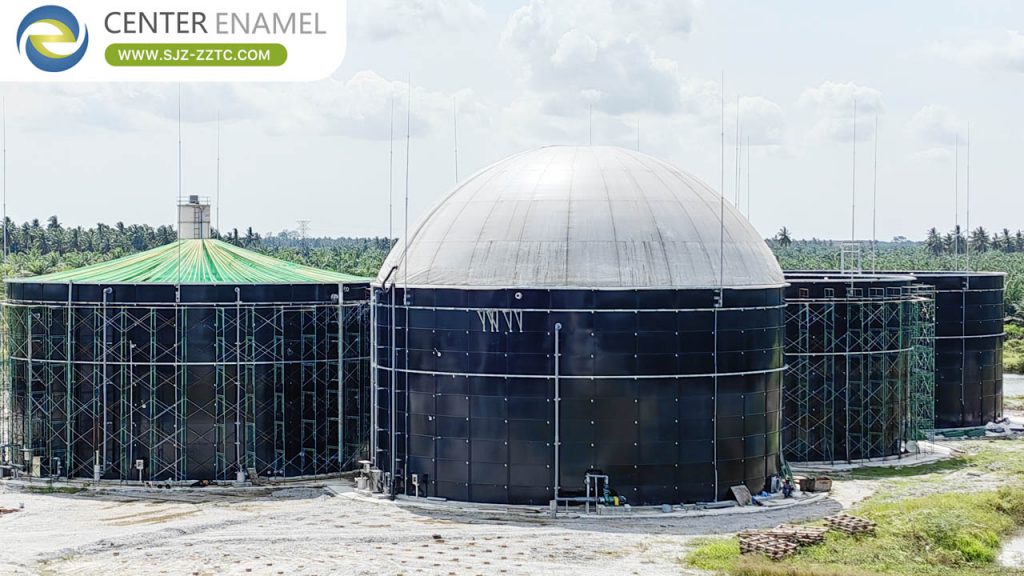
For wet biomass (manure, food waste), AD plants operate at 35–55°C in sealed digesters for 20–40 days, producing biogas of 50–65% methane. The biogas fuels a CHP gas engine at 35–43% electrical efficiency, or is upgraded to biomethane. AD is the only route that treats wet waste while generating energy—and it returns digestate as fertilizer, closing the nutrient loop.
Comparative Data Table: Three Biomass Power Plant Routes
| Parameter | Direct Combustion | Gasification | Anaerobic Digestion |
| Feedstock moisture | <40% | <30% (dry systems) | >60% (wet slurry) |
| Operating temperature | 800–1,000°C | 700–1,000°C | 35–55°C |
| Electrical efficiency | 25–35% (to 40%) | 28–38% (syngas engine) | 35–43% (CHP) |
| Typical scale | 5–50+ MW₎ | 1–20 MW₎ | 0.05–5 MW₎ |
| Main product | Steam → electricity | Syngas → power/chemicals | Biogas → power/biomethane |
| Byproducts | Ash (10–25% of feed) | Char, tar, ash | Digestate (fertilizer) |
The Common Backbone: Turbine, Generator, and Grid Connection
Regardless of route, the power block is standard: prime mover (steam turbine, gas engine, or gas turbine) → generator → transformer → substation. A 10 MW₎ combustion plant typically exports at 10–35 kV, with auxiliary consumption of 6–10% of gross output for fuel handling, fans, and pumps—the single largest efficiency leak if not designed carefully.
For 2026 project developers, the practical rule is: choose AD for wet waste with gate fees, choose combustion for large dry woody feedstocks, and consider gasification only for niche dry high-value feedstocks or where biochar/carbon capture adds revenue.
Frequently Asked Questions (FAQ)
Q1: How efficient are biomass power plants?
A: Electrical efficiency ranges from 25–35% for steam-cycle combustion plants to 35–43% for biogas CHP engines. Total efficiency reaches 80–90% when waste heat is used for district heating or industrial processes—so location and heat off-take often matter more than the prime mover.
Q2: What is the difference between combustion and gasification?
A: Combustion fully oxidizes biomass with excess air into hot flue gas; gasification uses limited oxygen to create flammable syngas (CO + H₂). Gasification enables higher-efficiency power generation at small scale but demands drier, cleaner, size-consistent feedstock.
Q3: Can biomass power plants run on any type of biomass?
A: No—moisture is the gatekeeper. Wet feedstocks (manure, food waste) must go through anaerobic digestion; dry feedstocks (wood, straw) suit combustion or gasification. Fuel flexibility is a design feature, not an afterthought.
Q4: Are biomass power plants carbon neutral?
A: They are near-carbon-neutral over the growth cycle: CO₂ released at combustion equals CO₂ absorbed during plant growth, provided feedstock is sustainably sourced. Methane leakage in AD plants must be controlled, since CH₄ is 28× more potent a greenhouse gas than CO₂.