
How Do Plants Reach Energy-Positive Status?
Plants reach energy-positive status by first slashing their own energy demand—above all aeration—and then recovering more energy than they use, typically by digesting sludge or high-strength waste anaerobically and burning the biogas in a CHP unit. When recovered power and heat exceed site consumption, the plant exports the surplus and becomes a net energy producer.
What “Energy-Positive” Means
Energy-positive (or energy-neutral) means the facility's renewable energy generation meets or exceeds the energy it consumes in treatment—pumping, aeration, mixing, and heating. Most conventional plants are net consumers because aerobic aeration alone can account for 40–60% of their electricity use; closing that gap is the core task.
Step 1 — Reduce Demand
The cheapest energy is the energy you do not use. High-efficiency blowers, variable-frequency drives, dissolved-oxygen-based aeration control, and process optimization (right-sizing return sludge, avoiding over-aeration) can cut aeration energy by 20–50%. Better influent screening and dewatering also lower downstream loads. Demand reduction makes the remaining gap small enough for recovery to close.
Step 2 — Recover Energy From Organics
Anaerobic digestion of sludge or high-strength sidestreams converts organics into biogas at roughly 0.30–0.45 m³ per kg of COD removed (about 60% methane). A CHP unit burns that biogas at 35–45% electrical and 80–90% total efficiency, supplying on-site power and useful heat (for digester heating and building warmth). Recovered energy is the credit that flips the balance positive.
Comparative Data Table: Demand vs Recovery Levers
| Lever | Typical impact | Role |
| Efficient aeration / VFD | 20–50% less aeration energy | reduces demand |
| Sludge AD + CHP | covers 50–100%+ of plant power | adds supply |
| Heat recovery | digester + building heat | raises total efficiency |
| Renewable add-ons | solar, biogas surplus export | closes the gap |
Technical Considerations
Energy positivity needs steady organic load and good control. Plants with low influent strength or high imported water have little to recover and may only reach neutrality with solar add-ons. CHP must be sized to the steady biogas flow; oversizing wastes capital, undersizing leaves surplus gas flared. Maintenance matters: CHP upkeep runs about $0.015–0.045 per kWh of electricity produced.
Advantages and Limitations
The benefit is lower operating cost, resilience against energy prices, and a strong sustainability story. The limitations are capital cost, the need for consistent feed, and the reality that very dilute or small plants may never reach positivity on organics alone. For them, a hybrid of recovered biogas plus a modest renewable add-on is the realistic path.
Best Practices / How to Get There
Audit energy by end-use first; attack aeration and pumping with controls and efficient equipment; then add or optimize sludge AD with CHP and capture all heat. Model the site balance before buying generation, and plan digestate handling up front. Target demand reduction first—it is cheaper than building supply you do not need.
Energy-positive status is reached in two moves: cut demand with efficient aeration and controls, then recover more than you use through anaerobic digestion and CHP. Plants with a strong organic load and disciplined energy management are the ones that get there—and stay there.
Frequently Asked Questions (FAQ)
Q1: How do plants reach energy-positive status?
A: By cutting demand (especially aeration, 20–50%) and recovering energy via sludge AD and CHP at 35–45% electrical efficiency, so generation exceeds site power use.
Q2: What cuts demand first?
A: Aeration is the biggest load (40–60% of plant power). Efficient blowers, VFDs, DO-based control, and process optimization cut it 20–50% before any generation is added.
Q3: How does AD plus CHP help?
A: AD turns sludge organics into biogas (0.30–0.45 m³/kg COD removed, ~60% CH₄); CHP converts it to power and heat, covering 50–100%+ of plant electricity and useful warmth.
Q4: Which plants get there?
A: Plants with strong, steady organic load and good energy management—especially those combining sludge AD, efficient aeration, and heat recovery. Dilute or tiny plants may need a renewable add-on.
Q5: Is solar needed to be energy-positive?
A: Not usually. Organics-rich plants can reach it on biogas alone; solar or surplus-biogas export mainly helps dilute or small plants close the final gap.
Q6: What does CHP maintenance cost?
A: Roughly $0.015–0.045 per kWh of electricity produced, lower on large units (>500 kWe) and higher on small ones (<100 kWe) with harder duty.
Project Case Reference
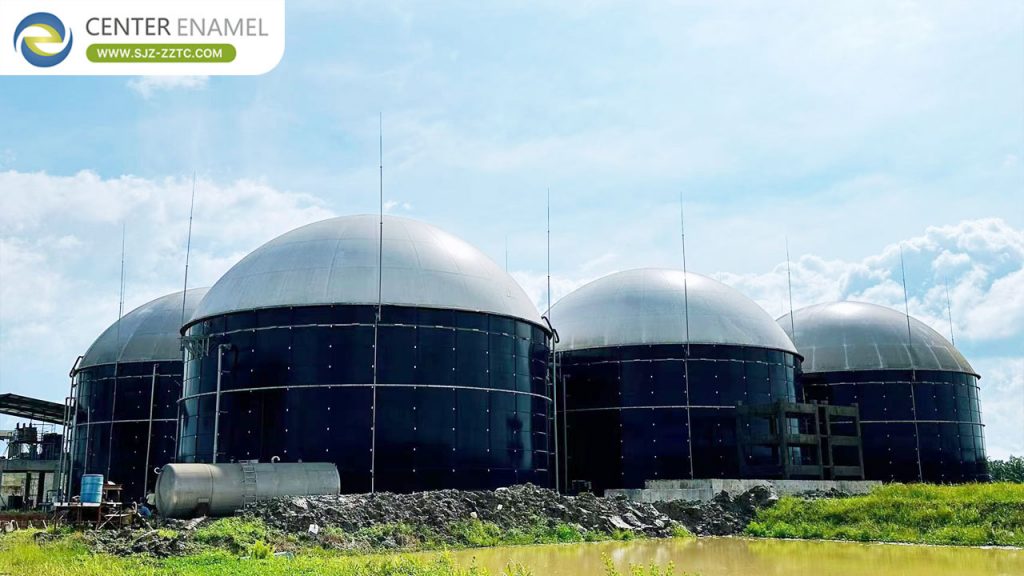
Malaysia Biogas Project — Malaysia · 2026
5 GFS Tanks · 27,000 m³ Total Volume · 22,000 m³ Biogas/Day
A large-scale biogas project in Malaysia featuring 5 Glass-Fused-to-Steel (GFS) tanks. The project achieves approximately 80% digestibility, with each single tank producing about 4,400 m³ of biogas daily, totaling 22,000 m³ per day across all 5 tanks.
Technical Specifications
Single Tank Volume: 5,400 m³ (Ø24.46 × 12 m)
Total Effective Volume: 27,000 m³ (5 tanks)
Daily Biogas Production: 22,000 m³ total
Digestibility: ≈ 80%
Gas Production Rate: 0.45 m³ / kg COD removed
Tank Type: Glass-Fused-to-Steel (GFS)
Water Quality Data
| Parameter | Inlet Water | Effluent |
| COD | ≥ 60,000 mg/L | ≥ 12,000 mg/L |
| BOD | ≤ 25,000 mg/L | ≤ 5,000 mg/L |