
How Do You Diversify Biogas Feedstock Sources?
You diversify biogas feedstock by co-digesting three or more complementary streams—manure, crop residues, food waste, and purpose-grown energy crops—so that no single source, season, or supplier can stall the plant. A well-balanced mix also lifts biogas yield by hitting the ideal carbon-to-nitrogen ratio of 20–30:1, which mono-substrate manure alone rarely achieves.
What Co-Digestion Actually Does
Co-digestion is the simultaneous anaerobic treatment of two or more substrates in one digester. Manure alone is nitrogen-rich but low in readily degradable carbon; adding crop residues or food waste supplies the carbon the microbes need, while energy crops such as maize silage or grasses provide a steady, storable buffer. The result is higher methane output per tonne and a more stable biological process than any single feedstock delivers.
Comparative Data Table: Typical Co-Digestion Streams
| Stream | Role in mix | Biogas yield (m³/kg VS) |
| Cattle / swine manure | base, nitrogen source | 0.20–0.30 |
| Food waste | high carbon, fast degrade | 0.35–0.60 |
| Crop residues / straw | carbon buffer, storable | 0.20–0.30 |
| Energy crops (silage) | steady seasonal buffer | 0.30–0.45 |
| Sewage sludge | consistent, year-round | 0.20–0.35 |
How Diversification Balances Season and Risk
Manure is available year-round, but crop residues arrive in a narrow harvest window and food waste volumes swing with economic activity. By mixing a storable carbon source (silage or straw) with continuous streams, the plant smooths both biology and logistics: a poor harvest or a lost food-waste contract no longer forces a shutdown. Geographic spread of suppliers adds a second layer—weather or transport problems in one area rarely hit all sources at once.
Frequently Asked Questions (FAQ)
Q1: How do you diversify biogas feedstock sources?
A: Co-digest three or more complementary streams—manure plus crop residues, food waste, and energy crops—and spread suppliers geographically so no single source, season, or supplier can stall the plant.
Q2: What is co-digestion?
A: The simultaneous anaerobic treatment of two or more substrates in one digester. It balances the C:N ratio (20–30:1), stabilises the biology, and raises methane yield per tonne versus any single feedstock.
Q3: Which streams mix well?
A: Manure as the nitrogen base, food waste for fast carbon, crop residues or silage for a storable buffer, and sewage sludge for year-round consistency—each contributing a different role in the mix.
Q4: How does it balance seasonality?
A: A storable carbon source plus continuous streams smooths both biology and logistics, so a weak harvest or a lost contract no longer forces a shutdown, and geographic supplier spread protects against local weather or transport shocks.
Project Case Reference
Pakistan Biogas Project — Pakistan
100 m³ Biogas/Day · CSTR Process · Food Waste + Grass
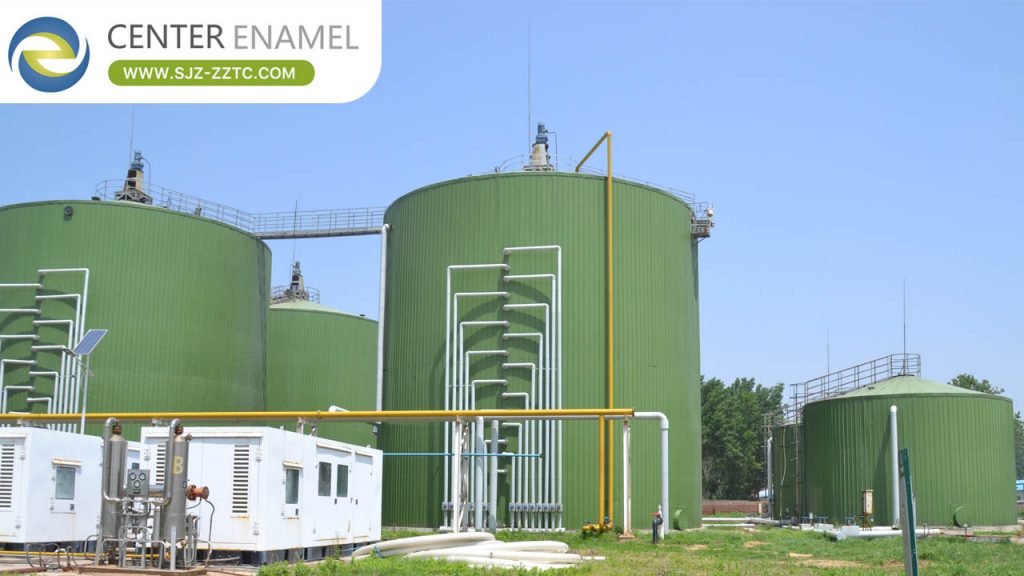
The Pakistan Biogas Project, delivered in partnership with Center Enamel, utilizes CSTR (Continuous Stirred-Tank Reactor) process technology to convert food waste and pennisetum purpureum (napier grass) into clean renewable biogas. The plant produces 100 m³ of biogas per day, providing sustainable energy solutions for local communities while managing organic waste efficiently.
Technical Specifications
Core Technology: CSTR Process
Feedstock: Food waste + Pennisetum purpureum
Daily Biogas Output: 100 m³/day
Partner: Center Enamel
Location: Pakistan
Application: Waste-to-Energy / Biogas Production