
How Do You Guarantee Feedstock for a Biogas Plant?
You guarantee feedstock for a biogas plant by contracting volume up front, controlling the core substrate, holding 7–14 days of buffer storage, co-digesting multiple streams, and spreading suppliers geographically. Together these convert an unreliable supply into a predictable daily tonnage, which is the single biggest determinant of whether a biogas plant hits its energy and payback targets.
1. Lock Volume with Feed-In Agreements
A feed-in agreement (FIA) is a written commitment from a supplier to deliver a specified tonnage at an agreed quality and price for a fixed term—typically 3–10 years for manure or agricultural residue. The agreement should state minimum and maximum monthly volumes, the substrate mix, moisture and contamination limits, and a take-or-pay or minimum-offtake clause so the plant is never left short. Plants that run on spot purchases alone see 10–30% more downtime from feed gaps.
2. Control the Core Substrate Yourself
The most secure feedstock is the one you already own. A dairy or swine operation that digests its own manure removes market risk entirely: the substrate is on-site, free of third-party negotiation, and available every day. Where the operator is not a farmer, the next best option is a long-term lease or joint venture with one or two large nearby farms, turning a purchase into a captive supply.
Comparative Data Table: Feedstock Security Levers
| Lever | Supply risk reduction | Typical cost / effort |
| Own manure (on-site) | highest | none (by-product) |
| Feed-in agreement (3–10 yr) | high | legal + price floor |
| 7–14 day buffer storage | high | tank / pad capital |
| Co-digestion (3+ streams) | medium-high | mixing + C:N control |
| Geographic supplier spread | medium | logistics |
3. Hold Buffer Storage and Diversify Streams
Buffer storage decouples delivery from consumption. A 7–14 day reserve of feedstock in a covered pad or secondary tank absorbs a missed shipment, a weather delay, or a harvest gap without tripping the digester. Co-digestion then adds resilience: blending manure with crop residues, food waste, and energy crops balances the carbon-to-nitrogen ratio (target 20–30:1), smooths seasonal swings, and means the loss of any single stream no longer threatens output.
Frequently Asked Questions (FAQ)
Q1: How do you guarantee feedstock for a biogas plant?
A: Contract volume up front, control the core substrate (own manure or a captive farm), hold 7–14 days of buffer storage, co-digest multiple streams, and spread suppliers geographically so no single failure stops the plant.
Q2: What is a feed-in agreement?
A: A written commitment from a supplier to deliver specified tonnage at agreed quality and price for a fixed term (often 3–10 years), usually with minimum-offtake or take-or-pay clauses that protect the plant from shortfall.
Q3: How much buffer storage is needed?
A: Most plants target 7–14 days of feedstock reserve in a covered pad or secondary tank. That window absorbs missed shipments, weather delays, and harvest gaps without starving the digester.
Q4: How does co-digestion secure supply?
A: Mixing manure with crop residues, food waste, and energy crops balances the C:N ratio (20–30:1) and smooths seasonality, so the loss of one stream no longer threatens output—and it raises biogas yield per tonne.
Project Case Reference
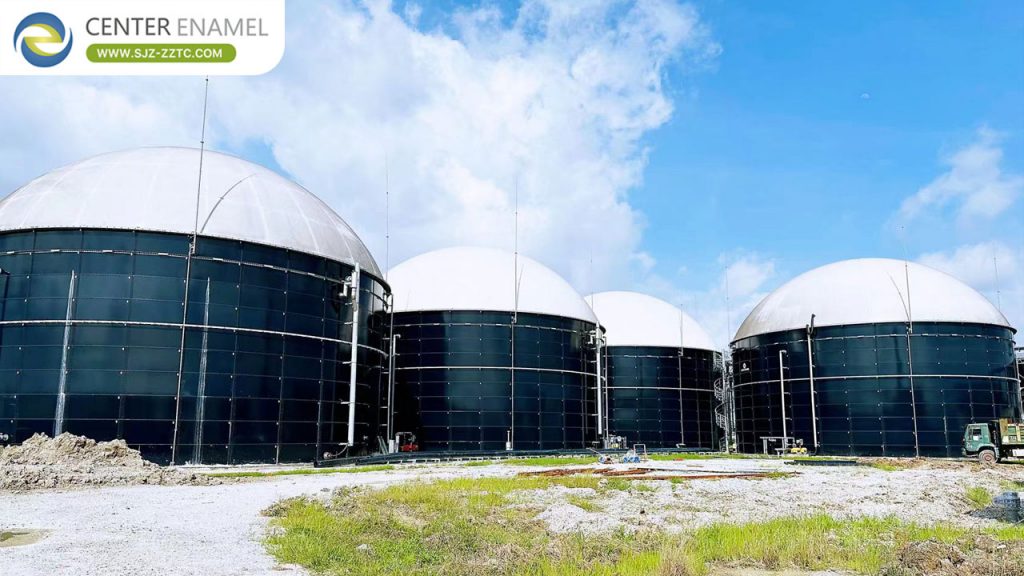
Zhaqi Biogas Project in Inner Mongolia — Xing'an, Inner Mongolia, China · 2017
900 m³/D Capacity · 4 CSTR Reactors · 20,000 m³ Biogas/Day
A medium-temperature anaerobic fermentation biogas project in Zhaqi, Inner Mongolia. The plant processes 900 m³/day of farm animal manure and agricultural waste including grass straw, producing 20,000 m³ of biogas daily. The project features 4 sets of CSTR (Continuous Stirred-Tank Reactor) anaerobic reactors specifically designed for cold climate operation.
Technical Specifications
Handling Capacity: 900 m³/D (manure + agricultural waste)
Treatment Type: Medium Temperature Anaerobic Fermentation
Reactor Type: CSTR (Continuous Stirred-Tank Reactor)
Reactor Size: 4 sets of Φ25.98 × 8.4 m
Daily Biogas Output: 20,000 m³/day
Feedstock: Animal manure + grass straw