
How Do You Treat Slaughterhouse Wastewater? A Complete Guide to Effective Treatment and Biogas Recovery
Slaughterhouses and meat processing plants generate large volumes of wastewater that contains blood, fat, protein, manure, and organic matter. If discharged untreated into the environment, this wastewater can cause severe water pollution, oxygen depletion, and harm aquatic life. So, how do you treat slaughterhouse wastewater?
The answer lies in a multi-stage process that combines physical separation, biological treatment, and increasingly, anaerobic digestion with biogas recovery. This article provides a comprehensive guide to the most effective methods for treating slaughterhouse wastewater-and how modern technology can turn a costly waste problem into a source of renewable energy.
Characteristics of Slaughterhouse Wastewater
Before discussing treatment methods, it is essential to understand what makes slaughterhouse wastewater unique. Typical slaughterhouse effluent contains:
| Parameter | Typical Range |
| COD (Chemical Oxygen Demand) | 2,000 - 15,000 mg/L |
| BOD (Biological Oxygen Demand) | 1,000 - 8,000 mg/L |
| Fats, Oil & Grease (FOG) | 200 - 2,000 mg/L |
| Total Suspended Solids (TSS) | 500 - 5,000 mg/L |
| Total Nitrogen (TN) | 150 - 500 mg/L |
| Total Phosphorus (TP) | 20 - 100 mg/L |
| pH | 5.5 - 8.5 |
| Temperature | 20 - 40°C |
The wastewater is characterized by high organic loading, high fat and grease content, significant solids, and often variable flow rates. These characteristics require a robust, multi-stage treatment approach.
Step-by-Step: How to Treat Slaughterhouse Wastewater
An effective slaughterhouse wastewater treatment system typically includes the following stages:
Stage 1: Pretreatment-Removing Large Solids and Grease
Before any biological treatment, the wastewater must be prepared. Pretreatment protects downstream equipment and ensures stable performance.
Screening
Mechanical bar screens or rotating drum screens remove large solids such as hair, feathers, bone fragments, and tissue pieces. This prevents clogging of pumps and pipes.
Equalization Tank
Slaughterhouse flow rates vary significantly depending on production shifts. An equalization tank balances these fluctuations by temporarily storing influent, mixing different batches, and providing physical cooling.
Dissolved Air Flotation (DAF)
DAF is critical for slaughterhouse wastewater. It removes fats, oil, grease (FOG), and fine suspended solids. In a DAF system, fine air bubbles attach to particles and float them to the surface for skimming. Removing FOG early protects the biological treatment stages from inhibition.
Stage 2: Primary Biological Treatment-Reducing Organic Load
After pretreatment, the wastewater enters the biological treatment stage where microorganisms break down organic pollutants.
Anaerobic Digestion (USR Process)
The Upflow Solids Reactor (USR) is one of the most effective anaerobic digestion technologies for slaughterhouse wastewater, which typically has total solids (TS) in the 2-5% range.
In the USR Process, wastewater is distributed evenly at the bottom of a vertical, cylindrical, air-tight reactor tank. As the liquid flows upward, it passes through a dense bed of anaerobic solids. Microorganisms digest the organic material and produce biogas-a renewable fuel containing 50-70% methane.
Advantages of USR for slaughterhouse wastewater:
High organic load removal (70-90% COD reduction)
Low energy consumption
Biogas production for on-site energy use
Reduced sludge volume
Aerobic Treatment (Optional Polishing)
Depending on discharge standards, aerobic treatment (such as activated sludge or sequencing batch reactors) may follow anaerobic digestion to further reduce BOD, COD, and nutrients.
Stage 3: Sludge Management
The biological treatment process generates sludge. Proper sludge management includes:
Thickening (gravity or mechanical)
Dewatering (screw press, belt press, or centrifuge)
Disposal or beneficial use (land application as fertilizer or co-digestion with other organic waste)
Stage 4: Effluent Disinfection and Reuse
For final discharge or water reuse, disinfection (chlorination, UV, or ozonation) may be required. Treated slaughterhouse wastewater can be reused for:
Irrigation on non-edible crops
Industrial cleaning and washdown
Dust control and landscaping
The USR Process: The Core of Modern Slaughterhouse Wastewater Treatment
The Upflow Solids Reactor (USR) is particularly well-suited to slaughterhouse wastewater because of its high solids tolerance and robust performance. Unlike other anaerobic digesters that struggle with fats and suspended solids, the USR retains active biomass effectively without expensive separation equipment.
How the USR Process Works:
Influent distribution: Wastewater enters through the bottom via a water distribution system.
Upflow through biomass: Liquid flows upward through a dense bed of anaerobic solids.
Biogas production: Microorganisms digest organic matter, producing methane-rich biogas.
Effluent overflow: Treated water overflows at the top for further polishing or discharge.
Sludge discharge: Excess solids are removed from the bottom periodically.
Why Biogas Solutions Make Sense for Slaughterhouses
Slaughterhouse wastewater is highly organic, which means it is an excellent feedstock for anaerobic digestion. By capturing biogas, slaughterhouses can:
Reduce energy costs: Biogas can power boilers, hot water heaters, or electricity generators.
Lower carbon footprint: Capturing methane prevents its release into the atmosphere.
Offset treatment costs: Energy savings can significantly reduce the net cost of wastewater treatment.
Meet sustainability goals: Many food companies have net-zero or carbon reduction targets.
Center Enamel: Professional One-Stop Biogas Solutions for Slaughterhouse Wastewater
For over 36 years, Center Enamel has been a global leader in water, wastewater, and biogas projects. As the largest manufacturer of Glass-Fused-to-Steel (GFS) tanks in Asia, Center Enamel provides complete, turnkey biogas solutions for slaughterhouse wastewater treatment.
Center Enamel’s Slaughterhouse Wastewater Treatment Solutions Include:
1. GFS Tanks for USR Reactors
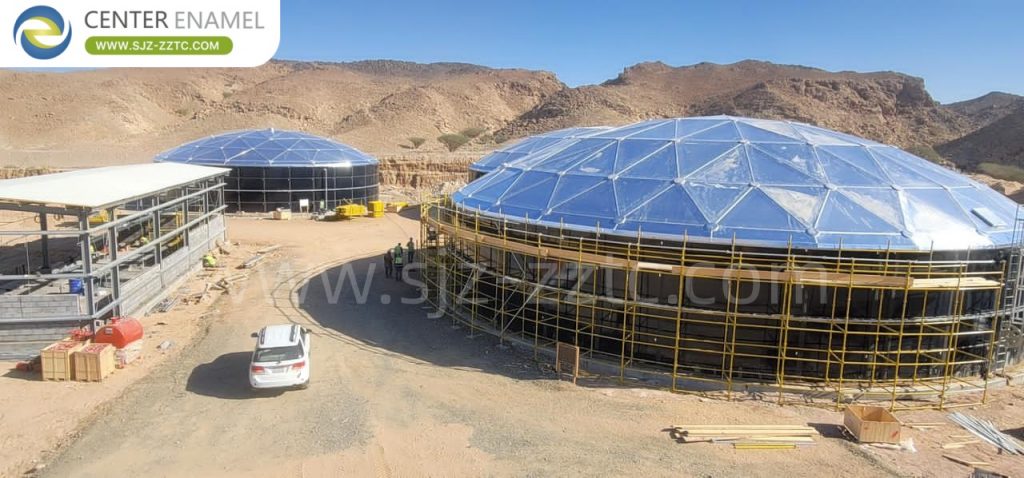
Center Enamel’s Glass-Fused-to-Steel (GFS) Tanks are the ideal containment solution for USR reactors. The glass coating is fused to the steel at over 800°C, creating a hard, inert, and durable surface that withstands the acidic, aggressive nature of slaughterhouse wastewater and raw biogas. GFS tanks meet rigorous standards (AWWA D103, EuroCode) and provide a 30+ year service life.
2. Double Membrane Roof Systems
For efficient biogas capture, Center Enamel recommends the double membrane roof. Advantages include lower roof cost, space efficiency (no separate gas holder required), and excellent gas-tightness. This sealed system maximizes methane recovery for energy generation.
3. Complete EPC Services
Center Enamel offers Engineering, Procurement, and Construction (EPC) services-a true one-stop solution. They handle:
Site assessment and civil design
Process engineering and equipment supply
Mechanical installation and electrical control systems
Commissioning and operator training
4. Supporting Equipment
Center Enamel supplies all necessary auxiliary equipment:
Gas holders for biogas storage
Hot water boilers to maintain mesophilic temperatures
Emergency torch systems for safe biogas combustion
Dehydration and desulfurization tanks to clean raw biogas
Screw sludge dewatering machines for sludge handling
With over 250,000 GFS tank sheets produced annually and certifications including ISO9001, NSF61, CE/EN1090, and EN28765, Center Enamel is the trusted partner for slaughterhouses worldwide seeking to turn wastewater into a resource.
Conclusion: From Waste Problem to Energy Asset
So, how do you treat slaughterhouse wastewater? You combine pretreatment (screening, equalization, DAF) with anaerobic digestion using the USR Process-and you do it in durable GFS Tanks with a double membrane roof to capture biogas.
This approach not only meets environmental regulations but also generates renewable energy, reduces operating costs, and supports sustainability goals. Center Enamel provides the complete, one-stop solution to make this transformation possible.
Frequently Asked Questions (FAQ)
Q1: Why is dissolved air flotation (DAF) important for slaughterhouse wastewater treatment?
DAF is critical because slaughterhouse wastewater contains high levels of fats, oil, and grease (FOG). If FOG enters the anaerobic digester directly, it can coat the anaerobic bacteria and inhibit their activity, reducing treatment efficiency and biogas production. DAF removes 80-95% of FOG and suspended solids before biological treatment, protecting the downstream USR reactor and ensuring stable operation.
Q2: What is the typical biogas yield from treating slaughterhouse wastewater with the USR Process?
Biogas yield depends on the organic loading (COD concentration) of the wastewater. Under mesophilic conditions (35-37°C), slaughterhouse wastewater typically produces 20-35 cubic meters of biogas per cubic meter of influent. This biogas contains 50-70% methane and can be used directly in boilers or upgraded for electricity generation. A medium-sized slaughterhouse can often meet 30-60% of its thermal energy needs from biogas.
Q3: Does Center Enamel provide after-sales support for slaughterhouse biogas projects?
Yes. Center Enamel offers comprehensive after-sales support, including operator training (both classroom and hands-on), spare parts supply, remote troubleshooting, and optional long-term maintenance contracts. Their technical team can conduct periodic performance audits to ensure the USR Process and GFS Tanks continue operating at peak efficiency throughout the plant’s lifetime.